While discussing their Q1 2015 earnings report, Warner Music's CEO noted that streaming revenues passed digital downloads. If you combine streaming with other rights/licensing, it suggests that the music giant is making more from music licensing than music sales.
Source: Warner Music says streaming passed downloads for first time, telecoms.com
This blog is affiliated with a course at the School of Journalism & Electronic Media at the University of Tennessee, Knoxville. I'll try to use it to share relevant news and information with the class, and anyone else who's interested.
Showing posts with label licensing. Show all posts
Tuesday, May 12, 2015
Wednesday, March 18, 2015
Streaming Music Systems Performance (Infographics)
Two interesting pieces recently. One on the relative performance of top music streaming options, the other on how those services compensate performers and writers.
Researchers at YouGov BrandIndex looked at a variety of metrics for the top 5 music streaming services in the U.S. They found Pandora to be the dominant player in the field, although Spotify has been making inroads recently. Pandora has dominant leads in most of the metrics, from number of subscribers to awareness (from both ads and word of mouth). Spotify's numbers were improving, but the researchers concluded that
As sales in the traditional music markets continued to fade, the record industry wanted more from streamers. They started arguing that the current system (which they had eagerly negotiated) was "unfair" - largely because streaming revenues were slow to develop. The attack came on three fronts.
First, that not enough money trickled down to artists and songwriters. The biggest problem with that argument is the fact that the share that trickles down to the artists and composers is determined by the rights organizations (like ASCAP and BMI) and the actual rights holders (predominantly the record labels), who take their cut off the top. So the industry argues for a larger royalty rate, of which only a small fraction would actually go to the artists and composers.
Second, streaming services differ from radio stations in that they can and do track individual consumer plays. There's no mechanism to measure how many listeners hear a song on radio. The current licensing deal with Spotify calls for royalties to be paid according to a formula that includes both a revenue percentage and the number of streams. Spotify also pays an additional set of royalties to songwriters and composers for what is termed "streaming mechanical royalties". As a consequence, Spotify pays a much higher total percentage of its revenues than Pandora. (Pandora is currently classified as an online radio service, and radio stations are currently not required to pay mechanical royalties).
The third argument is that most streaming services offer a free streaming option, which the music industry argues "cheats" the rights holders because revenues from the ads are less than subscription-based revenues. The fact that the free/paid proportions for Pandora is roughly 75/25, while Spotify's audience is more of a 50-50 split, also contributes to the difference in royalty payments. As one record label executive summarized,
One can look at this situation from the "level playing field" metaphor. Spotify wants a level playing field by getting the same deal Pandora has, Pandora wants a level playing field with broadcast radio (straight percentage of revenues, and lower percentage), and the music industry wants to raise the height of the field several feet because they cut the grass (i.e. royalties to artists and composers) too short, and aren't making enough profits from their traditional business models.
The current copyright and royalty system is a mess, largely because it was designed to deal with selling physical copies of intellectual property. The current model has never really worked well with digital reproduction, or with the growing need to replace shrinking sales revenues with licensing arrangements for emerging digital streaming channels. Add the fact that digital markets are global and have the potential to scale much higher than physical copy sales (tens of millions for hit albums in digital, while in the physical medium heyday, hits sold hundreds of thousands). Plus, they're now having to deal with younger audiences who care more about access to music than owning copies of music. In addition, artists need to recognize that the scale differences should be reflected in the setting of royalty fees - and that because digital access to their recordings remain available long after labels drop them, that they'll benefit from their work much longer under digital deals.
The debate and fights over music royalties is likely to continue for a long time, in part because the music industry is trying to hold on to an increasingly problematic business model, and is hoping to find a way to maintain their control over revenues derived from their historic role as the choke point between artists and their audiences. However, the growth of the digital economy is showing that it doesn't require multiple layers of distributors (and their growing costs) to provide access to products for potential purchasers. There are already content creators (including musicians) who have discovered that going independent can provide them much higher levels of return, as well as more control over use of their work. For the big labels, this is a fight for survival; but for society, it's a fight for who gets to control access to content (and who gets to benefit from that). As for the question of whether streaming will leave artists unhappy - the answer is yes, if the big labels remain in control, and no, if we can shift focus from preserving a declining music industry to how to develop a rights and licensing regime that promotes and protects creation of, and access to, intellectual property.
It's time we shifted our concern from protecting the old ways to think about how to develop copyright and licensing systems that benefits the creators and users of intellectual property rather than those who merely reproduce and distribute it.
(For more background, see this post about a digital music licensing panel at the 2014 CES).
Sources: Infographic: Which Streaming Services Are Winning the Battle for Millenial Eardrums, Adweek
Is the Music Streaming Industry Destined to Leave Artists Unhappy?, Adweek
Researchers at YouGov BrandIndex looked at a variety of metrics for the top 5 music streaming services in the U.S. They found Pandora to be the dominant player in the field, although Spotify has been making inroads recently. Pandora has dominant leads in most of the metrics, from number of subscribers to awareness (from both ads and word of mouth). Spotify's numbers were improving, but the researchers concluded that
"Perhaps the brands with the biggest challenge are iHeartRadio and iTunes Radio. They have reasonably high awareness levels, but do not seem to be getting traction with consumers. The conclusion is that these brands may need to try something different to generate excitement with consumers."Music streaming services largely emerged as a result of major record companies eagerness to open up a second revenue stream to help cope with declining sales of physical recordings. Initially, they were eager to license their recordings to streaming services, but faced an initial roadblock - the existing royalty systems employed two distinct approaches. Royalties for sales were based on fixed compensation for each unit sold, while royalties for licensing music to radio stations was based on a percentage of station revenues (and not directly linked to which music was played). Conceptually, the radio model seemed closest to how streaming services operated, as well as how audiences used them. Thus, most of the early deals utilized royalty payments as a percentage of revenues.
As sales in the traditional music markets continued to fade, the record industry wanted more from streamers. They started arguing that the current system (which they had eagerly negotiated) was "unfair" - largely because streaming revenues were slow to develop. The attack came on three fronts.
First, that not enough money trickled down to artists and songwriters. The biggest problem with that argument is the fact that the share that trickles down to the artists and composers is determined by the rights organizations (like ASCAP and BMI) and the actual rights holders (predominantly the record labels), who take their cut off the top. So the industry argues for a larger royalty rate, of which only a small fraction would actually go to the artists and composers.Second, streaming services differ from radio stations in that they can and do track individual consumer plays. There's no mechanism to measure how many listeners hear a song on radio. The current licensing deal with Spotify calls for royalties to be paid according to a formula that includes both a revenue percentage and the number of streams. Spotify also pays an additional set of royalties to songwriters and composers for what is termed "streaming mechanical royalties". As a consequence, Spotify pays a much higher total percentage of its revenues than Pandora. (Pandora is currently classified as an online radio service, and radio stations are currently not required to pay mechanical royalties).
The third argument is that most streaming services offer a free streaming option, which the music industry argues "cheats" the rights holders because revenues from the ads are less than subscription-based revenues. The fact that the free/paid proportions for Pandora is roughly 75/25, while Spotify's audience is more of a 50-50 split, also contributes to the difference in royalty payments. As one record label executive summarized,
"Based on the free model, the payouts we're getting on streaming is so small... The problem that we're running into is Spotify is just not converting users to the paid version quick enough."That perspective contributed to the fact that the music labels pressured Apple to raise its proposed starting subscription price for the new Beats streaming service (much like the book publishers did for iBook pricing - which the courts later ruled was an antitrust violation). But the underlying issue is that the record companies want more money, and are using artist payments to engender sympathy. If artist payments are the real problem, the music industry could solve that easily by granting them a bigger share of the payments they get, or changing accounting practices so that the artist share comes from gross payments, and not what's left after music industry costs (and profits) are covered.
One can look at this situation from the "level playing field" metaphor. Spotify wants a level playing field by getting the same deal Pandora has, Pandora wants a level playing field with broadcast radio (straight percentage of revenues, and lower percentage), and the music industry wants to raise the height of the field several feet because they cut the grass (i.e. royalties to artists and composers) too short, and aren't making enough profits from their traditional business models.
The current copyright and royalty system is a mess, largely because it was designed to deal with selling physical copies of intellectual property. The current model has never really worked well with digital reproduction, or with the growing need to replace shrinking sales revenues with licensing arrangements for emerging digital streaming channels. Add the fact that digital markets are global and have the potential to scale much higher than physical copy sales (tens of millions for hit albums in digital, while in the physical medium heyday, hits sold hundreds of thousands). Plus, they're now having to deal with younger audiences who care more about access to music than owning copies of music. In addition, artists need to recognize that the scale differences should be reflected in the setting of royalty fees - and that because digital access to their recordings remain available long after labels drop them, that they'll benefit from their work much longer under digital deals.
The debate and fights over music royalties is likely to continue for a long time, in part because the music industry is trying to hold on to an increasingly problematic business model, and is hoping to find a way to maintain their control over revenues derived from their historic role as the choke point between artists and their audiences. However, the growth of the digital economy is showing that it doesn't require multiple layers of distributors (and their growing costs) to provide access to products for potential purchasers. There are already content creators (including musicians) who have discovered that going independent can provide them much higher levels of return, as well as more control over use of their work. For the big labels, this is a fight for survival; but for society, it's a fight for who gets to control access to content (and who gets to benefit from that). As for the question of whether streaming will leave artists unhappy - the answer is yes, if the big labels remain in control, and no, if we can shift focus from preserving a declining music industry to how to develop a rights and licensing regime that promotes and protects creation of, and access to, intellectual property.
It's time we shifted our concern from protecting the old ways to think about how to develop copyright and licensing systems that benefits the creators and users of intellectual property rather than those who merely reproduce and distribute it.
(For more background, see this post about a digital music licensing panel at the 2014 CES).
Sources: Infographic: Which Streaming Services Are Winning the Battle for Millenial Eardrums, Adweek
Is the Music Streaming Industry Destined to Leave Artists Unhappy?, Adweek
Tuesday, January 21, 2014
Music licensing @CES2014
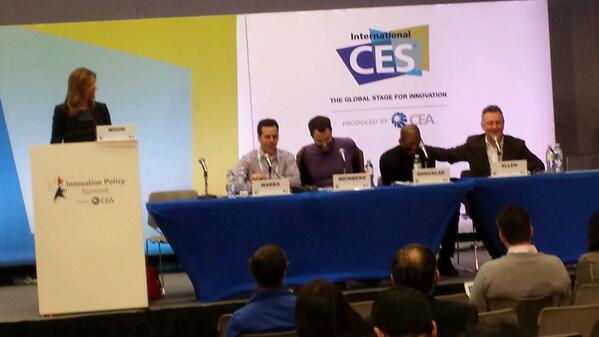
I attended what turned into a fun session on music
licensing policy at CES in Las Vegas.
The paneL included a music industry rep from RIAA, the head of a public
interest group, and two former musicians.
It started off on focus - acknowledging the mess that is
music licensing in the US today, and some ideas for improvement. The RIAA rep, Steven Marks, said one problem was that there
was no comprehensive database of songs and performances, which could make it
difficult to know whether a license was needed when using a recording, and who
to contact to get it.
[Which reminded me
of a recent story that one of the nastiest of the licensers (for 'Happy
Birthday to You') may actually have never filed for a legal copyright for the piece,
and thus may have been illegally collecting licensing fees for decades.]
But he's right that having a central listing of licensed
works would be helpful - particularly if they verify that pre-1976 works were
actually copyrighted. (Post- 1976
creations are automatically granted copyrights). He also suggested creating a
basic licensing center for 'small' users.
Making things easier would arguably help those who want to be legal to
do so.
Mark Weinberg, acting Co-President of Public Knowledge - a public interest group promoting wider diffusion of knowledge and content, concurred that making it easier
for music users to know what licenses may or may not be needed, and making them
easier to obtain would be useful - but was concerned that the industry would
try to limit fair use exemptions and collect fees from those who shouldn't have
to pay. He also expressed a desire to
see the industry become more flexible in dealing with new media and
applications, to support innovations and the exploration of potential new music
outlets. He noted that there was a wide range of music licensing strategies (and different rates) being applied to the wide variety of digital music distribution options - and that applying a single consistent standard, regardless of what technological backend was used for delivery, would be helpful.
Next came Dave Allen, former Gang of Four member. He made a strong point about the changes in
the music industry. Vastly more listened to radio or streaming sources today. He noted that the
prime source for music with today's youth is YouTube (the RIAA guy agreed), but
since most of the music content there is in the form of promotional videos, they don't pay
royalties. That led to a claim that the
record industry is making deals with streamers that bypass licensing fees and
cheat musicians, joined by Hank Shocklee (founder of Public Enemy), and prompting predictable objections from Steve Marks (Chief, Digital Business and General Counsel for RIAA). The discussion of that generated a great deal of fun back and forth between the artists on
the panel and the RIAA rep.
But the key point, which Dave Allen came back to later when
things calmed down, was that digital and streaming music sources had the
potential to scale much higher than the old record industry, again something the RIAA rep and other panel members acknowledged. Marks, from RIAA, noted that the
scale of the physical recordings industry was always fairly small - people, on
average, bought only 2-3 records a year, and acknowledged that the potential of digital to be significantly higher. Someone made the point that in the heyday of the old records industry, hit records were sales in the hundreds of thousands in the U.S. Today, Spotify's paid subscribership in the U.S. is around 6 million, and Beyonce's recent digital album sales were in the millions in the first month alone.
Allen suggested the digital market could easily explode - if the right model and pricing develops.
One problem delaying the scale-up is the fact that today's rights fee scales are derived from the payment
schedule for vinyl records and that scale of sales. Revising rights fees (lower) to the higher scale levels could encourage more listening, scale up music use,
and benefit artists even more than the current system. Of course, the RIAA guy wasn't about to support reducing licensing fees, but the head of Public Knowledge encouraged the idea, as a way of encouraging exploration and development of new delivery options.
I've been thinking about licensing fees and pricing strategies a lot lately (particularly focused on the bundling vs. a la carte debate on cable), and had a couple of proposals to offer - but the session ran out of time. I wanted to support the notion of thinking of rescaling rights fees to the potential scale of digital systems - while it might initially reduce short-term revenue generation, it would accelerate the growth of those systems and in the long term had the potential in the long term to generate much higher revenues for the industry and the artists. The other idea I wanted to raise was the notion of exploiting versioning.
Versioning is a strategy in marketing information goods where different versions of the product are offered at different prices, or to different market segments. Versioning, based on sound quality, seems to have a natural potential for music. It's already in regular use - Spotify offers free access to lower-quality streams, and lets subscribers also upgrade their subscriptions to higher-quality. However, the current licensing system applies the same fees for all quality versions. If the licensing fee rate schedules would similarly differentiate between quality versions, this could address many of the Public Knowledge's concerns about providing a mechanism for exploration and development of new music distribution systems. It could also facilitate a better music promotion and sampling system - letting people to listen to low-rez versions of whole songs rather than the current method of allowing very short snippets from the start of songs.
Certainly, all the panelists, and most everyone in the audience, agreed that the current music rights and licensing scheme is massively screwed up, and the inevitable "strong debates" over major record labels handling of rights and fee reimbursements to artists just acts to delay any efforts towards solutions. There are very reasonable proposals out there, some expressed by panelists, and multiple others being offered by academics, professionals, and policy types (including my own not-so-humble ideas). It's time, as the panel title suggests, to "Stop Fighting and Fix It."
Sources -
Video of the Stop Fighting and Fix It music licensing session at the CEA Innovative Policy Summit, CES2014, can be found here.
Thursday, January 2, 2014
"TV Everywhere" Challenged
The concept of "TV Everywhere" - the ubiquitous access to TV programming on any device, at any time, and at any location (including while mobile) is facing a critical challenge from those seeking to control access so as to maximize licensing fees and revenues. This can be seen in several recent trends:
- Lawsuits against Aereo and similar services that seek to make local broadcast station signals accessible from mobile devices (without actually putting a tuner and antenna onboard). Almost as soon as the product started trials in several cities, networks and big station groups filed suit challenging the legality of the practice. The broadcasters have lost at every court level so far, and have asked the Supreme Court to weigh in on the temerity of anyone helping people to watch free over-the-air TV broadcasts without paying them. I'm hoping that the case gets cert, so that a Justice can ask the network lawyers - "So, in essence, you want to prevent people from watching free over-the-air TV signals on anything other than a TV set?" - or - "You're arguing that you deserve to be paid so people can watch your free broadcast signal?" The whole idea that stations - who are losing audiences to competition - wouldn't want to expand their potential audience base is kind of nonsensical, until you realize that stations and networks are increasingly turning to licensing fees as a major revenue source.
- The drive for maximizing licensing fees through retrans fees for local stations. CBS in particular is pushing the idea that cable MSOs need to pay $3-5/mo. per subscriber in retransmission fees for their local affiliates. While this may seem a good short-term strategy, it's likely to lead to some MSOs (which remain - with DBS & telco cable operators - the major source for video programming for 90% of US households) dropping the local affiliates. And if successful, it'll sure lead to sticker shock if the Big Four jacks up subscription costs $15-20 a month for watching "free" TV, and probably a lot of people selecting to not take that bundle. The broadcasters seem to be realizing that "free" and loading up on licensing fees are incompatible, so they're resorting to classic fear-mongering of taking all the good programs (and sports) to pay cable.
- In the meantime, ABC is looking to regain control of online access to its programs, by seeking to block subscribers of DirecTV, the Dish, and TWC (TimeWarnerCable) from being able to access recently aired programs online. It's also removing access to that programming from the free version of Hulu+. Those wanting access will have to subscribe to Hulu Plus, or purchase episodes at $2.99 a piece from iTunes or Amazon. CBS and Fox are also said to be blocking online access to recent programs and/or looking to move access behind paywalls. The blocking is said to be limited to systems without "authentication" deals, which assure that only paying customers get access to current programming.
"TV Everywhere" had been set to take off, with big gains in mobile and online viewing, and an increase in authentication protocols. But a lot of that is predicated on the idea that online and mobile viewing is free, or at least included in existing subscription levels. Behaviors that seemed designed to make such viewing more costly, such as the efforts outlined above, are not likely to be well-received by consumers. After all, they have an exploding universe of free content alternatives that they can choose from instead. With a few exceptions, moving network series and programming from "free" to "pay" is likely to be disastrous - particularly for an industry that still is funded predominantly by advertisers and audience size.
Sources - Supreme Court May Decide Jan. 10 Whether to Hear Aereo Case, TheWrap
Tuesday, March 5, 2013
Scripps - Amazon Licensing Deal
The recent success of audio and video streaming services is opening up a new source of licensing revenues for content producers and owners. Scripps Networks is testing the waters with its first online-only licensing deal, with Amazon's subscription-based video streaming service. By the end of this week, shows from Scripps' top channels - HGTV, Travel Channel, and Food Network - will be available through Amazon's Instant Video service. For now, access will be limited to shows from previous years will be available.
Source - Scripps Networks signs content licensing deal with Amazon, Broadcast Newsroom
"The risk Scripps wants to be careful about is to make sure that it (online subscription deal) doesn't take away viewers from its current shows. The advertising dollars are from its current programming on pay TV, that's the main source of their revenue," (Morningstar Inc analyst Michael Corty) said.Comments in earlier announcements suggest a similar deal with Netflix may be in the works.
Source - Scripps Networks signs content licensing deal with Amazon, Broadcast Newsroom
Tuesday, January 29, 2013
EU Study Suggests Need to "Monitor" News
Bureaucracies like setting up commissions and groups to study things. They get time off from real work to "study things", free travel to group meetings in nice locales, invite their friends to participate in the group, and spend money for others to really study whatever they're supposed to look at and tell them what to say about it. And the EU is really just a gigantic bureaucracy with a veneer of democracy for show.
In this case, it's the "High Level Group on Media Freedom and Pluralism" releasing their report last week after pondering various "threats" to media independence and the independence of journalists for more than a year. As the norm, any complaint by any group got treated as a threat, Too much government oversight? A threat. Too little government oversight? A threat. Media too big and powerful? A threat. Media too weak and powerless? A threat. 27 separate sets of libel and privacy laws (one for each EU nation)? Almost as many distinctive sets of ethical standards, professional norms, and legal rights for journalists? A real problem in a digital world where content easily flows across national borders.
The good news is the report only outlines concerns and makes suggestions, rather than drafts new laws and regulations. Still, you can see the underlying intent in many of the suggestions in the report and in the comments made by the group's Chair, former President of Latvia Vaire Vike-Freiberger, in a well-attended press conference announcing the report. Frances Robinson, covering the story for the Wall Street Journal, offered a few of the juicier bits.
Sources - EU, Media, and Trained Monkeys, Wall Street Journal
High Level Group on Media Freedom and Pluralism website and final report, EU Task Force on Co-ordination of Media Affairs
In this case, it's the "High Level Group on Media Freedom and Pluralism" releasing their report last week after pondering various "threats" to media independence and the independence of journalists for more than a year. As the norm, any complaint by any group got treated as a threat, Too much government oversight? A threat. Too little government oversight? A threat. Media too big and powerful? A threat. Media too weak and powerless? A threat. 27 separate sets of libel and privacy laws (one for each EU nation)? Almost as many distinctive sets of ethical standards, professional norms, and legal rights for journalists? A real problem in a digital world where content easily flows across national borders.
The good news is the report only outlines concerns and makes suggestions, rather than drafts new laws and regulations. Still, you can see the underlying intent in many of the suggestions in the report and in the comments made by the group's Chair, former President of Latvia Vaire Vike-Freiberger, in a well-attended press conference announcing the report. Frances Robinson, covering the story for the Wall Street Journal, offered a few of the juicier bits.
- Oversight needed to reign in "journalists"
“There is a responsibility that goes with being a journalist,” Ms. Vike-Freiberga told the assembled hacks. But with new technology “enabling just about everybody” to access information, form an opinion, and blog it, from their phone, “trained monkeys could probably do it.”
The report suggests a need for someone to determine who gets to be a journalist and who doesn't (i.e. licensing), although that power shouldn't be in the hands of government or left to the discretion of news outlets or journalists self-identifying. In other words, you need an "independent body". One that will probably also have the job of determining which journalism is "quality," and which isn't. - One Ring to Rule Them All
The final report actually likes the idea of "politically correct" national Media Councils with the power to punish possible offenders. Although Europe really, really needs an EU-wide "independent" Media Council with ultimate authority, under the aegis of the European Commission (i.e. the unelected, unaccountable, EU bureaucracy).Recommendation: All EU countries should have independent media councils with a politically and culturally balanced and socially diverse membership. … Media councils should have real enforcement powers, such as the imposition of fines, orders for printed or broadcast apologies, or removal of journalistic status. The national media councils should follow a set of European-wide standards and be monitored by the Commission to ensure that they comply with European values.
- Set a single EU standard
The report seeks to apply to same approach EU bureaucracies favor in virtually all regulatory circumstances - replace local and national standards and regulation (outside the EU's control) with a single standard/regulation/law determined and enforced by the EU bureaucracy.Recommendation: For improving the functioning of the Single Market, further harmonisation of EU legislation would be of great benefit.
While greater consistency in libel and privacy rules would be helpful, "harmonisation" is the most widely-hated aspect of the EU and its bureaucracy. - Punish (successful) Intruders
Robinson notes one recommendation suggesting using regulation to punish "dominant information providers" (i.e. Google) for being more popular than local sources and thus "restrict(ing) media freedom and pluralism." In other words, let's promote pluralism by removing media sources... particularly those you can't control. As the line goes, "Yeah, that's the ticket." - Fund (and control) investigative journalism
Not enough good investigative journalism? Let the EU fund it, and thus influence what reporters and stories investigate. - We Need Good PR
The report suggests that the various EU Presidents need to meet with groups of journalists from a range of EU countries, and get wider coverage of pronouncements in other EU press. Robinson succinctly phrased the problem that poses.EU Presidents aren’t known for breaking news in panel interviews, and hypothetical situations don’t sound promising – will a Finnish reader really want to know the Spanish commissioner’s answer to a question from a Slovenian journalist?
Sources - EU, Media, and Trained Monkeys, Wall Street Journal
High Level Group on Media Freedom and Pluralism website and final report, EU Task Force on Co-ordination of Media Affairs
Thursday, January 17, 2013
Using Social Media Images
In what looks to be an interesting case, a Federal judge ruled in a summary judgement that the Washington Post, press agency Agence France-Press (AFP), and Getty Images (which AFP uses to market its photos, and which it used to license the images in question to other media outlets and publications) improperly and illegally used images that a photojournalist had posted on Twitter.
So it was no surprise that the judge knocked down that defense in a summary judgement. (Judges use summary judgements when the allegations are so silly and/or inappropriate that there's no point in even going to trial). The judge also ruled in a separate summary judgement to limit potential damages. Morel's attorneys had argued for damages as set forth in U.S. Copyright Law, which allows for damages of up to $150,000 per instance if infringers did so willfully, and $200 if infringers can prove they didn't know they were infringing; the kicker, though, is that each the damages apply separately to each separate instance of infringement. That let plaintiff's attorneys to ask for damages for each infringement, for each copy of the photo printed in newspapers, or each time a webpage with the image was accessed online - which could lead to hundreds of millions of dollars in statutory damages). The judge, in summarily ruling that any damages would be limited to the initial infringement of each image (and not later reuse), essentially indicated that the current legal language on damages was "ridiculous" - at least when applied to online circumstances like this specific case.
A number of other arguments and aspects of the case, such as whether the infringement was willing, and whether Getty Images acted in the role of purely a middleman passing images and covered by the ISP exemption, will continue on to a full trial, or whether AFP & Getty violated the DMCA by providing false copyright information (in this case claiming ownership by AFP for licensing purposes through Getty).
I've posted on a similar situation emerging from secondhand use of photos and images on Pinterest. The main point coming from that situation and this case, is that content creators need to be aware that availability on the net does not equate with being in the public domain. If you do reuse content, you need to consider the nature of that use, whether permission is likely to be needed, and that proper credit and attribution is provided - particularly if you're commercial operation.
The one thing I'll disagree with in terms of the judge's summary judgements relates to the damages. I'll agree that the current copyright law language overdoes damages (mostly to maximize potential deterrence), but rather than limiting damages to the single instance (per image), I'd also argue that Morel should be able to recover a hefty multiple of the revenues that AFP and Getty earned by (illegally) licensing his photographs. But that's the result of fraud as well as copyright infringement, so I hope Morel's attorneys can still make that case.
Sources - News flash for the media: You can't sell photos grabbed from Twitter, arstechnica
More than $120,000,000 at stake in AFP vs. Morel case, British Journal of Photography
Daniel Morel, a photojournalist whose photos (of the immediate aftermath of the Haiti earthquake) were placed on the AFP newswire without payment, turned to the courts in March 2010, claiming AFP had violated his copyright. AFP responded with a few different defenses; its boldest, almost shocking defense was that the Twitter terms of service actually granted it a license to use whatever photos it could grab off the micro-blogging service.AFP had argued that once posted on Twitter, the images became public - specifically that since the photographer had granted Twitter a license to post and share the picture, that meant that he had granted permission for everybody else to use the photos freely, without permission or royalty. In this case, the judge ruled that such an argument was dead wrong now, just as it was when it was pointed out to the AFP in a copyright infringement case years earlier. And it's certainly not an argument that AFP and other media outlets would extend to their own photos and content, or when they sought payment from others for licensing the Morel photographs to other outlets.
So it was no surprise that the judge knocked down that defense in a summary judgement. (Judges use summary judgements when the allegations are so silly and/or inappropriate that there's no point in even going to trial). The judge also ruled in a separate summary judgement to limit potential damages. Morel's attorneys had argued for damages as set forth in U.S. Copyright Law, which allows for damages of up to $150,000 per instance if infringers did so willfully, and $200 if infringers can prove they didn't know they were infringing; the kicker, though, is that each the damages apply separately to each separate instance of infringement. That let plaintiff's attorneys to ask for damages for each infringement, for each copy of the photo printed in newspapers, or each time a webpage with the image was accessed online - which could lead to hundreds of millions of dollars in statutory damages). The judge, in summarily ruling that any damages would be limited to the initial infringement of each image (and not later reuse), essentially indicated that the current legal language on damages was "ridiculous" - at least when applied to online circumstances like this specific case.
A number of other arguments and aspects of the case, such as whether the infringement was willing, and whether Getty Images acted in the role of purely a middleman passing images and covered by the ISP exemption, will continue on to a full trial, or whether AFP & Getty violated the DMCA by providing false copyright information (in this case claiming ownership by AFP for licensing purposes through Getty).
I've posted on a similar situation emerging from secondhand use of photos and images on Pinterest. The main point coming from that situation and this case, is that content creators need to be aware that availability on the net does not equate with being in the public domain. If you do reuse content, you need to consider the nature of that use, whether permission is likely to be needed, and that proper credit and attribution is provided - particularly if you're commercial operation.
The one thing I'll disagree with in terms of the judge's summary judgements relates to the damages. I'll agree that the current copyright law language overdoes damages (mostly to maximize potential deterrence), but rather than limiting damages to the single instance (per image), I'd also argue that Morel should be able to recover a hefty multiple of the revenues that AFP and Getty earned by (illegally) licensing his photographs. But that's the result of fraud as well as copyright infringement, so I hope Morel's attorneys can still make that case.
Sources - News flash for the media: You can't sell photos grabbed from Twitter, arstechnica
More than $120,000,000 at stake in AFP vs. Morel case, British Journal of Photography
Wednesday, October 31, 2012
Disney goes gaming
Its not quite the blockbuster of the Lucasfilm deal, but Chris Kohler has a good piece in Wired about Disney's renewed interest in gaming and its impact on the media giant's other operations. He notes that you're starting to see videogame characters joining the iconic pantheon of classic Disney characters.
Of course, Disney's involvement in videogaming isn't exactly new. Disney began licensing some of its characters for use in videogames some thirty years ago, and had established its own in-house gaming unit in 1988. However, as Kohler notes, those efforts were aimed at bringing existing characters into the gaming market rather than creating new characters. Even 2010's hit Epic Mickey brings back Oswald the Lucky Rabbit, Mickey's precursor. Disney lost the rights to Oswald quite early, which led to his creation of Mickey Mouse and contributing to Disney's famous (or infamous) emphasis - bordering on obsession - on keeping and maintaining IP rights.
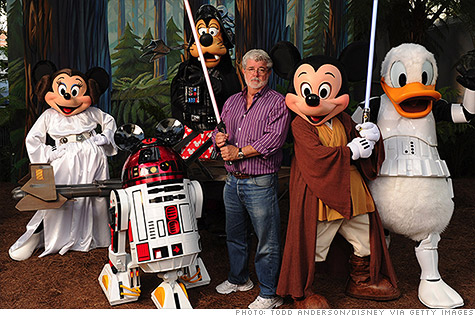
Enter Swampy, an alligator and leading character in Disney's successful smartphone game app Where's My Water.
In addition to the success of the game app, Swampy's entered Disney's merchandising efforts.
Source - How Videogames are Changing Disney, Wired.com
Of course, Disney's involvement in videogaming isn't exactly new. Disney began licensing some of its characters for use in videogames some thirty years ago, and had established its own in-house gaming unit in 1988. However, as Kohler notes, those efforts were aimed at bringing existing characters into the gaming market rather than creating new characters. Even 2010's hit Epic Mickey brings back Oswald the Lucky Rabbit, Mickey's precursor. Disney lost the rights to Oswald quite early, which led to his creation of Mickey Mouse and contributing to Disney's famous (or infamous) emphasis - bordering on obsession - on keeping and maintaining IP rights.
Enter Swampy, an alligator and leading character in Disney's successful smartphone game app Where's My Water.
In addition to the success of the game app, Swampy's entered Disney's merchandising efforts.
“This is maybe the first time in Disney’s history where we have a character that was created solely for a videogame product that is now branching in other directions,” says Disney Interactive Media Group vice president Bill Roper.Roper hopes that the unit's Originals group can produce new worlds and characters that can tradition into other markets - shows for the Disney Channel, animated features, and more -
“There’s been discussions about, can we have Swampy be a walkaround character somewhere? For example, in Orlando in the water parks?”It doesn't hurt that Disney's next big animation release, Wreck-It Ralph, is a nostalgic paen to classic arcade games (trailer). I'd look for a lot more gaming characters and worlds cross over to other markets.
Source - How Videogames are Changing Disney, Wired.com
Disney's Latest Big Deal
Of course, you've probably already heard about is Disney's announcement yesterday of its deal to purchase Lucasfilm Ltd. for j$4.05 billion. About half of the purchase price will be paid in cash, half in Disney stock - and the stock component will make George Lucas, sole owner of Lucasfilm, the second largest shareholder in Disney.
The announcement was only the most recent of a number of business moves that should help cement Disney's pre-eminance in a range of creative content-based industries - the acquisition of Capital Cities/ABC through merger in 1996 (which included ESPN), comic book publisher Marvel in 2009, producers of a number of children's TV programs (Muppets, DIC, Sabane (Power Rangers)), and Pixar in 2006. The move seems to cement Disney's preeminence in the superhero and Sci-Fi/Fantasy market.
While the decision of George Lucas to sell Lucasfilm and withdraw from the business came as a surprise, the sale to Disney shouldn't have been. Both Lucas and Disney are considered to be among the smartest media business operators who have consistently taken a long-term approach to growing their business rather than focusing on short-term profit maximization. Both also shared an awareness that good creative content was exploitable beyond the initial media product release.
Disney in particular has had a long tradition of exploitation of creative intellectual properties, epitomized by Disneyland (a theme park incorporating Disney characters), the first movie studio to use television to further promote and exploit its movies and theme park (starting with the Disneyland series in 1954), long term recognition and exploitation of licensing and merchandizing its creations, and its pioneering distribution strategy for its animated movies. Disney recognized quite early that the primary audience for many of its animated features were children, and that that market had some distinctive characteristics - mainly that children grow up, while others are born to replace them. Disney recognized that he could exploit that feature by re-releasing animated features every 7-10 years to a new audience; and until the rise of recordable media that was Disney's film distribution strategy.
George Lucas was also known for his innovative business practices as well as his creative acumen. Lucas' first big success came from the film American Graffiti, both as a hit film and as an innovative financial arrangement. Rather than take a big salary and/or a percentage of profits - the industry norm - Lucas got a deal that provided him less upfront money, but a smaller percentage of the film's gross revenues. In essence, Lucas bet on his own success, and American Graffiti, produced at a cost of $775,000, went on to earn more than $200 million in box office and home video sales alone. Lucas' earnings allowed him to create Lucasfilm in 1971, special effects powerhouse Industrial Light & Magic, and largely self-finance Star Wars; and once again Lucas struck an innovative distribution deal with Fox - once again Lucas took a smaller salary in return for keeping licensing and merchandizing rights for the Star Wars creative franchise. Star Wars became the highest grossing film in the industry's history (until surpassed by E.T. five years later), with global earnings of more than $775 million to date. Those earnings allowed Lucas to self-finance the rest of the Star Wars and Indiana Jones films, while insisting on retaining licensing and merchandising rights. Lucas quipped that Disney's long history of protecting, nurturing, and - yes - exploiting, of its creative content and intellectual property meant that he could trust them to take good care of his signature creative franchises.
In an interview he gave to fan magazine Empire earlier this year, Lucas had indicated he wanted to move away from the corporate side.
Sources - Disney to buy "Star Wars" producer for $4.05 billion, Reuters
Disney to Buy Lucasfilm for $4.05 Billion; New 'Star Wars' Movie Set for 2015, The Hollywood Reporter
Disney Buys Lucasfilm for $4B, Targets Star Wars: Episode 7 for 2015. Wired.com
“For the past 35 years, one of my greatest pleasures has been to see Star Wars passed from one generation to the next,” Lucas, the sole shareholder of Lucasfilm, said in a press release announcing the acquisition. “It’s now time for me to pass Star Wars on to a new generation of filmmakers.”
“Lucasfilm reflects the extraordinary passion, vision and storytelling of its founder, George Lucas,” Disney chairman and CEO Bob Iger said in a statement. “This transaction combines a world-class portfolio of content including Star Wars, one of the greatest family entertainment franchises of all time, with Disney’s unique and unparalleled creativity across multiple platforms, businesses and markets to generate sustained growth and drive significant long-term value.”And speaking of the Star Wars franchise, Disney announced that Episode 7 of Star Wars is forthcoming (scheduled for release in 2015), with other Star Wars franchise films to follow every 2-3 years.
The announcement was only the most recent of a number of business moves that should help cement Disney's pre-eminance in a range of creative content-based industries - the acquisition of Capital Cities/ABC through merger in 1996 (which included ESPN), comic book publisher Marvel in 2009, producers of a number of children's TV programs (Muppets, DIC, Sabane (Power Rangers)), and Pixar in 2006. The move seems to cement Disney's preeminence in the superhero and Sci-Fi/Fantasy market.
While the decision of George Lucas to sell Lucasfilm and withdraw from the business came as a surprise, the sale to Disney shouldn't have been. Both Lucas and Disney are considered to be among the smartest media business operators who have consistently taken a long-term approach to growing their business rather than focusing on short-term profit maximization. Both also shared an awareness that good creative content was exploitable beyond the initial media product release.
Disney in particular has had a long tradition of exploitation of creative intellectual properties, epitomized by Disneyland (a theme park incorporating Disney characters), the first movie studio to use television to further promote and exploit its movies and theme park (starting with the Disneyland series in 1954), long term recognition and exploitation of licensing and merchandizing its creations, and its pioneering distribution strategy for its animated movies. Disney recognized quite early that the primary audience for many of its animated features were children, and that that market had some distinctive characteristics - mainly that children grow up, while others are born to replace them. Disney recognized that he could exploit that feature by re-releasing animated features every 7-10 years to a new audience; and until the rise of recordable media that was Disney's film distribution strategy.
George Lucas was also known for his innovative business practices as well as his creative acumen. Lucas' first big success came from the film American Graffiti, both as a hit film and as an innovative financial arrangement. Rather than take a big salary and/or a percentage of profits - the industry norm - Lucas got a deal that provided him less upfront money, but a smaller percentage of the film's gross revenues. In essence, Lucas bet on his own success, and American Graffiti, produced at a cost of $775,000, went on to earn more than $200 million in box office and home video sales alone. Lucas' earnings allowed him to create Lucasfilm in 1971, special effects powerhouse Industrial Light & Magic, and largely self-finance Star Wars; and once again Lucas struck an innovative distribution deal with Fox - once again Lucas took a smaller salary in return for keeping licensing and merchandizing rights for the Star Wars creative franchise. Star Wars became the highest grossing film in the industry's history (until surpassed by E.T. five years later), with global earnings of more than $775 million to date. Those earnings allowed Lucas to self-finance the rest of the Star Wars and Indiana Jones films, while insisting on retaining licensing and merchandising rights. Lucas quipped that Disney's long history of protecting, nurturing, and - yes - exploiting, of its creative content and intellectual property meant that he could trust them to take good care of his signature creative franchises.
"I really wanted to put the company somewhere in a larger entity which could protect it," (Lucas) said.
In an interview he gave to fan magazine Empire earlier this year, Lucas had indicated he wanted to move away from the corporate side.
"I'm moving away from the company, I'm moving away from all my businesses, I'm finishing all my obligations and I'm going to retire to my garage with my saw and hammer and build hobby movies.There's a couple of lessons here for creative content producers and media outlets in the digital age. Both Disney and Lucas recognized that the value of creative content is not limited to its initial production and release, but can be translated into value in other markets; both were adept at innovative exploitation of that value; and both recognized the importance of keeping and protecting intellectual property rights. All key lessons for content producers in a digital media environment.
"I've always wanted to make movies that were more experimental in nature, and not have to worry about them showing in movie theaters."
Sources - Disney to buy "Star Wars" producer for $4.05 billion, Reuters
Disney to Buy Lucasfilm for $4.05 Billion; New 'Star Wars' Movie Set for 2015, The Hollywood Reporter
Disney Buys Lucasfilm for $4B, Targets Star Wars: Episode 7 for 2015. Wired.com
Thursday, September 6, 2012
EPIX Shifts Content to Amazon
EPIX, a consortium of major movie studios and distributors, marked the end of its exclusive content licensing deal with Netflix by inking a content licensing deal with Amazon. Amazon's announcement of the deal comes on the heels of a series of content licensing arrangements with MGM and Warner Brothers.
"We are investing hundreds of millions of dollars to expand the Prime Instant Video library for our customers. We have now more than doubled this selection of movies and TV episodes to over 25,000 titles in just under a year," (said) Bill Carr, vice president of video and music at Amazon,As Amazon continues to expand its streaming business and content archive - and is joined by Hulu+, Blockbuster On Demand (affiliated with Dish Network), VUDU (affiliated with WalMart), Google TV (through its Android Store), Apple's iTunes Store, and YouTube movie rentals - Netflix faces an increasingly competitive content marketplace. And one where content owners are likely to want to have their content available through multiple channels, rather than making exclusive deals. A more competitive market can be good for consumers, but not as beneficial for firms that had virtual monopolies (and was able to use that monopoly power to its advantage.
It's not surprising that Netflix's share prices dropped 10% with the Amazon announcement.
Source - Amazon Adds EPIX Content to Prime Instant Video, Prompting Netflix Slide, Online Video Daily
Wednesday, August 29, 2012
Licensing Photos for/from Social Media
The copyright for a photograph belongs to the person who took it, and for most photo-sharing sites, you retain the copyright while licensing the site to post and share it. However, without a definitive indication of downstream licensing, the consequent use of the photo may be problematic. (And no, the fact that a photo is shared online does not mean its licensed to use by everyone under all conditions).
If you're a professional, or want to be one, you'll need to explore the various options for licensing. The American Society of Media Photographers has a good online Licensing Guide that outlines copyrights for photos and the various licensing options.
On the other hand, if you just want to share your photos with others without having to develop specific licensing language, there's Creative Commons licensing language. Creative Commons (CC) is a nonprofit organization which has developed a set of standard licensing statements that indicate what uses you want to allow others to make of your content, while confirming your ownership of the copyright.. They basically outline three aspects of downstream use to license - whether you want the work to be attributed to you; whether you want others to be able to manipulate (change) the work; and whether you want to allow your work to be used for commercial purposes.
The photo-sharing site Flickr allows you to set a basic (default) Creative Commons license for all your photos uploaded to Flickr. It also allows you to change the license for specific photos through the "Owner Settings" option. More than 200 million photos on Flickr bear Creative Commons licenses.
There's also a way to easily attach Creative Commons licenses to photos uploaded to Instagram. I am CC is an add-on service that allows Instagram users to sign up under their Instagram account, select the CC license they prefer, and then every photo uploaded to Instagram for the next three months will carry that license. In a nice move, I am CC asks you to renew the service every three months as a reminder of the license choice.
If you're looking for photos to use, there are several sites that aggregate images by Creative Commons license type. There's also a number of useful online guides for how to properly use and reference those images.
Regardless of whether or not you're a professional, it's smart to get into the habit of thinking about whether you want others to be able to use your work, and under what conditions. So why not start with the vacation photos you're sharing with friends and family.
And if you see a great photo online you want to use, save yourself from the possibility of a copyright violation take-down notice, and pay attention to an image's licensing and follow them.
Sources & Resources
How to License Your Instagram Photos on Creative Commons, Wired
I-Am-CC website
Creative Commons images and you: a quick guide for image users, Ars Technica
Using Creative Commons Images from Flickr, SquidooHQ
American Society of Media Photographers Licensing Guide
Creative Commons website
If you're a professional, or want to be one, you'll need to explore the various options for licensing. The American Society of Media Photographers has a good online Licensing Guide that outlines copyrights for photos and the various licensing options.
On the other hand, if you just want to share your photos with others without having to develop specific licensing language, there's Creative Commons licensing language. Creative Commons (CC) is a nonprofit organization which has developed a set of standard licensing statements that indicate what uses you want to allow others to make of your content, while confirming your ownership of the copyright.. They basically outline three aspects of downstream use to license - whether you want the work to be attributed to you; whether you want others to be able to manipulate (change) the work; and whether you want to allow your work to be used for commercial purposes.
The photo-sharing site Flickr allows you to set a basic (default) Creative Commons license for all your photos uploaded to Flickr. It also allows you to change the license for specific photos through the "Owner Settings" option. More than 200 million photos on Flickr bear Creative Commons licenses.
There's also a way to easily attach Creative Commons licenses to photos uploaded to Instagram. I am CC is an add-on service that allows Instagram users to sign up under their Instagram account, select the CC license they prefer, and then every photo uploaded to Instagram for the next three months will carry that license. In a nice move, I am CC asks you to renew the service every three months as a reminder of the license choice.
If you're looking for photos to use, there are several sites that aggregate images by Creative Commons license type. There's also a number of useful online guides for how to properly use and reference those images.
Regardless of whether or not you're a professional, it's smart to get into the habit of thinking about whether you want others to be able to use your work, and under what conditions. So why not start with the vacation photos you're sharing with friends and family.
And if you see a great photo online you want to use, save yourself from the possibility of a copyright violation take-down notice, and pay attention to an image's licensing and follow them.
Sources & Resources
How to License Your Instagram Photos on Creative Commons, Wired
I-Am-CC website
Creative Commons images and you: a quick guide for image users, Ars Technica
Using Creative Commons Images from Flickr, SquidooHQ
American Society of Media Photographers Licensing Guide
Creative Commons website
Tuesday, September 27, 2011
Britain's Labour Party proposal to license journalists
At this week's Labour Party convention in Britain, party leaders are putting forth a proposal for licensing journalists through a professional body. Shadow Culture Minister Ivan Lewis will propose "system of independent regulation including proper like-for-like redress which means mistakes and falsehoods on the front page receive apologies and retraction on the front page".
Taking the decidedly illiberal approach even further, the proposal is said to call for the licensing body to have the authority to prohibit unlicensed journalists, and "licensed" journalists found in breach of an unspecified code of conduct, from practicing "journalism." Cory Doctorow's story on the proposal gives some examples of "journalism" being discussed -
Regrettably, that seems to be much of what passes for proposals for speech regulation these days - finding ways to silence the speech rights of critics. (The gall of people - wanting to contribute to and possibly influence political discourse). Defenders of free speech always hope that such proposals generate laughter and derision rather than cheers of support. But it seems that the more we open channels for discussion, the more those in power regret having to listen.
Sources: UK Labour Party wants journalism licenses, will prohibit "journalism" by people who are "struck off" the register of licensed journalists, boingboing
Phone hacking fallout: Labour plans tighter media regulation, Guardian.co.uk
Taking the decidedly illiberal approach even further, the proposal is said to call for the licensing body to have the authority to prohibit unlicensed journalists, and "licensed" journalists found in breach of an unspecified code of conduct, from practicing "journalism." Cory Doctorow's story on the proposal gives some examples of "journalism" being discussed -
Given that "journalism" presently encompasses "publishing accounts of things you've seen using the Internet" and "taking pictures of stuff and tweeting them" and "blogging" and "commenting on news stories," this proposal is even more insane than the tradition "journalist licenses" practiced in totalitarian nations.The proposal from what used to be the more liberal of Britain's major parties is identified as a "message for Mr Murdoch", and specifically mentions the phone hack scandal at Murdoch's News of the World (the British equivalent of the US's National Enquirer), and decries alleged attempts to have political influence.
Regrettably, that seems to be much of what passes for proposals for speech regulation these days - finding ways to silence the speech rights of critics. (The gall of people - wanting to contribute to and possibly influence political discourse). Defenders of free speech always hope that such proposals generate laughter and derision rather than cheers of support. But it seems that the more we open channels for discussion, the more those in power regret having to listen.
Sources: UK Labour Party wants journalism licenses, will prohibit "journalism" by people who are "struck off" the register of licensed journalists, boingboing
Phone hacking fallout: Labour plans tighter media regulation, Guardian.co.uk
Saturday, September 24, 2011
CBS anticipates big "reverse compensation" payday
Until fairly recently, one stable revenue stream for local TV broadcasters was the compensation that networks paid them for carrying network programming. In the recent competitive environment, the networks began reducing compensation levels, or dropped compensation fees totally, as network-affiliate contracts came up for renegotiation. Networks have talked about the next step - requiring local stations to pay networks for the rights to carry programming, just as cable networks get paid by cable and DBS operators. As stations started to collect retransmission fees from cable and MSO, the networks started claiming that the value came from their programming, and thus should be passed through to networks. Local stations, particularly in smaller markets, are in a bad spot - television programming is expensive and networks supply a lot of what stations air. They are likely to acquiesce to network demands, as long as the networks are smart and keep initial fees on the low side. The stage is set for the next round of affiliation contracts to have carriage fees flowing from stations to networks.
While most of the big CBS-affilate group contracts don't come up for renewal for a couple of years, their approach will be to ask for "reverse compensation." CBS has reached an agreement with a group of small market stations that reportedly includes stations paying for network programming, and is said to be near a deal with a larger station group that will also include "reverse compensation." CBS CEO Les Moonves has indicated that station fees for carrying network programming could generate as much as $450 million in added revenues a year, as it gets phased in.
Source - CBS's Moonves Sees Gold In Reverse Comp, TV Newscheck
While most of the big CBS-affilate group contracts don't come up for renewal for a couple of years, their approach will be to ask for "reverse compensation." CBS has reached an agreement with a group of small market stations that reportedly includes stations paying for network programming, and is said to be near a deal with a larger station group that will also include "reverse compensation." CBS CEO Les Moonves has indicated that station fees for carrying network programming could generate as much as $450 million in added revenues a year, as it gets phased in.
Source - CBS's Moonves Sees Gold In Reverse Comp, TV Newscheck
Tuesday, July 19, 2011
NBCU debuts online Archive
NBCU has opened an online archive of clips and content, at NBCUniversalArchives.com. The site contains content from a number of studios and channels, some going back more than 70 years. The site, while providing free previews, is set up to serve primarily as a licensing mechanism. This follows on the Discovery Networks earlier announcement (see this post) that they were making much of their stock footage available through an e-commerce site.
Both are good examples of two of the major business strategies for media producers - find additional ways to monetize your content, and focus on licensing as a mechanism for future revenue streams.
Source: "NBCU puts Archives Content Online" Media Daily News
Both are good examples of two of the major business strategies for media producers - find additional ways to monetize your content, and focus on licensing as a mechanism for future revenue streams.
Source: "NBCU puts Archives Content Online" Media Daily News
Monday, March 28, 2011
"TV Everywhere" - The other issue
In the previous post I talked about the authentication issue behind "TV Everywhere."
This one addresses another aspect of IP rights and licensing - do the cable and DBS operators actually have the right to distribute programming of independent cable networks via alternative delivery systems?
Responding to Time Warner Cable's recent announcement that it will distribute 32 live channels through an iPad app that will only work in customer's homes, a number of networks (including Scripps Networks Interactive, Viacom, and Discovery) have questioned whether or not Time Warner has the right to do so.
At issue is what rights are in current contracts - which are generally limited to "cable television" or "DBS service." And it's not that unusual a debate - when new uses or distribution channels come along, there is often a lag in terms of writing them in contracts (one classic example is that when the old TV show WKRP originally licensed the music for the show, they only licensed it for TV - so the show wasn't available on DVD until they renegotiated music rights for that - and in some cases had to change songs when rights weren't available). Does Time Warner have only the specific rights in the contract language with networks, or do they have the right to send the programming to "any device in the home" through a secure network (whether cable or WiFi).
The courts will eventually decide that issue. But in the meantime, individuals retain their rights to time- and place-shift programming they legally access (through earlier court decisions regarding copyright's "Fair Use")
Source."New Cable Fight at Hand" Wall Street Journal online
This one addresses another aspect of IP rights and licensing - do the cable and DBS operators actually have the right to distribute programming of independent cable networks via alternative delivery systems?
Responding to Time Warner Cable's recent announcement that it will distribute 32 live channels through an iPad app that will only work in customer's homes, a number of networks (including Scripps Networks Interactive, Viacom, and Discovery) have questioned whether or not Time Warner has the right to do so.
At issue is what rights are in current contracts - which are generally limited to "cable television" or "DBS service." And it's not that unusual a debate - when new uses or distribution channels come along, there is often a lag in terms of writing them in contracts (one classic example is that when the old TV show WKRP originally licensed the music for the show, they only licensed it for TV - so the show wasn't available on DVD until they renegotiated music rights for that - and in some cases had to change songs when rights weren't available). Does Time Warner have only the specific rights in the contract language with networks, or do they have the right to send the programming to "any device in the home" through a secure network (whether cable or WiFi).
The courts will eventually decide that issue. But in the meantime, individuals retain their rights to time- and place-shift programming they legally access (through earlier court decisions regarding copyright's "Fair Use")
Source."New Cable Fight at Hand" Wall Street Journal online
Can Adobe make "TV Everywhere" real?
The biggest obstacle in getting commercial content online has been fear of the "free rider" (an economic term refering to those who can get the value of a good without paying for it). That and piracy, anyway.
For the last year or so, cable networks, cable MSOs and DBS, have been touting their "Next Big Thing" - TV Everywhere. At the heart of the concept is the idea that you can watch any programming you've paid for (through your cable or DBS subscription), on any screen (TV, computer, laptop, mobile), anywhere, and any time. What's holding it up has been the problem of making sure that you've paid your subscription when you access content (and it's you, and not your friend in Utah).
Adobe recently announced "Adobe Pass," which they claim will provide a secure authentication system to provide access to content across a range of computer and mobile operating systems. A benefit in that it promises to use a single user sign-in, and not require additional downloads or authentication with each device.
Such a system would help remove one roadblock to "TV Everywhere." Now if they could only fix that piracy issue...
Source: "Adobe Pass Wants to Turn On TV Everywhere," Vidblog
For the last year or so, cable networks, cable MSOs and DBS, have been touting their "Next Big Thing" - TV Everywhere. At the heart of the concept is the idea that you can watch any programming you've paid for (through your cable or DBS subscription), on any screen (TV, computer, laptop, mobile), anywhere, and any time. What's holding it up has been the problem of making sure that you've paid your subscription when you access content (and it's you, and not your friend in Utah).
Adobe recently announced "Adobe Pass," which they claim will provide a secure authentication system to provide access to content across a range of computer and mobile operating systems. A benefit in that it promises to use a single user sign-in, and not require additional downloads or authentication with each device.
Such a system would help remove one roadblock to "TV Everywhere." Now if they could only fix that piracy issue...
Source: "Adobe Pass Wants to Turn On TV Everywhere," Vidblog
Tuesday, March 8, 2011
In search for new revenues, Discovery offers Archive
Discovery Communications is making its footage archive, comprising more than 100,000 hours of content, available to external production companies. It's new content licensing business, DiscoveryAccess.com, is an early move in the shift from sales to licensing as the source of ongoing revenue streams.
Source: "Discovery Offers Archive Via e-Commerce Site", MediaDailyNews
Subscribe to:
Posts (Atom)