Several suitors have been pursuing Time Warner over the last few months. It looks like Comcast is the likely winner, offering to purchase the second-largest cable operator for $45 billion.
But the deal is more about broadband than cable. The addition of Time Warner broadband customers would give Comcast more than 33 million broadband subscribers and what amounted to $18 billion in subscription revenues in 2013. That's about half of current broadband subscribers. And broadband revenues are growing faster than cable video, with higher profit margins (around 90 percent). The cable side, in fact is in trouble, losing customers and facing and increasing profit squeeze.
The deal is also about positioning Comcast for the future and the likely radical transformation of the video signal delivery business. Local stations and cable networks keep pushing licensing fees higher and higher in search of revenues to replace stagnant (although still quite large) TV advertising dollars. And then there's the continuing advances in IP video streaming, and changing audience habits. Comcast is one of the few TV companies doing R&D - in fact, they have the largest R&D presence in the industry - and much of that effort is geared towards positioning the firm for the developing IP streaming, digital broadcast innovations (such as Aereo and multicasting), and mobile video explosions.
Those under 25 are spending less time watching traditional live TV - considerably less. Delayed viewing and consumption of IP-video streams from an increasing variety of high-quality online video services (i.e. Netflix), as well as gaming, are eating up an increasing share of viewer's attention. Advances in mobile, in the meantime, are creating new opportunities for TV viewing - although delays in implementing "TV Everywhere" has slowed cable's ability to tap into that new market. Experts are now expecting a major transformation in TV viewing, even while unsure just what kind of TV market will eventually emerge from the growing chaos.
I'd be remiss, though, if I didn't point out the regulatory roadblocks in the way of the merger. After all, the deal would combine the two largest cable system operators in the U.S., each of whom also owns a wide range of other media outlets, including broadcast networks, cable networks, film & video production and distribution outlets, publishing, etc. Both are often listed among the world's 10 largest media conglomerates. While there's not a lot of direct competition between the two cable and broadband operations (they're more local monopolies, increasingly challenged by telco and broadband operators like AT&T, Verizon, and Google), media is an area where just being large is considered problematic. More problematic on an anti-competitive basis would be many of the other media components, which are arguably more directly competitive with one another. And then there's the issue of Comcast's data caps and their interference with (slowing down) of unaffiliated video streaming services - the one glaring anti-competitive behavior fueling Network Neutrality debates. There's lots of reasons the deal might not be approved and consummated.
Even if the FTC doesn't knock the deal down in terms of sheer size and concentration, there will need to be a lot of negotiations and deals to meet the antitrust concerns of all the various markets and media elements in play.
(Let me also point interested readers to Ken Doctor's analysis of the deal and the fundamental issues confronting cable systems like Comcast and Time Warner Cable. The Newsonomics of Comcast's deal and our digital wallets)
Sources - If Comcast buys Time Warner, TV could change forever, GigaOm
The Comcast-Time Warner Cable merger is not a marriage made to last, The Guardian
edited to add last graph and link (2/17/14)
This blog is affiliated with a course at the School of Journalism & Electronic Media at the University of Tennessee, Knoxville. I'll try to use it to share relevant news and information with the class, and anyone else who's interested.
Showing posts with label media ownership. Show all posts
Monday, February 17, 2014
History of US Cable Concentration: Chart
In the wake of the proposed takeover of TimeWarner Cable (#2) by Comcast (#1) -
Source: Chart: Two Decades of Cable-TV Consolidation
Thursday, October 10, 2013
Latest Research on Online Video 3: Magid Connected Culture report
Three research reports on aspects of video/TV viewing and use have been released recently.
A nationwide study from Frank N. Magid Associates characterizes the role of mobile devices as "the beating heart of content and commerce." Perhaps a bit of hyperbole, but the rapid adoption of smartphones and tablets, and the increased availability of compelling high-quality content is certainly impacting, and shifting, audience viewing behaviors. The audience for mobile TV and video is there - the report finds 74% of U.S. "mobile consumers" have a smartphone, and 52% use tablets. 71% of tablet viewers, and 45% of smartphone viewers, now watch long-form TV, movies, and sports content on their devices.
Perhaps the most striking indication of that shift is the finding that digital and mobile devices are becoming the dominant source of entertainment for the 18-34 age group: smartphones/tablets account for 35%, PCs/laptops at 34%, while traditional television trails at 21%.
The Heartbeat of Connected Culture - Magid Smartphone and Tablet Study 2013
A nationwide study from Frank N. Magid Associates characterizes the role of mobile devices as "the beating heart of content and commerce." Perhaps a bit of hyperbole, but the rapid adoption of smartphones and tablets, and the increased availability of compelling high-quality content is certainly impacting, and shifting, audience viewing behaviors. The audience for mobile TV and video is there - the report finds 74% of U.S. "mobile consumers" have a smartphone, and 52% use tablets. 71% of tablet viewers, and 45% of smartphone viewers, now watch long-form TV, movies, and sports content on their devices.
Perhaps the most striking indication of that shift is the finding that digital and mobile devices are becoming the dominant source of entertainment for the 18-34 age group: smartphones/tablets account for 35%, PCs/laptops at 34%, while traditional television trails at 21%.
"Consumers have made the clear leap into mobile long-form," says Andrew Hare, Magid Research Director. "Beyond just TV and traditional video consumption, however, the visual culture has taken over with the growth of Instagram, Tumblr, Pinterest, Snapchat, and Vine showing consumers increasingly prefer to communicate through images and video."Sources - 'Mobile is the new TV', finds Magid study, Broadcast Engineering
The Heartbeat of Connected Culture - Magid Smartphone and Tablet Study 2013
Tuesday, August 6, 2013
Print News Fire Sales: Post, Globe, Newsweek (again)
Three big sales over the weekend in the news field.
First was the report that the New York Times sold The Boston Globe to the owner of the Boston Red Sox baseball team, for $70 million. Considering that the Times bought the Globe for $1.1 billion in 1993 (before the newspaper business started crashing), that's quite a loss in value. A 93% drop in value in 20 years. But a look at some of the details makes it look even worse. The sale of the Globe includes a couple of small regional papers and related real estate holdings; estimates place the value of the real estate alone at nearly $70 million. More critically, the sale did not include pension liabilities of $100 million, which the Times will retain. As such, what the Times got won't even cover its existing pension liabilities for the Globe's employees.
From the viewpoint of the Times, they got rid of a distraction and a drain on corporate resources. The Globe lost about half its readership in the last ten years, and reportedly, its advertising revenue fell a further 10% in the first half of this year. This may help the Times in their stated goal of refocusing on building the primary Times brand and growing online revenues. And it helps a bit with those pesky pension liabilities.
It's also been reported that the Times turned down three higher bids for the Globe.
Newsweek has another owner, as well. The Washington Post sale of Newsweek for $1 was one of the first of the news media fire sales. After that initial sale to Sidney Harman in 2010, ownership shifted to Barry Diller through a partnership, and the Newsweek staff and brand was integrated into online news site The Daily Beast. Ownership later terminated the print version, refocusing Newsweek as a semi-regular focused section within the Daily Beast website. Portents of another sale surfaced when Diller publicly indicated that acquiring Newsweek was a mistake, and its merger into the Daily Beast a failure.
Last weekend, IBT Media, publisher of online global news site International Business Times, agreed to acquire the Newsweek brand.
Then came yesterday's unexpected blockbuster - the sale of the Washington Post to Jeff Bezos, founder and CEO of Amazon. The announced price of $250 million certainly tops recent newspaper sales, but is also significantly less than what the Post was worth ten to twenty years ago (one analyst indicated that just 10 years ago, the Post would have been worth $2 billion). From a financial "multiples" perspective, the announced price is less than half of the Post's 2012 revenues of $582 million; conversely, it's 5 times annual losses. Both multiples are significantly outside industrial norms (I used to do broadcast M&A evaluations, where prices were more typically 3-5 times annual revenues, or 8-12 times annual profits).
Furthermore, unlike most recent deals, the sale is limited to the newspaper, the Post website, some suburban papers and affiliated publications, and two printing shops. It does not include the Post's current building or other DC area real estate, other Post Co. owned media (broadcast stations, online magazines Slate and The Root, and the international magazine Foreign Policy), or other Post Co. properties.
As such, it does seem that Bezos may have paid a bit of a premium for the Post - for the prestige and influence of one of the U.S.'s preeminent media outlets. As for the parent Post Co., it gets to shed that portion of its business that's been a significant drain on the company's profits and had little indication of a rapid return to profitability. As for Bezos, he announced that Post ownership will fall under a new holding company (Explore Holdings) separate from Amazon, and that current editorial and management staff will continue in place after the sale is finalized (at some point in the next two months). Since most analysts don't see much opportunity for a quick turn-around in profits for the Post, that's probably the smart move at this time.
In all three cases, sales to innovative, accomplished, and successful businessmen may be the best move for organizations facing radical transformation of their traditional markets. They're likely to be more willing to explore and exploit new markets, and/or developing opportunities for added revenues. At least their focus won't be on trying to hold onto past glories.
Sources - 7 things to know about The Boston Globe's sale to John Henry, Poynter
Newsweek Magazine Sold to IBT Media, The Daily Beast
Washington Post sale: Details of Bezos deal, Washington Post
First was the report that the New York Times sold The Boston Globe to the owner of the Boston Red Sox baseball team, for $70 million. Considering that the Times bought the Globe for $1.1 billion in 1993 (before the newspaper business started crashing), that's quite a loss in value. A 93% drop in value in 20 years. But a look at some of the details makes it look even worse. The sale of the Globe includes a couple of small regional papers and related real estate holdings; estimates place the value of the real estate alone at nearly $70 million. More critically, the sale did not include pension liabilities of $100 million, which the Times will retain. As such, what the Times got won't even cover its existing pension liabilities for the Globe's employees.
From the viewpoint of the Times, they got rid of a distraction and a drain on corporate resources. The Globe lost about half its readership in the last ten years, and reportedly, its advertising revenue fell a further 10% in the first half of this year. This may help the Times in their stated goal of refocusing on building the primary Times brand and growing online revenues. And it helps a bit with those pesky pension liabilities.
It's also been reported that the Times turned down three higher bids for the Globe.
Newsweek has another owner, as well. The Washington Post sale of Newsweek for $1 was one of the first of the news media fire sales. After that initial sale to Sidney Harman in 2010, ownership shifted to Barry Diller through a partnership, and the Newsweek staff and brand was integrated into online news site The Daily Beast. Ownership later terminated the print version, refocusing Newsweek as a semi-regular focused section within the Daily Beast website. Portents of another sale surfaced when Diller publicly indicated that acquiring Newsweek was a mistake, and its merger into the Daily Beast a failure.
Last weekend, IBT Media, publisher of online global news site International Business Times, agreed to acquire the Newsweek brand.
"We are thrilled to welcome this iconic brand and global news property into our portfolio. We believe in the Newsweek brand and look forward to growing it, fully transformed to the digital age," said Etienne Uzac, the co-founder and CEO of IBT Media in a press release.Terms of the deal were not announced at the time, but Newsweek was starting to tap into growing online ad revenues as a digital publication, and continued to bring in revenue from licensing its brand outside the U.S. The internationally recognized brand of Newsweek should have a positive impact on IBT brands.
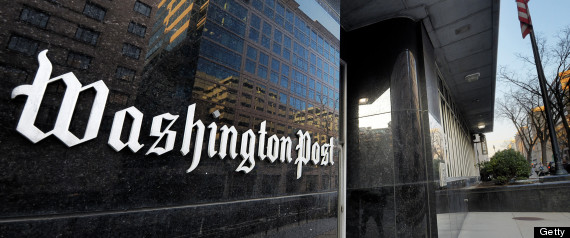
Furthermore, unlike most recent deals, the sale is limited to the newspaper, the Post website, some suburban papers and affiliated publications, and two printing shops. It does not include the Post's current building or other DC area real estate, other Post Co. owned media (broadcast stations, online magazines Slate and The Root, and the international magazine Foreign Policy), or other Post Co. properties.
As such, it does seem that Bezos may have paid a bit of a premium for the Post - for the prestige and influence of one of the U.S.'s preeminent media outlets. As for the parent Post Co., it gets to shed that portion of its business that's been a significant drain on the company's profits and had little indication of a rapid return to profitability. As for Bezos, he announced that Post ownership will fall under a new holding company (Explore Holdings) separate from Amazon, and that current editorial and management staff will continue in place after the sale is finalized (at some point in the next two months). Since most analysts don't see much opportunity for a quick turn-around in profits for the Post, that's probably the smart move at this time.
In all three cases, sales to innovative, accomplished, and successful businessmen may be the best move for organizations facing radical transformation of their traditional markets. They're likely to be more willing to explore and exploit new markets, and/or developing opportunities for added revenues. At least their focus won't be on trying to hold onto past glories.
Sources - 7 things to know about The Boston Globe's sale to John Henry, Poynter
Newsweek Magazine Sold to IBT Media, The Daily Beast
Washington Post sale: Details of Bezos deal, Washington Post
Monday, November 12, 2012
FCC to move on cross-ownership
The 1996 Telecommunications Act requires the FCC to periodically its ownership rules, primarily to consider whether the existing limits can be relaxed or dropped. The FCC's actually a cycle or two behind schedule, due in part to the inevitable legal challenges that surface if they change any of the previous rules. Still, the word in DC is that the FCC is planning on releasing a formal Notice of Proposed Rulemaking on ownership rules before the end of the year. That's normally the last step before formally adopting the proposed rule changes.
The last formal proposals included dropping the rule against owning a TV station and radio stations in the same market, and loosen restrictions against owning both TV stations and newspapers in the same market. The FCC is expected to leave its local market ownership limits for radio and TV as they are. And if past history is any indication, they might propose some minor increases to the current national ownership limits for radio and TV. The FCC has also floated a proposal for dropping the national ownership limits for cable - but the negative reaction to that proposal at that time suggests that they may try raising cap limits substantially rather than dropping them entirely.
While there's likely to be the same hue and cry from various interest groups to any proposed changes that relax ownership limits, I have to say that they make sense - particularly if the rationale is to preserve existing channels and service. The FCC's worked hard to keep local radio stations on the air, and with the coming economic changes facing smaller TV stations, allowing radio-TV crossownership in local markets might keep stations on the air. On the other hand, relaxing TV-newspaper ownership limits (in top markets) are designed more to keep newspapers alive, letting TV station profits help subsidize failing newspapers. As for concerns about concentration, national caps for broadcasters were mostly irrelevant anyway, as stations operate in local markets, not in national markets - and the FCC's likely preservation of local market ownership limits is what's important in that regard.
The cable national caps issue is probably the most controversial. Initially, cable systems were local monopolies in almost all communities, and the national caps were there to protect against cable MSO's using their monopoly power against cable networks, equipment manufacturers, and advertisers. Since then, however, DBS systems have gone national, AT&T and Verizon have been implementing their own multichannel video programming delivery services (and with Google just starting), and online video streaming services have taken off. It's increasingly difficult to make the case that cable systems are local monopolies (here in Knoxville, for instance, we have access to 5 multichannel providers).
It's also becoming apparent that platform-specific ownership limits aren't that helpful in controlling concentration and monopoly power, as two of the top 3 MVPDS systems (in terms of subscribers) are DBS systems, and another 2 of the top 10 are telco MVPDS. On the other hand, one of the problems that the small local cable operators face is the cost of upgrading their systems to be competitive. The larger cable MSOs have the know-how and access to capital that could help smaller cable systems to upgrade their systems to be competitive with other video delivery platforms. Lifting caps, particularly if targeted towards acquisitions or partnerships with small systems, could be beneficial for viewers and communities.
I look forward to the new ownership proposals, and to the debate they'll engender.
Source - FCC Sources: Chairman Wants Media-Ownership Vote on Nov. 30, Multichannel News
The last formal proposals included dropping the rule against owning a TV station and radio stations in the same market, and loosen restrictions against owning both TV stations and newspapers in the same market. The FCC is expected to leave its local market ownership limits for radio and TV as they are. And if past history is any indication, they might propose some minor increases to the current national ownership limits for radio and TV. The FCC has also floated a proposal for dropping the national ownership limits for cable - but the negative reaction to that proposal at that time suggests that they may try raising cap limits substantially rather than dropping them entirely.
While there's likely to be the same hue and cry from various interest groups to any proposed changes that relax ownership limits, I have to say that they make sense - particularly if the rationale is to preserve existing channels and service. The FCC's worked hard to keep local radio stations on the air, and with the coming economic changes facing smaller TV stations, allowing radio-TV crossownership in local markets might keep stations on the air. On the other hand, relaxing TV-newspaper ownership limits (in top markets) are designed more to keep newspapers alive, letting TV station profits help subsidize failing newspapers. As for concerns about concentration, national caps for broadcasters were mostly irrelevant anyway, as stations operate in local markets, not in national markets - and the FCC's likely preservation of local market ownership limits is what's important in that regard.
The cable national caps issue is probably the most controversial. Initially, cable systems were local monopolies in almost all communities, and the national caps were there to protect against cable MSO's using their monopoly power against cable networks, equipment manufacturers, and advertisers. Since then, however, DBS systems have gone national, AT&T and Verizon have been implementing their own multichannel video programming delivery services (and with Google just starting), and online video streaming services have taken off. It's increasingly difficult to make the case that cable systems are local monopolies (here in Knoxville, for instance, we have access to 5 multichannel providers).
It's also becoming apparent that platform-specific ownership limits aren't that helpful in controlling concentration and monopoly power, as two of the top 3 MVPDS systems (in terms of subscribers) are DBS systems, and another 2 of the top 10 are telco MVPDS. On the other hand, one of the problems that the small local cable operators face is the cost of upgrading their systems to be competitive. The larger cable MSOs have the know-how and access to capital that could help smaller cable systems to upgrade their systems to be competitive with other video delivery platforms. Lifting caps, particularly if targeted towards acquisitions or partnerships with small systems, could be beneficial for viewers and communities.
I look forward to the new ownership proposals, and to the debate they'll engender.
Source - FCC Sources: Chairman Wants Media-Ownership Vote on Nov. 30, Multichannel News
Monday, July 23, 2012
Comcast-NBC Universal net moves
Comcast, the parent company of NBC-Universal has formerly purchased Microsoft's stake in MSNBC.com for a reported $300 million. MSNBC will be rebranded as NBCNews.com.
Comcast has signaled its intent to get out of other joint operations, whether by selling its stake, or buying out its former partners. One of the first moves has been to sell its 15.8% stake in A&E Networks to Disney and Hearst for $3.03 billion in cash.
Sources - Comcast Buts Microsoft's Shares in MSNBC, BroadcastNewsroom.com
Comcast Sells A&E Stake to Disney, Hearst for $3B, BroadcastNewsroom.com
Comcast has signaled its intent to get out of other joint operations, whether by selling its stake, or buying out its former partners. One of the first moves has been to sell its 15.8% stake in A&E Networks to Disney and Hearst for $3.03 billion in cash.
Sources - Comcast Buts Microsoft's Shares in MSNBC, BroadcastNewsroom.com
Comcast Sells A&E Stake to Disney, Hearst for $3B, BroadcastNewsroom.com
Friday, December 23, 2011
FCC to allow some newspaper-TV cross-ownership
Part of the language of the 1996 Telecomm Act directed the FCC to regularly examine its ownership rules, with an eye towards opening things up. One of the last areas to be addressed has been the 1970s-era ban on newspaper-TV cross-ownership in the same market. The FCC tried a slight loosening in 2007, only to have its proposed change overturned by the courts in July because the FCC had skimped on the public comments period.
The FCC has already permitted a few cases of newspaper-TV cross-ownership to occur in New York and Boston - in both of those cases, however, there were at least two newspapers in the home market and the TV stations did not have a significant local news presence at the time. The new proposed rule will permit newspaper -TV cross-ownership in the top 20 markets, as long as the TV station did not operate as a duopoly (did not own or operate a second station in the market). Final establishment of the rules will be delayed until the 45-day public comments period has lapsed.
The newspaper-broadcast station cross-ownership bans originated in the 1960s. At the time, local newspapers owned many of the dominant radio and television stations in its market, and the concern was that this would limit diversity in news programming and growth of broadcasting. The ban initially pertained to any broadcast outlet, but in the 1980s, the FCC allowed local newspapers to pick up radio outlets. With the FCC waivers in some markets, the considerable expansion of news outlets, and general deregulatory thrust of the last 20 years, I made an argument for the idea of allowing newspaper-TV cross-ownership, as long as neither was the sole media outlet of that type in the market's main city. While there might be some concern in terms of news diversity, a strong local TV station can help subsidize a newspaper's operations (particularly a second competitive daily) while expanding news coverage opportunities for both outlets. Considering the current state of local newspaper revenues and profitability in the top 20 markets, perhaps it's time to consider this more as a policy move to save daily newspapers and promote local journalism rather than a shrinking of news content diversity.
Source: FCC to Ease Media Rule, Wall Street Journal
The FCC has already permitted a few cases of newspaper-TV cross-ownership to occur in New York and Boston - in both of those cases, however, there were at least two newspapers in the home market and the TV stations did not have a significant local news presence at the time. The new proposed rule will permit newspaper -TV cross-ownership in the top 20 markets, as long as the TV station did not operate as a duopoly (did not own or operate a second station in the market). Final establishment of the rules will be delayed until the 45-day public comments period has lapsed.
The newspaper-broadcast station cross-ownership bans originated in the 1960s. At the time, local newspapers owned many of the dominant radio and television stations in its market, and the concern was that this would limit diversity in news programming and growth of broadcasting. The ban initially pertained to any broadcast outlet, but in the 1980s, the FCC allowed local newspapers to pick up radio outlets. With the FCC waivers in some markets, the considerable expansion of news outlets, and general deregulatory thrust of the last 20 years, I made an argument for the idea of allowing newspaper-TV cross-ownership, as long as neither was the sole media outlet of that type in the market's main city. While there might be some concern in terms of news diversity, a strong local TV station can help subsidize a newspaper's operations (particularly a second competitive daily) while expanding news coverage opportunities for both outlets. Considering the current state of local newspaper revenues and profitability in the top 20 markets, perhaps it's time to consider this more as a policy move to save daily newspapers and promote local journalism rather than a shrinking of news content diversity.
Source: FCC to Ease Media Rule, Wall Street Journal
Monday, August 15, 2011
FCC Suspends "Eligibility" Rules for Ownership Waivers
For some time now, the FCC has been trying to promote diversity in national ownership numbers. One particular mechanism was to offer waivers to some of its rules (ownership, attribution, etc.) rules to "Eligible Entries" - small businesses, firms qualifying as minority or woman-owned, etc. A recent court decision vacated several aspects of its ownership rules, including the notion of "Eligible Entries." As a result, the FCC has had to suspend all of its eligible entity rule provisions and policies are suspended until the Court issues its final mandate.
This will slow the already feeble efforts to improve diversity in ownership.
Source: "FCC "Eligible Entity" Rules Suspended- Build Out Deadlines Affected for Some Broadcasters", The NAB Pulse
This will slow the already feeble efforts to improve diversity in ownership.
Source: "FCC "Eligible Entity" Rules Suspended- Build Out Deadlines Affected for Some Broadcasters", The NAB Pulse
Monday, July 25, 2011
FCC looks at media ownership policy changes
The FCC recently released a number of studies as part of their mandated regular review of media ownership rules. A number support changing long-standing cross-ownership rules, in particular the newspaper-broadcast cross-ownership ban. Three of the studies suggest there is little evidence that newspaper-broadcast cross-ownership has a negative impact on the amount of news produced in local markets, and "statistically significant." evidence that cross-ownership has a positive "correlation" on local news. One study goes so far as the call for repeal of the ban. Now, these aren't necessarily very strong indications of either negative or positive impacts, but should at least put consideration of lifting the ban on the table.
From my own perspective, the ban originated when newspapers were the dominant media, and local broadcasters carried very little news. The argument for the ban was to limit a newspaper from dominating local media and precluding competition by buying and subsidizing local stations. Today, you're much more likely to see a lifting of the ban allowing local broadcasters to buy and subsidize newspapers. My approach would be to lift the ban, as long as neither the broadcast stations nor newspapers are the only ones in the market.
Another aspect of the ownership rules being studied is allowing companies to own multiple stations in the same market. Initially, the FCC allowed broadcasters to own only one station per service (AM, FM, and TV were considered as separate services). The 1996 Telecomm Act authorized broadcasters to own multiple stations in a market - the actual numbers varying by market size. A major underlying rationale was the collapse of AM radio markets and the likelihood that many would go under and cease broadcasting - the FCC argued that allowing multiple ownership would let broadcasters use FM service profits to cross-subsidize failing AM outlets. Critics were concerned that multiple-ownership would have the effect of reducing carriage of news and local public affairs programming. The current studies, however, show that owning multiple stations in a market does not reduce public affairs programming, and actually seems to have a positive impact on the mix of local and national news provided. That's in line with an old study of mine.
The FCC is waiting for final versions of three other studies, for a total of 10, before opening the period for public comment on the policy and any proposed changes.
Source: "FCC Releases Three More Ownership Studies," Broadcasting & Cable
The FCC has posted a number of studies affiliated with the review at this link..
From my own perspective, the ban originated when newspapers were the dominant media, and local broadcasters carried very little news. The argument for the ban was to limit a newspaper from dominating local media and precluding competition by buying and subsidizing local stations. Today, you're much more likely to see a lifting of the ban allowing local broadcasters to buy and subsidize newspapers. My approach would be to lift the ban, as long as neither the broadcast stations nor newspapers are the only ones in the market.
Another aspect of the ownership rules being studied is allowing companies to own multiple stations in the same market. Initially, the FCC allowed broadcasters to own only one station per service (AM, FM, and TV were considered as separate services). The 1996 Telecomm Act authorized broadcasters to own multiple stations in a market - the actual numbers varying by market size. A major underlying rationale was the collapse of AM radio markets and the likelihood that many would go under and cease broadcasting - the FCC argued that allowing multiple ownership would let broadcasters use FM service profits to cross-subsidize failing AM outlets. Critics were concerned that multiple-ownership would have the effect of reducing carriage of news and local public affairs programming. The current studies, however, show that owning multiple stations in a market does not reduce public affairs programming, and actually seems to have a positive impact on the mix of local and national news provided. That's in line with an old study of mine.
The FCC is waiting for final versions of three other studies, for a total of 10, before opening the period for public comment on the policy and any proposed changes.
Source: "FCC Releases Three More Ownership Studies," Broadcasting & Cable
The FCC has posted a number of studies affiliated with the review at this link..
Subscribe to:
Posts (Atom)


