-page-001.jpg)
Showing posts with label programming. Show all posts
Showing posts with label programming. Show all posts
Tuesday, March 31, 2015

Tuesday, February 10, 2015
New challengers for Cable, Multichannel

In addition to the explosion of competition, the cable/multichannel provider market (which includes DBS and telco-cable services) is having to deal with the growing demand for carriage rights for channels and content - leading to substantial increases in the cost of channels which are inevitably passed through to increased costs for multichannel customers (see Bates, 2014). While the multichannels consider breaking their bundles, or going "a la carte" (offering single channels to viewers), the online streaming markets have been booming, offering a wealth of content choices for a fraction of the price. Until recently, though, that has not included live carriage of major networks.
Carriage of major network content actually started a couple of years ago, when the major broadcast networks started making some of their primetime series to audiences through their own websites, multichannel on-demand services, and even some streaming video services. Then CBS upped the ante, announcing their own subscription streaming service that would greatly expand access to network content, and both HBO and Sony have announced plans that would offer access to their channels and content online, and independent of having a multichannel subscription. (TV Everywhere also boasts streamed access to cable channels, but require that consumers subscribe to those channels through a multichannel provider).
The degree to which these streaming efforts are impacting the TV marketplace is reflected in the FCC's recent announcement that it's considering revising its definition of multichannel service to include online sites that offer multiple channels or streams.

The initial problem for the big multichannels is that the basic service plus an add-on or two, provides access to much of the channels desired by a big segment of current multichannel subscribers, but at a fraction of the cost of the bigger bundles of channels that multichannels now offer. Multichannels will have to respond with similar mini-bundles at competitive prices, or significant loss in customers to cord-shaving or cord-cutting.
Sources - Sling TV Debuts With Major Cable Channels, MediaDailyNews
Cable-TV Desperately Searches for Ways to Stop the Cord-Cutting, The Street
Editted - added pics.
Tuesday, November 5, 2013
CNN's slide continues; Fox News dominates

Maybe there's something more to that "Fair and Balanced" idea than Fox's critics have been willing to credit. That, or Zucker's revamp of CNN isn't working at all and its corporate owners will be looking for a new President for CNN. (MSNBC is posting higher growth rates, but that's partly a result of it's ratings collapse after the 2012 elections).
Sources - TV Ratings: CNN Suffers Worst Week Under Jeff Zucker, Hollywood Reporter
Fox Tops October Cable News Ratings with Revamped Primetime; 'The Kelly File' Ends First Month in No. 2 Spot Behind O'Reilly, Deadline Hollywood
Thursday, September 12, 2013
Infographic: Social Media TV Buzz
From the folks at metrics firm Crimson Hexagon and Lost Remote

Found at http://lostremote.com/infographic-which-fall-shows-generated-the-most-social-tv-buzz-this-summer_b38772
Found at http://lostremote.com/infographic-which-fall-shows-generated-the-most-social-tv-buzz-this-summer_b38772
Tuesday, May 7, 2013
Off Net to Online - Starting the Revolution
A couple of recent items in support of Friday's post on TV shows moving off broadcast networks.

(As) far as soap operas go, the new “AMC” and “OLTL” look like the real deal: handsomely executed television series that just happened to be produced for online viewing.

Right out of the box, the kids are running around without clothes on during “AMC,” and cursing up a storm on “OLTL.” (On “OLTL,” s-bombs are dropping over Llanview like ducks from the sky during hunting season.)Commentators suggest that the new shows are once again skating along the cutting edge of soaps, perhaps seeking to entice younger viewers who have grown up watching the less-regulated content of cable and Internet, while maintaining the familiar characters and plots that might just entice older fans and viewers online.
Production Model - Talking about Amazon's new political comedy series Alpha House on a cable talk show with producers Jonathan Alter and Garry Trudeau, advertising mogul and TV commentator Donny Deutsch let it slip -
“You guys are on the front line of a revolution,” Deutsch said.

“It feels a little bit like those folks in the early '50s at the beginning of the era of television or in the early '80s at the beginning of cable TV,” Alter said. “Online TV is coming. It’s coming really fast and it’s going to be great for viewers.”The historic TV program business model emphasized general-interest programs for the casual viewer (and advertisers), and high-overhead, heavily unionized, and increasingly expensive studio production. (On a per-episode basis, a half-hour sitcom can cost $1-3 million; an hour drama $2-5 million; a two-hour TV movie $7-15 million). It's a high-cost but potentially high-reward strategy.
In contrast, the business model for SVOD emphasizes niche programming for the dedicated viewer - the kind of viewer who will pay for access to the show, and devote a weekend to watching a full season of shows, and come back again and again and again. In other words, the engaged, dedicated, fan. In addition, SVOD distributors (like many cable networks) are not tied to the Hollywood studio model for production, and can take advantage of declining costs of digital production and less costly locations. As Trudeau said during the talk show -
"But now there is this perception that content can be made anywhere. Obviously, the provider has to have deep enough pockets, but TV shows are now seen as kind of the new novel. Anyone can make it. As long as it’s of a certain quality, people will go find it.”An emerging advantage for niche programming is the potential to use crowd-sourcing for initial funding and testing. Amazon's testing that approach with some of its candidates for new original movies and series - with pilots airing on Amazon Instant Video to gather viewer feedback and response. Then using that feedback to tweak content and select which go into full production
"That form of implicit feedback is as useful, or more useful sometimes, than the explicit feedback," (head of Amazon Studios Roy) Price said. "This told us something about the marketability of these ideas."Between the lower costs of digital production and distribution and the higher value placed on programs by dedicated and/or engaged viewers, the threshold for success online (and on cable networks) is much lower than it is for the Big Four broadcast networks. And it doesn't hurt that niche audiences can attract premium rates for targeted markets.
Amazon Studios recently turned "Blackburn Burrow," a movie script by screenwriter Jay Levy, into a digital comic to get more consumer input.

The TV program market is changing, evolving, and expanding. Digital innovation is having a significant impact on program production costs and removing barriers to entry; digital distribution is opening new markets and revenue sources; and advertisers are taking advantage of niche programming and targeted audiences.
Vive la Revolution!
Sources - Are Online Versions Of 'All My Children' & 'One Life to Live' TV Game-Changers, TV Board
Netflix, Amazon Could Impact Original Content Ecosystem, TVBlog
Crowdsourcing goes to Hollywood as Amazon makes movies, Reuters
Monday, May 6, 2013
Online Video Use Still Booming
According to comScore's Video Matrix, 178 million Americans watched 33 billion online content videos last February - 83.3% of the American Internet audience. That's a national reach matched only by top broadcast and cable networks. The average online video user consumed 17.4 hours of content that month. And the better news for the industry is that they also watched 9.9 billion video ads online.
 Google sites (principally YouTube) still dominate online video use, attracting 150 million unique visitors who watched 11.3 billion videos. The average online video user spent more than 6 hours watching videos streamed from Google sites. In contrast, Facebook - with its best numbers - had only 61 million unique visitors watching a total of 558 million videos. No other online video source had more than 50 million unique visitors.
The report also showed the growing success of a number of YouTube partner channels. Music channels did well - VEVO @ YouTube saw more than 48 million unique users watching 514 million online videos; Warner Music's 26 million users watched nearly 135 million; and UMG (Universal Music Group) pulled in 14 million viewers watching 34 million videos. Several content hosts/aggregators also hit the top 10 - Fullscreen attracted 38 million unique visitors and 241 million videos watched; Maker Studios pulled in 30 million viewers and delivered 363 million videos. ZEFR (formerly MovieClips), host for movie promos and clips, rounded out the Top 5 with 24 million unique viewers and 96 million videos watched.
As expected, video advertising platforms topped the list of online video ads sources - Google streaming 2.2 billion video ads, BrightRoll Video Network following with 1.6 billion, and six others in the Top 10 (two streaming more than a billion ads). Big content streamers showed promise, with Hulu coming in third with 1.4 billion online ads, and CBS Interactive at 565 million.
Source - comScore Releases February 2013 U.S. Online Video Rankings, comScore press release
Google sites (principally YouTube) still dominate online video use, attracting 150 million unique visitors who watched 11.3 billion videos. The average online video user spent more than 6 hours watching videos streamed from Google sites. In contrast, Facebook - with its best numbers - had only 61 million unique visitors watching a total of 558 million videos. No other online video source had more than 50 million unique visitors. The report also showed the growing success of a number of YouTube partner channels. Music channels did well - VEVO @ YouTube saw more than 48 million unique users watching 514 million online videos; Warner Music's 26 million users watched nearly 135 million; and UMG (Universal Music Group) pulled in 14 million viewers watching 34 million videos. Several content hosts/aggregators also hit the top 10 - Fullscreen attracted 38 million unique visitors and 241 million videos watched; Maker Studios pulled in 30 million viewers and delivered 363 million videos. ZEFR (formerly MovieClips), host for movie promos and clips, rounded out the Top 5 with 24 million unique viewers and 96 million videos watched.
As expected, video advertising platforms topped the list of online video ads sources - Google streaming 2.2 billion video ads, BrightRoll Video Network following with 1.6 billion, and six others in the Top 10 (two streaming more than a billion ads). Big content streamers showed promise, with Hulu coming in third with 1.4 billion online ads, and CBS Interactive at 565 million.
Source - comScore Releases February 2013 U.S. Online Video Rankings, comScore press release
Friday, May 3, 2013
Expanding Channels for TV (Quality) Programming
HBO and Showtime showed that original TV-form programming could succeed on pay cable channels. SyFy, AMC, Comedy Central, A&E, and many more are creating and airing original professional-quality (on a par with major broadcast network standards) programming, and grabbing large and lucrative audiences. And now, Netflix has had two hits with new episodes of Arrested Development and original series House of Cards - demonstrating the viability and value of original programming for streaming video-on-demand services, and driving Amazon and Hulu into creating their own original series programming. Broadcast networks are no longer the sole, or even primary, conduits for quality original series programming.
Need proof? Last year cable networks won more Emmys than the major broadcast networks. A&E's Duck Dynasty pulled in more viewers than all original broadcast series programming in recent weeks . HBO's Game of Thrones is becoming the must-see standard for excellence in TV programming. And a recent study showed that 45 million people watch "professional quality" original video programs a month through streaming services.
At the recent Digital Content NewFronts, Netflix, Hulu, and Amazon previewed 19 new original series for potential advertisers, and test audiences. NewMediaMetrics asked a sample of 3000 people to indicate their interest in the programs (based on a description), and how much "emotional pull of the premise" they felt. Based on their metrics, they predicted four likely successes - Zombieland (Amazon Studios); The Onion Presents: the News (Amazon Studios); Prisoners of War (Hulu); and Lilyhammer (Netflix). Five other shows rated just below, judged to b e "on the bubble."
If you're wondering how accurate "emotional pull" can be, NewMediaMetrics said it used the measure to accurately predict two-thirds of the flops among the major broadcast networks Fall prime-time series..
Sources - Which NewFronts Shows Will Be Hits: OnlineVideoInsider
The Nielsen Family Is Dead, Wired.com

Need proof? Last year cable networks won more Emmys than the major broadcast networks. A&E's Duck Dynasty pulled in more viewers than all original broadcast series programming in recent weeks . HBO's Game of Thrones is becoming the must-see standard for excellence in TV programming. And a recent study showed that 45 million people watch "professional quality" original video programs a month through streaming services.
At the recent Digital Content NewFronts, Netflix, Hulu, and Amazon previewed 19 new original series for potential advertisers, and test audiences. NewMediaMetrics asked a sample of 3000 people to indicate their interest in the programs (based on a description), and how much "emotional pull of the premise" they felt. Based on their metrics, they predicted four likely successes - Zombieland (Amazon Studios); The Onion Presents: the News (Amazon Studios); Prisoners of War (Hulu); and Lilyhammer (Netflix). Five other shows rated just below, judged to b e "on the bubble."
If you're wondering how accurate "emotional pull" can be, NewMediaMetrics said it used the measure to accurately predict two-thirds of the flops among the major broadcast networks Fall prime-time series..
Sources - Which NewFronts Shows Will Be Hits: OnlineVideoInsider
The Nielsen Family Is Dead, Wired.com
Monday, April 1, 2013
Milestone: General Hospital Turns 50

Just a year ago, the long-running soap was looking to follow other network daytime soaps into oblivion. It's not only survived, but undergone a revival of sorts - and remains one of the very few holdovers from the Golden Age of Television.
Source - 'General Hospital' Marks An Amazing Milestone on Monday, TV Board
HBO Go to add live sports?
HBO Sports head Ken Hershman, speaking at the Harvard Sports Law Symposium that his network was "actively pursuing the idea of putting live streaming sporting events on HBO Go." When is another question - one person attending the conference said the goal was to have live streaming sports by the end of this year, while other press reports have HBO indicating that they have no intentions of adding live sports to HBO Go "anytime soon." HBO's chief executive Richard Plepler also contributed to the uncertainty of HBO Go's focus when he speculated that the streaming service might someday be offered as part of a bundle with high-speed internet access.
Adding live sports would be the draw that could provide the demand for a higher-priced HBO Go as a stand-alone streaming service - but the long-term viability will depend more on the cost of carriage rights - and for now, the highly competitive cable sports market is driving up carriage fees. So while live sports is something that's worth looking into for the programmers at HBO Go, it may be some time before the numbers make it a viable business decision - at least for more popular sports.
Source - HBO Go planning to add livestreaming sports in 2013, VentureBeat
Adding live sports would be the draw that could provide the demand for a higher-priced HBO Go as a stand-alone streaming service - but the long-term viability will depend more on the cost of carriage rights - and for now, the highly competitive cable sports market is driving up carriage fees. So while live sports is something that's worth looking into for the programmers at HBO Go, it may be some time before the numbers make it a viable business decision - at least for more popular sports.
Source - HBO Go planning to add livestreaming sports in 2013, VentureBeat
Tuesday, March 26, 2013
Too Competitive to Care
From a New York Magazine piece on the decline and fall of NBC's Today
Show comes an anecdote about the bad side of competition.
 Many attributed the decline to Ann Curry - some arguing that she wasn't right for a morning news host, and many others pointing to how NBC handled her firing after it became glaringly obvious that the chemistry between Curry and Matt Lauer was toxic - and that at least one of them had to go. At that point, fears, contracts, reputations - and particularly the growing success of Good Morning America - made a mess of things. The article makes for some fascinating reading on the inner workings of a disaster in the making.
But for me, the central theme of the piece was the mounting paranoia as Good Morning America supplanted the Today Show as top of the morning show heap. And this short anecdote captures its essence:
Source - Long Night at Today, New York Magazine
But for me, the central theme of the piece was the mounting paranoia as Good Morning America supplanted the Today Show as top of the morning show heap. And this short anecdote captures its essence:
When Robin Roberts left Good Morning America a month later to get treatment for MDS, Curry asked NBC if she could tweet a note of sympathy for the ABC co-host. NBC said no, afraid she was trying to aid the enemy.That just about sums it up.
Source - Long Night at Today, New York Magazine
Tuesday, February 26, 2013
Battle for Sports Rights Hits Home (Hard)

The other primary factor pushing the bidding wars is the fact that sports is one of the few remaining TV programming sources reliably delivering live audiences.
Simply put, sports ratings not only remain robust in the face of declining tune-in for almost everything else, but they are one of the few commodities TV viewers insist on watching live, which removes (or seriously diminishes) the impact of delayed DVR viewing.As a result, sports is widely seen as the one thing you've got to have - as a network and as a multichannel provider. Combine absolute demand with growing competition and the price keeps rising.
The result? The NFL will get $2 billion a year out of its multi-network deals (a figure up 70% from the last round of deals). The Los Angeles Dodgers signed a $7 billion deal with Fox, while the Lakers got $2 billion in its latest deal. ESPN will be paying $470 million a year to air the new college football playoff games, on top of the billions it's paying for the top Bowl games. Major League Baseball's latest deal will generate $12.4 billion from three sports networks. NBC paid $1.8 billion for the London Olympics, and $4.38 billion for the US rights for the next four biennial events. The rising cost of sports broadcasting rights is felt internationally, particularly for big events. Telco BT (British Telecom) is making headlines with its recent deals to air matches from top soccer leagues across Europe and its purchase of ESPN's UK and Ireland channels (BT's building a telco cable service, supplemented by broadband net access, in competition with satellite service BSkyB).

Of course, skyrocketing sports rights aren't the only thing driving multichannel subscription prices higher. A SNL Kagan study identified two other factors - the fact that broadcast stations are now getting real money for retransmission fees, and the explosion of channels now carried by digital providers.
The surcharges and rising fees are driving another round of calls for mandating "a la carte" pricing from multichannels. Which, while it sounds good, is actually very bad economics for subscribers as well as networks and multichannel providers (discussed briefly in this post).
Sources - Cablevision to Inplement $2.98 Sports Surcharge, Multichannel
Rising fees for sports rights 'indispensable' and 'unsustainable', Sports Business News
BT ups ante against BSkyB with ESPN deal, The Telegraph
Kagan study outlines program cost drivers for MVPDs, RBR.com
Changing the game: Outlook for the global sports market to 2015, Price Waterhouse Cooper white paper
Thursday, December 6, 2012
Netflix in the News - Still out to change the (TV) world
Earlier this week, Netflix and Disney announced a deal that will bring Disney and affiliated studio content to Disney. But the big news was that Netflix will become the primary pay-TV outlet for future features.
Older Disney fare had been available on Netflix through its deal with Starz, but that deal expired earlier this year. Now, older content from Disney, Walt Disney Animation Studios, Pixar Animation, Marvel Studios and Disneynature will be available shortly, while new feature films will become available on Netflix when they move into the pay TV window (typically six months after the initial theatrical run ends. A spokesman for Disney indicated that content from Lucasfilm will be included once its acquisition is finalized, while noting that DreamWorks, while it uses Disney for theatrical distribution, will honor its current deal with Showtime as a pay-TV partner. High profile direct to video releases (Tinker Bell, cartoon series, and shorts built on feature film characters) will come online in 2013.
The deal prompted a piece in GigaOm by Janko Roettgers, who sees the strategy of going directly to content producers and distributors for streaming rights (rather than acquiring them as secondary rights from pay TV networks), along with other recent moves, as building a platform that could transform traditional TV.
Where Netflix is changing the game is in terms of its scheduling strategy - releasing all of a season's episodes at the same time. Sarandos argues that ratings, and thus worries about scheduling, are irrelevant from Netflix's perspective (and business model). Unlike commercial networks, a program's value is not determined by its ability to attract large simultaneous audiences.
“The most difficult thing in linear television is the pressure on the time slot,” Sarandos said. Some content works well on what he termed linear television (content is offered as a linear sequence of programs) - like sports, news, and talk. “The immediacy of Jon Stewart…. lends itself to linear business models.” However, he suggested that scripted content is different - it has a longer shelf life, and it comes closer to giving viewers the flexibility in viewing options they want (as seen in DVR behaviors), while avoiding scheduling conflicts and losing audiences if the network shifts the air times. In addition, program creators like the ability to build storylines over episodes without having to recap the previous episode.
Netflix's on-demand and subscription business model, he noted, is based on building the value of available content, and the choice and flexibility an on-demand model provides to its subscribers. Thus, success for Netflix is not built on the popularity of any single film, content, or episode, but in providing access to programming that at least some of their subscribers want to watch.
 In addition, Netflix learned from Amazon the value of developing a recommendation system that personalizes the service. (They even had an open challenge/contest to develop a better systems). A more formal differentiation is coming in its new "Just for Kids" interface - that allows parents to provide their kids with family-friendly programming.
As that Netflix business model (programming strategy) continues to prove itself, it may transform TV viewing, if not TV markets. Sarandos wasn't shy when asked about the future of TV -
Source - How Netflix wants to change television forever, GigaOm
Older Disney fare had been available on Netflix through its deal with Starz, but that deal expired earlier this year. Now, older content from Disney, Walt Disney Animation Studios, Pixar Animation, Marvel Studios and Disneynature will be available shortly, while new feature films will become available on Netflix when they move into the pay TV window (typically six months after the initial theatrical run ends. A spokesman for Disney indicated that content from Lucasfilm will be included once its acquisition is finalized, while noting that DreamWorks, while it uses Disney for theatrical distribution, will honor its current deal with Showtime as a pay-TV partner. High profile direct to video releases (Tinker Bell, cartoon series, and shorts built on feature film characters) will come online in 2013.
The deal prompted a piece in GigaOm by Janko Roettgers, who sees the strategy of going directly to content producers and distributors for streaming rights (rather than acquiring them as secondary rights from pay TV networks), along with other recent moves, as building a platform that could transform traditional TV.
Netflix doesn’t just want to compete with traditional pay TV networks like HBO, Showtime and Starz – it wants to change television forever. The company envisions a future for TV in which old-fashioned things like ratings, schedule and recaps simply don’t matter anymore.Roettgers interviewed Netflix's Chief Content Officer, Ted Sarandos, about the Disney deal and other recently announced deals - and what was behind the moves. One of the moves is the decision to produce original content - last year Lillyhammer led the way, and two highly-anticipated TV series are set to launch February with original content. One, a return of Arrested Development has been generating a lot of media buzz and fan chatter since the series' relaunch on Netflix was first announced. The other series slated for February debut is House of Cards. But these days, a lot of channels (beyond the traditional broadcast networks) are airing traditional programming in the hunt for bigger and better ratings.
Where Netflix is changing the game is in terms of its scheduling strategy - releasing all of a season's episodes at the same time. Sarandos argues that ratings, and thus worries about scheduling, are irrelevant from Netflix's perspective (and business model). Unlike commercial networks, a program's value is not determined by its ability to attract large simultaneous audiences.
“The most difficult thing in linear television is the pressure on the time slot,” Sarandos said. Some content works well on what he termed linear television (content is offered as a linear sequence of programs) - like sports, news, and talk. “The immediacy of Jon Stewart…. lends itself to linear business models.” However, he suggested that scripted content is different - it has a longer shelf life, and it comes closer to giving viewers the flexibility in viewing options they want (as seen in DVR behaviors), while avoiding scheduling conflicts and losing audiences if the network shifts the air times. In addition, program creators like the ability to build storylines over episodes without having to recap the previous episode.
Netflix's on-demand and subscription business model, he noted, is based on building the value of available content, and the choice and flexibility an on-demand model provides to its subscribers. Thus, success for Netflix is not built on the popularity of any single film, content, or episode, but in providing access to programming that at least some of their subscribers want to watch.
As that Netflix business model (programming strategy) continues to prove itself, it may transform TV viewing, if not TV markets. Sarandos wasn't shy when asked about the future of TV -
“It’s gonna look nothing like we’re seeing today.”
Source - How Netflix wants to change television forever, GigaOm
Tuesday, November 27, 2012

Sunday, November 25, 2012
Soap Opera Rejuvenation?
Once the bulwark of daytime network TV in the US, the last decade has seen the cancellation of most network daytime soaps. The decline in soaps can be traced to a number of factors - costs being among the most significant. Soaps, in one sense, were caught in the middle of the dramatic transformation of TV/video production and distribution costs. Significant drops in distribution costs facilitated the explosion of cable and online video competition. Rapidly declining basic production costs encouraged local stations to expand their daytime news offerings. Drops in network compensation arrangements made syndicated options more viable.
The explosion of alternative channels through cable and satellite offerings hit networks and local stations hardest in the "daytime" hours. Networks responded by trying to keep a lid on programming costs, and pressured production companies to cut corners, which some argue was a contributing factor in the quality of soaps.
Furthermore, soap operas were inherently the most expensive of the major daytime programming types: the format required new content almost daily, called for a large number of actors, writers, and production staff, and needed a large number of sets. Game shows also needed new content daily, but had only a single set, had only a few on-air talent to pay, and multiple episodes could be filmed in a day (and in many cases, prizes were trade-outs, reducing the cost of "winnings"). Local stations could also draw on an ever-increasing supply of non-original programming through syndication. Now, the digital costs transformation hit all of these as well, but for soap operas, the production costs were driven by the creative side (actors, writers, production staff), so savings from switching production equipment to digital had a relatively small impact on total costs. In addition, daytime soap operas (as a genre) tended to not have a lot of syndication value to offset production overruns.
This put soaps in a difficult position - how to survive in a transitioning and declining market. Like many other media facing increasing digital competition, a lot of network and production executives first turned to trying to cut costs - cuts that, for the most part, lowered the basic value of the product. While a common approach, it's one that's more effective in short-term disruptions than major transformations of the marketplace.
 Eventually, outlets seem to recognize that cutting costs isn't a viable long term approach - and the survivors look for ways to better compete in the changed market. Ed Martin, in a post on TV Board blog, takes a look at how General Hospital (ABC) turned it around.
 But the turn-around isn't solely with General Hospital. Martin notes that Days of Our Lives (NBC) has also refocused on its historic strengths in terms of characters and the drama surrounding romantic struggles. The show's brought back many of the strong characters lost to budget cuts over the last decade, but also striking out in new directions to try to build up a new, younger audience with what Martin says is the most engaging romance in daytime drama.
 CBS is also breaking new ground with The Bold and the Beautiful - killing off the character that's driven the show for the last 25 years. Killing off characters isn't all that novel for soaps; it's been the prototypical response when actor demands get too unreasonable. What's different here is the approach - helped by the fact that the actor is retiring rather than being fired. Instead of the prototypical sudden accident or illness, the show is using the opportunity to address a sensitive topic while incorporating a wealth of highlights, moments, and reunions.
Source - 'General Hospital' Leads a Sudden Revitalization Of Daytime Drama, TV Board
The explosion of alternative channels through cable and satellite offerings hit networks and local stations hardest in the "daytime" hours. Networks responded by trying to keep a lid on programming costs, and pressured production companies to cut corners, which some argue was a contributing factor in the quality of soaps.
Furthermore, soap operas were inherently the most expensive of the major daytime programming types: the format required new content almost daily, called for a large number of actors, writers, and production staff, and needed a large number of sets. Game shows also needed new content daily, but had only a single set, had only a few on-air talent to pay, and multiple episodes could be filmed in a day (and in many cases, prizes were trade-outs, reducing the cost of "winnings"). Local stations could also draw on an ever-increasing supply of non-original programming through syndication. Now, the digital costs transformation hit all of these as well, but for soap operas, the production costs were driven by the creative side (actors, writers, production staff), so savings from switching production equipment to digital had a relatively small impact on total costs. In addition, daytime soap operas (as a genre) tended to not have a lot of syndication value to offset production overruns.
This put soaps in a difficult position - how to survive in a transitioning and declining market. Like many other media facing increasing digital competition, a lot of network and production executives first turned to trying to cut costs - cuts that, for the most part, lowered the basic value of the product. While a common approach, it's one that's more effective in short-term disruptions than major transformations of the marketplace.
The early years of this decade were not good for soap operas, with one executive bungle after another continually compromising what not so long ago had been a robust and deeply enriching genre wholly unique to broadcast television.
Caught in a death grip by network executives, producers and writers who seemed to care not one whit about the show’s long-term viability, and who collectively chose to make murderous criminals and their supporters the “heroes” of its storylines, “General Hospital” had become a revolting mess.As sometimes happens when a program tanks, producers brought in a new creative team (executive producer/head writer) was brought in. Rather than looking to cut costs, they refocused on bringing back the value of the program by returning to what had made it the premiere soap for much of its almost five decades on the air - strong characters, romances, strong story lines with great scenes and almost daily cliffhangers. It helped that they were also able to incorporate some of the better characters and story lines from recently canceled One Life to Live - drawing in a large portion of that soaps fan base.
(While) other soaps had already broken boundaries with love stories about gay characters... “Days of Our Lives” is taking things even further with the story of star-crossed lovers Will and Sonny. They are currently the couple to root for on the show..."
Rather than rage against the dying of the light, Stephanie has done what she can to celebrate her life and exit on her own terms, but she’s now at the point where she must rely on others to keep her comfortable during her final days. As is to be expected, Flannery is giving a powerful, brutally realistic performance right to the end. And as can only happen on a long-running soap opera, every one of Stephanie’s final moments is informed by the millions of moments that have come before.It's difficult to predict whether the focus on rebuilding value and audiences will be enough for soaps to survive as major network daytime dramas. The dynamics of the broadcast network - affiliate relations, increasing competition, and the current lack of secondary markets for soaps aren't favorable. But if daytime dramas can rebuild a highly engaged audience base, they can be successful and continue somewhere. As Martin notes, basic cable's used the decline in primetime entertainment programming to develop its own supply of strong dramas and comedies -
Just imagine the outcome if basic cable could do for daytime storytelling what is has done for prime-time drama.
Source - 'General Hospital' Leads a Sudden Revitalization Of Daytime Drama, TV Board
Tuesday, October 9, 2012
U.S. TV "Gayest" Ever

GLAAD President Herndon Graddick said the increasing numbers reflect "a cultural change in the way gay and lesbian people are seen in our society.
"More and more Americans have come to accept their LGBT family members, friends, coworkers, and peers, and as audiences tune into their favorite programs, they expect to see the same diversity of people they encounter in their daily lives," Graddick added in a statement.
It's a start, anyway.
Source - Gay characters at record high on U.S. television, Reuters
Wednesday, September 26, 2012
Radio Evolution Conference Proceedings

You can access and download individual papers, as well as the entire proceedings, here -
Radio Evolution: 2011 ECREA Conference Proceedings
Tuesday, September 25, 2012
How much News on Local TV?
While industry surveys show incremental growth in local TV news schedules in the last few years, one report suggests that it's the few mega-news broadcast stations that are really profiting from the expansion of local news operations. In particular, there's a group of stations, predominantly Fox O&Os or Fox affiliates, that have been very successful while airing more than 60 hours of local news a week.
As a network, Fox has no network news broadcast, the smallest primetime schedule, and offers very little daytime network programming - which translates as more potential time for news or other content.
The report suggests that several factors can contribute to the growth in local TV news. Locally produced programming, like local news, is one of the few areas where the station controls all of the advertising spots, and thus gets all the revenues. Historically, even with more traditional levels of news content, local news brings in about 50% of a station's total revenues. Expanding the amount of news programming is also fairly inexpensive, as added programs can recycle stories, use stories and content that didn't make their primary newscasts, and offer significant opportunities for soft news coverage of local events and community activities. New newscasts in the fringe hours (between midnight and the start of the morning network shows) can be done with minimal cost, while offering a means for local broadcasters to stay relevant in an era of 24/7 cable news channels and the Internet. In addition, the relative low cost and increased revenue potential of newscasts can be a better bargain that filling mid-day schedules with increasingly high-priced syndicated programs.
Going long with local news can also provide the buffer and time to follow through with breaking news and to pursue enterprise stories.
Source - More News Turns Out To Be Good News, TV Newscheck
As a network, Fox has no network news broadcast, the smallest primetime schedule, and offers very little daytime network programming - which translates as more potential time for news or other content.
The report suggests that several factors can contribute to the growth in local TV news. Locally produced programming, like local news, is one of the few areas where the station controls all of the advertising spots, and thus gets all the revenues. Historically, even with more traditional levels of news content, local news brings in about 50% of a station's total revenues. Expanding the amount of news programming is also fairly inexpensive, as added programs can recycle stories, use stories and content that didn't make their primary newscasts, and offer significant opportunities for soft news coverage of local events and community activities. New newscasts in the fringe hours (between midnight and the start of the morning network shows) can be done with minimal cost, while offering a means for local broadcasters to stay relevant in an era of 24/7 cable news channels and the Internet. In addition, the relative low cost and increased revenue potential of newscasts can be a better bargain that filling mid-day schedules with increasingly high-priced syndicated programs.
Station leaders say that airing local news when others can’t — for, say, four to five hours in the morning, or from late afternoon straight until 7 p.m. — has given them an edge with viewers, who see them as the closest things to 24/7 news on broadcast TV.
“You almost can’t get away from us,” says Dana Hahn, news director at WJBK, which airs two hours more news before lunch (7.5 hours) than the average station airs all day. Morning news, which starts at 4:30 a.m., runs straight until noon. News returns for another 90 minutes at 5 p.m., and again at 10 for another 90 minutes.WJBK's efforts in Detroit seem to be paying off, with their morning and late afternoon newscasts coming in number 1 among adults in the 25-54 age demographic, and coming in second in direct competition with local Big Three affiliates' newscasts.
Going long with local news can also provide the buffer and time to follow through with breaking news and to pursue enterprise stories.
“Because we’re effectively in news 24/7, it gives us the opportunity to makes sure our stories are accurately researched so that we have really strong hooks into the story,” says Bill Schneider, GM of Fox-owned WAGA Atlanta... “We’re not pressed for news and sound bites.”The longer news schedule also allows more opportunity for community outreach, and can help to build engagement and trust with the local community -
“For our viewers, it doesn’t matter what time you’re heading out to work or whether you’re sleeping late,” Hahn says. “We are going to be there for you.”The strategy may not work for everyone, but is something for news directors, station managers, and station owners to consider.
Source - More News Turns Out To Be Good News, TV Newscheck
Wednesday, September 19, 2012
Boom in TV Tweeting - Impact of Social TV

The writers at Covert Affairs added a scene to the season's final episode to specifically address continuing fan questions about the eyesight of a major character. When Vampire Diaries had one of the vampire characters violate the "unwritten law" that vampires can't enter a dwelling without an invitation, there was an immediate flood of comments and questions seeking an explanation. The comments kept coming well into the next season before writers finally provided an explanation in a later episode. The record for per-viewer social TV commenting is cable program Pretty Little Liars, which received on comment for every one and a half viewers for an episode this August (1.6 million comments).
Program producers note that the huge number of comments over a month are primarily produced by a much smaller number of active social TV users. July's 75 million social media comments, for instance, were produced by about 8 million viewers (out of 113 million TV households in the U.S.). Some consider it important to keep the support of fans who are the most active social media commenters. Matt Corman, creator and executive producer for Covert Affairs put a positive spin on the situation - "Fans who watch the show can become grass-roots organizers for the show... In politics they say don't ignore your base." Others like the chatter, but would rather it not come while watching the program. Brad Falchuk, creator and executive producer for Glee (the show with the highest average commenting last year) quipped "I would love to do an episode that was so amazing you got fewer Tweets."
You can also see the growing importance of social TV - commenting on and discussing TV programs on social media - in the rise of analytics firm Fizziology, which is monitoring pre- and post-premiere social buzz for a number of this fall's slate of programs. Fizziology's big winners - Fox's The Mindy Project, NBC's The New Normal and ABC's 666 Park Avenue. NBC is using social metrics to complement traditional ratings research, as a means of indicating viewer passion and involvement. For example, NBC's Go On generated significantly higher ratings that The New Normal, but The New Normal generated more than two and a half times more social buzz - with many of the commenters starting to quote the show's characters. At this point, however, the value and precision of social metrics is unsettled - at best they can be a reflection of viewer interest, attention, and involvement that can be combined with traditional viewership metrics to gauge public awareness and interest.
That can be good enough for some in the industry. NBC used the social buzz around the London Olympics to support increases in cross-media advertising deals.
"It was a really bright, shining example of how social could fuel ratings," said Peter Naylor, NBC Universal's exec VP-digital media sales. "People were really, really concerned about social being a spoiler, but it actually worked as an accelerant, and when we sold advertising packages, we made sure that for all the windows, all the platforms" -- most notably the NBC Olympics Live Extra app, which offered live streams of more than 3,500 hours of content -- "we associated marketers with those platforms."Executives at CBS note that social buzz can drive traffic to its online sites.
"As we push stuff onto Twitter and Facebook -- a clip or a photo or a comment made by talent from one of our shows -- we can see that large portions of the traffic to our sites are being driven by leads generated that way," said Marc DeBevoise, senior VP-general manager at CBS Interactive. "And, of course, more traffic to our sites drives more revenue."
 As social buzz reflects audience engagement, it supports the ability to develop highly targeted social TV initiatives, such as Lexus building on the social buzz surrounding USA Network's Suits, and its affluent viewers, to combine Lexus sponsorship of the program with its social-gamification program "Suits Recruits." American Express partnered with Glee, a show with strong social buzz and viewer involvement to promote their Members Project campaign - "a feel-good charitable initiative with the tagline 'Everyone can help change the world for the better, one step at a time.'" The potential of using social buzz to support highly targeting marketing and advertising efforts can be particularly beneficial for smaller niche networks - one example is the partnership of Hyundai with AMC's The Walking Dead.
With most TV viewing research showing continuing increases in social TV viewing (where the second online activity relates to the program being watched) and two-screen viewing (where the online activity is focused elsewhere), its clear that a significant portion of the TV viewing audience will be active online and during viewing. Comments about TV programs on social media services can provide insights into these more active viewers' attitudes about, and engagement with, programs (but not reliable quantitative measures; not yet anyway). Still, those insights can be valuable for some network executives, program producers, and marketers and advertising - helping to evaluate how programs and viewer engagement can match up at meet specific desired goals. We're seeing the beginning of that, with the likelihood that much more will be coming.
Sources - When Twitter Fans Steer TV, Wall Street Journal
Networks Track Social Buzz for Fall Shows, AdWeek
Wait, Who's Actually Making Money Off Social TV?, AdAge
Tuesday, August 28, 2012
Stat of the Week - 6300% More ...
A recent study by the Parents Television Council came up with this claim -
There was a 6300% increase in full-frontal nudity in network prime time television last year.
 Now before we all rush off to watch it, a few caveats. First, the actual number of instances was 64 for the 2011-12 season compared to 1 case in the previous year. As for the full extent of that "full-frontal nudity" - in 74% of the cases, shows used blurring or pixelation to cover the offending body parts, and in another 5% of cases a black bar or object covered the nudity. And when asked, a PTC representative admitted that placement of other objects obscured the naughty bits in the remaining cases - there was no actual visibly bare full-frontal nudity.
The PTC listed NBC as the biggest "offender", with 35 cases. ABC had 17, CBS 5 (including Ashton Kutcher's infamous debut on 'Three and a Half Men'), the CW had 4, and Fox was cited for three (non-animated) instances.
Source - Study Says Full-Frontal Nudity Up 6,300% in Primetime ... But It's Not (Video), The Box blog on The Wrap
There was a 6300% increase in full-frontal nudity in network prime time television last year.
Now before we all rush off to watch it, a few caveats. First, the actual number of instances was 64 for the 2011-12 season compared to 1 case in the previous year. As for the full extent of that "full-frontal nudity" - in 74% of the cases, shows used blurring or pixelation to cover the offending body parts, and in another 5% of cases a black bar or object covered the nudity. And when asked, a PTC representative admitted that placement of other objects obscured the naughty bits in the remaining cases - there was no actual visibly bare full-frontal nudity.The PTC listed NBC as the biggest "offender", with 35 cases. ABC had 17, CBS 5 (including Ashton Kutcher's infamous debut on 'Three and a Half Men'), the CW had 4, and Fox was cited for three (non-animated) instances.
Source - Study Says Full-Frontal Nudity Up 6,300% in Primetime ... But It's Not (Video), The Box blog on The Wrap
Tuesday, August 21, 2012
The Growing Importance of Search for TV
As media markets continue to expand, become more competitive, and with the flood of content availability and options, helping people find the information and content they want becomes more and more important - and valuable - to potential consumers.
John R. Osborn offers some thoughts on the importance of search for TV firms in the Online Video Insider blog. I'll offer my own insight that search will remain important, and become increasingly valued, for all media forms and formats.
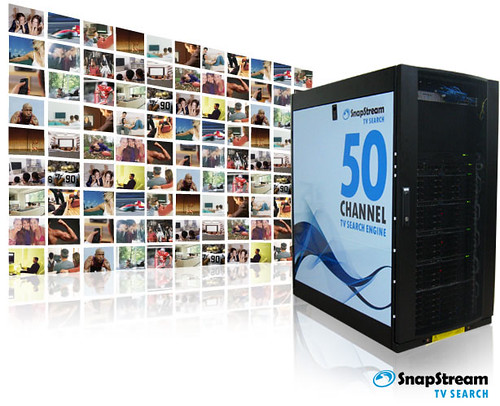 Osborn starts by reminiscing about TV's Golden Age of the 1950s, when there were limited channels and programming schedules were fairly static - so that most everyone knew where and when to find the programs they were interested in viewing. Today, he notes, more than half of US TV homes have DVRs, about 90% use multichannel video providers (cable, DBS, etc.) to access TV content from some or all of the 500+ networks available in the U.S. And then you also need to consider a number of other content sources that Osborn doesn't list - the huge backlist of movies and TV programs available through home video (DVDs, BluRay); the rise of multiple streaming services offering access to TV content and movies (Netflix, Hulu+, etc.) - including many current programs; and the explosion of online video. A quick stat from YouTube can give you an idea of the wealth of online video content available - on average, users upload to YouTube more video content each hour than the major U.S. networks have produced in their 60+ years of operation.
Today, it's not enough to produce good TV programming to successfully attract an audience - potential viewers have to first learn that the content is available, and then to find it. And to become successful, the content has to be engaging enough to get them to not only view the program, but to come back for new content as it becomes available. Search can be incredibly useful in meeting these goals.
Osborn's post outlines the importance and value that good search options can provide viewers, advertisers, content producers, cable/telco/satellite distributors (PayTV) many of which currently offer a variety of search options - and are applicable for local stations and outlets as well. There are some good exemplars and templates out there - Tivo's search and recommendation system, Microsoft's new X-Box Live technology, Amazon's recommendation platform, and Netflix's recommendation system.
The full post is worth a read.
Source - The Importance Of Search In Next-Gen T/V Business Model, Online Video Insider
John R. Osborn offers some thoughts on the importance of search for TV firms in the Online Video Insider blog. I'll offer my own insight that search will remain important, and become increasingly valued, for all media forms and formats.
Today, it's not enough to produce good TV programming to successfully attract an audience - potential viewers have to first learn that the content is available, and then to find it. And to become successful, the content has to be engaging enough to get them to not only view the program, but to come back for new content as it becomes available. Search can be incredibly useful in meeting these goals.
Osborn's post outlines the importance and value that good search options can provide viewers, advertisers, content producers, cable/telco/satellite distributors (PayTV) many of which currently offer a variety of search options - and are applicable for local stations and outlets as well. There are some good exemplars and templates out there - Tivo's search and recommendation system, Microsoft's new X-Box Live technology, Amazon's recommendation platform, and Netflix's recommendation system.
The full post is worth a read.
Source - The Importance Of Search In Next-Gen T/V Business Model, Online Video Insider
Subscribe to:
Posts (Atom)