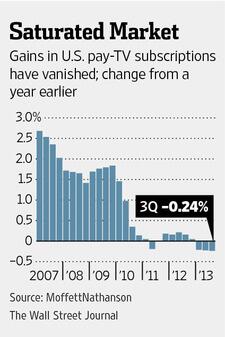
Research from Bernstein shows that total pay TV subscriptions has remained essentially steady over the last few years. While there is some variability quarter-to-quarter, looking at total subscriptions for all multichannel video delivery systems the year-to-year numbers remain pretty constant. While you might think that's good, in the sense that roughly 90% of US homes subscribe to a multichannel pay TV service, and thus there's not much room left to grow - it really isn't.
"For two years now, the pay TV industry has grown subscribers at a rate essentially indistinguishable from zero," said ISI Media analyst Vijay Jayant.
Here's the problem - it's not the percentage that's flat, but the subscriptions that aren't growing. That's despite the fact that the size of the US audience is growing (slowly), and TV subscriptions aren't keeping pace. There's also the problem that the TV marketplace is itself expanding. Basic cable subscriptions (aggregate) have been falling for years; now Dish TV is reporting a drop in subscriptions. Additionally, some analysts think superstorm Sandy might wipe out the anticipated gains in TV ad revenues from the Olympics and election advertising. When you're competing in a market with no meaningful growth (in demand and revenues) with a growing number of competitors, you're not in an optimal situation.
The flat forecasts have reignited concerns about cord-cutting (cancelling pay subscriptions for some combination of broadcast and Internet viewing), and/or the weak economy.
"Declining industry penetration rates suggest that cord cutting is a
reality, but perhaps not in the way that most pundits think," Bernstein analyst Craig Moffett
wrote in the report. "Certainly, there is no evidence that customers are dropping
subscriptions in droves in favor of Internet-based content. Rising costs
of cable service, however, are undoubtedly becoming more burdensome for
lower income households, increasing the likelihood that some households
are reverting to rabbit ears - cable losses, at least, continue to be
concentrated among low-end "broadcast basic" subscribers."
The combination of flat total growth and Dish's drop in subscriptions has also raised talk about the two DBS operators (DirecTV and Dish Network) reviving interest in a possible merger sometime down the line.
In the meantime, telco-based efforts continue its faster growth pace, and Google's entered the market with its GigaNet broadband/TV service mix.
Sources -
TV's Fiscal Cliff? Maybe Just a Bump In The Road,
TVWatch
Third-Quarter Pay TV Sub Trends Could Revive Cord Cutting, Merger Talk,
The Hollywood Reporter