Showing posts with label Cloud. Show all posts

Thursday, September 27, 2012

"Cable" to enter Gaming markets

It's not a totally new idea - using cable systems to stream videogames.  Sega tried it with Time Warner and TCI in the 1990s with the Sega Channel - subscribers to the channel could download games into a blank cartridge to play on their game consoles.  However the cost of a monthly subscription and the reusable blank cartridge were high compared to the cost of games, which limited demand.  The addition of low cost videogame rentals at major video rental outlets effectively killed the experiment as players quickly embraced the low cost option.
   Time Warner looks to be testing the gaming market again, this time with partners AT&T and Verizon.   This time, however, instead of partnering with existing videogaming platforms, the plan is to develop a cloud-based gaming platform, with game play processing in the cloud and the display platform integrated within the cable box.  This could save the consumer the cost of purchasing stand-alone gaming platforms (and repurchasing them every 3-5 years for upgraded technology).  The new system would combine the networks high-speed data connections and cloud computing to shift most game action processing to the Cloud, removing the need for increasingly complex local processing units like Playstation, Wii, and Xbox.  Shifting processing to the cloud would also reduce the need for avid gamers to regularly upgrade to new consoles (and new versions of favorite games re-engineered for the new consoles).  The three home distribution networks hope to introduce their new gaming system next year, after upgrading data transmission, cloud-based game processing, and set-top box video processing technologies.
  The videogaming market is huge, generating an estimated $24.1 billion in sales last year.  And while hardcore gamers still focus on consoles for gaming play, a growing portion of casual gamers have been shifting their focus to gaming apps on smartphones and tablets.  This shift is reflected in a 39% drop in videogame hardware sales over the last year.  Further development of cloud-based gaming options could enable the most complex and intricate hard-core games to be played on TV screens - even on tablets and smartphones - without the need for consoles, cartridges, and discs.  That would likely significantly disrupt the current console-based business model - with hardware (consoles) being sold near cost, and profits generated from operating system royalties from sales of game discs and cartridges.
   Developing and implementing a cloud-based gaming system would seem to have benefits for consumers, content providers, and carriers.
With cloud gaming, consumers will be able to avoid buying Sony’s PlayStation 3, Microsoft’s Xbox 360 or Nintendo’s Wii, and play using generic controllers connected to their set-top box or TV. Some carriers are looking at software that turns smartphones into controllers, (representatives) said.
Working with a single online cloud-gaming operating system would have clear benefits for game producers, who could avoid excessive royalty payments to console developers, and save the costs of having to adapt games for multiple platforms.  As for cable operators and carriers,
“It makes perfect sense why they would want to go after this market,” said (Mitch) Lasky, who was previously an executive at Electronic Arts. “Streaming games use a ton of bandwidth and really benefit from good networks. But it’s a gnarly execution problem they’re trying to solve.”
  Cloud-based gaming systems are already being tested and deployed in a number of markets around the world.  Playcast, based in Israel, currently has deals with telecommunication networks in South Korea, Singapore, France and Portugal for a subscription cloud-based gaming service featuring Activision gaming titles.  Another firm, CiiNOW, is running multiple trials in Europe.  Its CEO, Ron Haberman, commented that
“If there was ever a service that fit network providers, it’s this one... 2013 is going to be when we see big commercial offerings.”
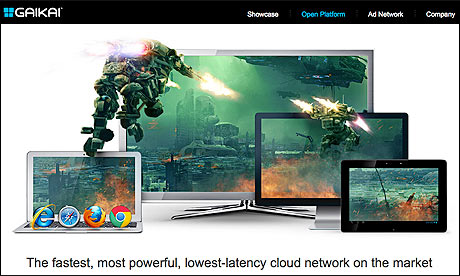
  Cable giants Comcast and Cox also indicated an interest in offering videogaming services, although declining to provide details.  Meanwhile, Sony's hedging its gaming future - purchasing cloud-gaming company Gaikai for $380 million in July.

  Cable and other multichannel operators are losing subscribers, so have been searching for new revenue sources.  Gaming is a big market; the introduction of reliable, high-quality, cloud-based gaming that would equal or surpass the gaming experience offered by dedicated consoles would likely profoundly reshape gaming markets by offering significant benefits and savings for players, game-creators, and network operators and access-points.  The only likely loser would be console manufacturers.  It's a good thing that those big conglomerates (Sony, Microsoft, Nintendo) are likely to be pitted against other big conglomerates (AT&T, Time Warner, Verizon) - with both sides having deep pockets, consumers are likely to benefit while the alternative gaming structures battle it out.
 

Sources -  Xbox Challenged as Cable Plots to Make Consoles Obsolete,  Bloomberg.
Sony buys cloud gaming company Gaikai for $380m,  the guardian

Monday, September 24, 2012

Move towards Global IPTV Cloud

A new service, called PurpleCloud, aims to provide a Cloud-based broadband IPTV service to allow Asian and Indian broadcasters access to the North American, European, and Australian markets.
  The service is a joint venture of Octoshape (provider of cloud-based streaming technology) and video content delivery specialist PurpleStream.  The combination of the two companies' cloud and streaming management technologies should allow the PurpleCloud system to optimize streams to available bandwidth and user devices, allowing users to access streamed content on any Internet-enabled device without buffering. 
Offered as a managed service for broadcasters and OTT operators, PurpleCloud is intended to deliver "stable and dependable HD quality video streams to any device, any platform, in any geography at a fraction of the cost of current delivery services," the press release added.
The two primary delivery mechanisms for broadcasters seeking to reach international audiences are satellites and dedicated Internet-based channels - both of which can be prohibitively expensive for smaller channels and networks, or even leading networks from smaller markets (countries).  The service aims to continue adding content partners and is working on getting the PurpleCloud service added to SmartTV and OTT service bundles.  The next stage will be expansion into the live events broadcast market.

Monday, August 20, 2012

SideNote - Top Apps for Back to School

Fierce Mobile Content has a post on Top "Back-to-School" apps for both iOS and Android mobile devices.  Its aimed at primary and secondary education, but includes a couple of interest to University educators and even media professionals.

  • DropBox - A cloud storage to share your files across devices, or with other users.  And it's free for low-volume users.
  • AT&T Translator - a free real-time translator for your mobile devices.  For now, covers the following languages: English, Spanish, German, French, Japanese, and Chinese).
    AT&T Translator marks a new milestone in how quickly speech technology is progressing in mobile. While there are hundreds of apps that translate text from one language to another, they can be time-consume and tedious. AT&T Translator, developed through AT&T Labs on AT&T's Watson platform, identifies languages automatically, saving the user from having to manually input this information. AT&T has stated it is working to add additional languages to the app.
Source -  Best Back to School Apps for iOS, Android,  Fierce Mobile Content

Thursday, April 26, 2012

Gaikai brings gaming to the Cloud

Post contributed by Jamison Lanum -

For those unfamiliar with the rise of cloud-gaming, here's the rub -
   Streaming content from the Cloud may not seem like such a big deal anymore. Netflix does it. Hulu does it. However, streaming video games is an entirely different animal to tame. High-end video games typically require a dedicated gaming pc that can run between $800 and $1200 and even higher.  This platform is needed because the data loads and throughput of games can run orders of magnitude greater than simple video, and speed and responsiveness is often critical.

    Companies like Gaikai have installed a massive network infrastructure that allows them to stream (that's right) high-end video games over the internet. Gaikai has this hardware and network in place on their own service, allowing customers to play games on lower-end machines without sacrificing performance.  Now it needs to show off these capabilities to potential users.
   Taking their service to Facebook is a huge step for the company, offering access to hundreds of millions of users around the world, many of whom are already playing simple games on Facebook. While Gaikai is only set up for streaming game demos at this time, full games are on the horizon. Partnering with Facebook seems to be a good marketing strategy, as long as the service delivers the full video gaming experience.

Source -  Gaikai brings its cloud gaming to Facebook, launches beta applicationEngadget

BJB - edited for style

Tuesday, April 24, 2012

Printing through the Clouds

Post contributed by Courtney Vick -

It seems like the next step - connected printers, networked printers, wireless printers, and now Google is offering the Google Cloud Print service - the ability to access your printers through the Cloud..  According to their main website, "Google Cloud Print is a new technology that connects your printers to the web. Using Google Cloud Print, you can make your home and work printers available to you and anyone you choose, from the applications you use every day. Google Cloud Print works on your phone, tablet, Chromebook, PC, and any other web-connected device you want to print from."
  To make printing even more mobile, the service also has the option of sending documents to FedEx shops around the world to be printed. The Cloud Print system will change the way people use media because it gives them instant access to print essentially anywhere. There are 1,800 FedEx stores located in the United States that will print documents from this service or other Android devices. If someone is not near a printer, all they have to do is go to a FedEx store and have their work printed their for a minimal fee. This will drastically reduce the stress in everyday life. You can even print documents to to other Android devices as PDFs. In order to pick up the documents at FedEx, customers will need a code in order to get their documents at one of the Print & Go machines. Many Canon printers work with the Google Cloud Print service.

   This service provides safe, convenient sharing because when you print, your material is sent to a printer via web. You can print to any printer that is set up through the Google Cloud Print system meaning you can send a print job anywhere. You can send the print job through a phone, a desktop, a tablet, etc. Virtually any form of technology has the ability to use this service. People have instant access to documents and files.


BJB - edited for style.

Tuesday, April 17, 2012

No optical drive for nex-gen console?

Post contributed by Jamison Lanum -

  According to Shawn Knight, writer at techspot.com, Microsoft's next video game console may not support the world's most popular physical format:discs.
"Microsoft is reportedly telling partners that the next Xbox, tentatively dubbed the Xbox 720, will not include an optical disc drive. The briefings are said to be released under what one source claims is the strictest NDA they have ever encountered, according to an exclusive article from MCV."
While many have thought this would happen eventually, I don't think this shift was expected so soon. While this is still speculation at this point, I think it's important to take a look at a few issues that could arise if this is in fact true. Not having an optical drive presents many problems for the customer and may even drive some away. 
  • If there isn't an optical drive then games will have to be downloaded over the internet. This will require owners to also have a fast internet service. The only other option is to have a sort of download kiosk that gamers can go to with removable storage to download the games then take them back to their console. This does not sound like a solid alternative.
  • Even though 1TB drives are becoming more affordable, more storage would be needed if Microsoft kept storage local (in the device). The alternative would be to tap into the cloud. Companies Onlive and Gaikai have both proven the cloud can handle storage and also reduce the hardware requirements needed in the physical console. This, once again, would require the customer to have access to high-speed internet. In more rural parts of the country, customers would probably be out of luck. 
  • Backwards Compatibility - One thing gamers demand of consoles is the ability to play their older games on the newer one they just dropped a pretty penny on. With no optical drive, there is no feasible way to make this happen. I'm sure Microsoft and other companies would make older games available for download, but a price tag would certainly be attached. 
  • No Used Games - No physical copy of the game means you can't take it to a second-hand seller like GameStop and trade it in to get another game. No longer will these stores be able to offer customers slightly used games at discounted rates. Microsoft and others could develop a system where each game can exchange hands x-amount of times, but financially it doesn't make sense for them to do so. 
BJB - This is a continuing reflection of the continuing transition to online access for content (see prior post on streaming vs disc for movies).  Although I'll agree that it might be a bit early to drop drives and force users to go that route.
(I reformatted the above slightly).

Source -  Source claims Xbox 720 will ship without optical drive, Techspot

Friday, April 13, 2012

New royalty deals for digital music

Music industry groups, digital music services and mobile telecomm operators have reached an "historic" deal on mechanical royalties (dealing with the reproduction of recorded material).  For the most part, the agreement continues the existing royalty structure and rates in existing markets, but establishes new rate formulas for newer digital music business models such as Cloud storage, some interactive streaming services, and digital music bundled with other services or content.
Tights for the newer services run about 12% of total revenue, 21% of the total costs of digital music, or 17-18 cents per subscriber (whichever is greater.  RIAA Chairman Cary Sherman hailed the deal -
"This is a historic agreement that reflects our mission to make it easier for digital music services to launch cutting-edge business models and streamline the licensing process ... This is a major win for consumers, the music community, and entrepreneurs and investors in new music services."
Another music business association leader, Jim Donio of NARM, proc;aimed that "the standardizing of rates and terms encourages innovation and fosters growth of new digital and physical products and services in the marketplace, giving consumers more choices around the music they love."

Certainly it's good for the music industry, and having a settled rate structure is helpful for digital music services as they will know what costs they face.  The downside will be for the consumer - who if they use a cloud service to hold music they've already bought and paid for, or in the case of digital music bundled with CDs, will be paying again for accessing and using his or her legally owned music online.  And as online music services aren't likely to just absorb the cost of royalties, the music consumer is looking at price increases of 10-25%..
  Then there's the secondary impacts of establishing an economic threshold for digital music services.  Fixing rates imposes known costs independent of any inherent value in either the music or the service. This discourages experimentation, innovation, and sampling of new artists and music, particularly when commercial value is low or uncertain.  It rewards content owners and services with proven high commercial value, to everyone else's detriment.  It imposes a burden on possible noncommercial options, or in situations where the production or distribution of digital music or digital music content is motivated by factors other than direct commercial gain.  As happened when rights fees were first imposed on online audio (radio) streams, experimental, noncommercial, and educational services will disappear, leaving only increasingly commercialized options,
  Further, as prices rise to incorporate new rights fees, consumers be less willing to purchase, and demand will fall.  As the music industry and commercial music services seek the short term stability and revenues they see excessive rights fees generating, they're continuing to alienate consumers and shrink demand, and hampering true innovation that they fear will challenge their market share,   In looking back, they're failing to consider the huge potential of the digital market economy.

Sources - Music Industry Groups, Digital and Cellular Interests Reach Royalty DealAllAccess
Music Industry, Online Services Strike DealWall Street Journal

Monday, December 5, 2011

Dark Side of Clouds?

Post contributed by Ali Griffin -


Cloud computing and newer technologies are becoming something that is integrated into our everyday lives. We used to find it inconvenient to have to switch cds in a walkman, or actually write things in two different calendars. Smaller companies that provided service such as these in a more convenient way are now facing threats of being bought up by larger companies such as Apple and Microsoft.
  Technology is no longer serving us with a specific service. Instead, it has become a part of personal and professional every day life. With technologies such as the iPad and iPHones people are using technology in every part of their lives. For instance people don't use phonebooks, people don't wait to hear reviews of restaurants from friends, they are now getting this information through technologies.
  Schedules can now be made and coordinated without having to take the time do it ourselves. For this reason, smaller companies such as NetSuite and Workday are slowly being faded out and bought up by larger companies.
  Cloud computing comes at a very high price so these smaller companies simply cannot afford to buy into new technologies such as cloud computing. Paper and simple software are no longer the way to conduct business. According to the New York Times big companies such as Amazon are attempting to sell software simply over the internet. Devices such as the Kindle Fire will also eventually be developed so that companies will be able to use them as a primary way to conduct mobile business.
  One problem that many critics may have is that since these larger companies are buying up these smaller technology companies, there won't be a place for new businesses in the industry. With the large amount of money it costs these days to stay up to date and have the latest technology it is hard for emerging companies to enter the market.

Source -  Cloud Computing Endangers Older Tech CompaniesNYTimes.com

Monday, October 10, 2011

How Tablets and Clouds may drive Hard Drive Demand

The rise of mobile devices (particularly tablets), particularly when combined with Cloud and streaming services, were supposed to be bad for the hard-drive (HDD) business.  After all, mobile devices shifted to flash memory for its size, weight, and power consumption advantages (Flash is smaller, lighter, and less of a drain on batteries).  Cloud services and widespread broadband access meant that people could store content in the Cloud rather than locally with every access device, reducing the need for add-on HDD media storage.  Streaming was supposed to substitute access for ownership, meaning there was no real need to have users store all of the content they were consuming.  While these shifts may yet come to fruition, in the short term it seems that demand for storage continues, and hard-disk drives remain the least expensive large capacity storage option.


Three factors should continue to drive demand for HDD drives.  First, both streaming and Cloud services require continued expansion of their storage capacity, to handle the increased needs for media content storage on the front end.  The growth of mobile and tablets are expected to drive increased demand for media content - and the large data files they require.
Finally, while tablets, Clouds and streaming may well shift consumer attitudes from ownership to access (and reduce perceived need for personal offline storage), that shift will take a while.  In the meantime, Clouds are new enough that many users will feel a need for back-up storage locally.  In addition, broadband speeds for many aren't sufficient for realtime HD-video streaming, so many consumers prefer streaming to local storage prior to watching.  And many of us old folks still believe in "ownership" as a means of assuring access - particularly with the current copyright system built on trying to limit access.  As for the potential of tablets as replacements for desktops - demand for local data storage is likely to overwhelm device capacity, meaning that tablet users will need to supplant desktop storage with networked storage.  So, even if consumer demand for data storage devices takes a bit of a hit, consumer demand for high-capacity local storage should remain high for some time to come.  Even if tablets come to replace desktops.
In the meantime, HDD price per capacity continues to fall, and remains significantly lower than any other data storage option.  Until existing (or some new) data storage technology can beat HDD price/capacity levels, the continually expanding demand for data storage should continue to benefit.

Source -  It's All About Content: Why Tablets Help Hard DrivesAllThingsD

Friday, September 2, 2011

Apple adds streaming to iTunes cloud

After reaching a deal with the music industry for extended rights, Apple has added streaming functionality to its proposed iTunes Match service, further differentiating their services from Amazon's and Google's.  What Amazon and Google offer is essentially a digital music storage platform, albeit one that exists in the cloud and is accessible everywhere.  Their services stored the digital music you bought through their online store, and allowed users to also upload legally acquired digital music from other sources.  When Apple first announced their iTunes cloud service, iTunes in the Cloud, it did the basic storage idea one better - instead of storing your music, the service would store a list of the songs you bought from iTunes, and allow you to download from the iTunes archive a high-resolution and DRM-free version of that song or album, regardless of whether or not your original purchase was in that format.  The free iTunes in the Cloud service would also automatically access and synchronize iTunes music files across all of a user's Apple iOS web-connected devices.  At the time, they also announced iTunes Match, which would allow you to list music files downloaded from other sources (up to 25,000 songs), which they would match with the newer high-res versions in the iTunes archive, and permit you to access those versions for download.
With licensing now in place, Apple's announced an additional major service addition - instead of just allowing downloads for later replay, iTunes Match will now allow users to "stream" songs from their digital Cloud library, again to a registered user's Apple iOS web-connected devices. (One report indicates this is not true streaming, but as it uses a cache on the device - still it offers instant replay rather than download and play.) The current beta being tested also allows "streaming" of TV shows bought through iTunes, but this has yet to be formally acknowledged as a feature of the consumer service. In this more recent announcement, Apple gave the price of the service as $24.95 a year.
With this move, the new iTunes Match service gives Apple a significant competitive advantage over Amazon and Google in functionality.  The announced price for iTunes Match also significantly undercuts music streamer Spotify.us subscriber rates ($4.99/mo for low res feeds to computers, $9.99/mo for higher res feeds to computers and mobile devices).  If the new service (now being tested in beta) works well and reliably after its introduction this fall, look for Apple's competitors to scramble to match features and prices.

Update - As I was putting this up, it's been reported that the streaming feature has been dropped from the most recent beta version of the software (iOS 5 beta 7).  So maybe, maybe not.

Sources -Apple's iCloud to bring iTunes streaming music service, FierceMobileContent
Apple to Add Music and TV Streaming to iCloud, StreamingMedia.com

(edit - added Source and some new details on service)
(Update - see above.  Source - Streaming disappears from iTunes Match Beta, Music Ally

Friday, August 26, 2011

Blackberry users get a (small) cloud

In the smartphone wars, Blackberry is a distant third to iPhone and Android devices. With much of the iPhone and Android marketing focus on their ability to handle music and video, Blackberry is developing a cloud-based music application.  The subscription service is expected to cost around five dollars a month, and will allow subscribers to build a personal music library (based on digital locker concept), as well as building a personal profile of 50 songs to share through the Blackberry BBM social networking service.
The move to the cloud is a good idea, as it allows expansion of media-based uses and applications without having to upgrade memory levels in the access devices.  I suspect, however, that it's overall impact as a marketing tool will be limited - the service is tied to the device, limiting its overall usefulness, and the price level is higher than a number of other cloud-based, or IP-based music streaming services that can offer access to a much wider music library and/or the ability to access music from a range of platforms.

Source - Blackberry users get cloud-based music lockerTelecoms.com

Wednesday, August 24, 2011

Court ruling opens way for music clouds

A federal judge hearing a music industry copyright lawsuit recently issued a ruling that may well open the way for cloud-based music services.  In the suit against digital music service MP3tunes, the music industry argued that MP3tunes contributed to copyright violations because it did not delete allegedly unauthorized content from users' digital lockers, even if it did comply with DMCA requirements regarding posting notices of alleged infraction and preventing access to the content in question.  Federal District Court Judge William H. Pauley III ruled that MP3tunes, and by inferences other ISP and music services, was not required to investigate whether user content was authorized or not, effectively saying that users are responsible for any copyright infringements, not the ISP, music service, or digital storage facility.

MP3tunes service model is conceptually similar to music-sharing cloud services announced by Amazon, Apple, Google, and others.  MP3tunes service allowed users to build online music libraries from a range of online sources for their own use.  The current and proposed music cloud services have similar options, storing songs purchased from their online music stores, as well as allowing users to add tracks from their personal collections (in some cloud models, that requires users to upload digital tracks - in others, it is a list of user's songs that is stored, and the service then provides access from a central library to those songs).  The ruling basically sets the foundation for consumers to use cloud and similar services to store and access, for their own use, legally acquired music without having to pay an additional licensing fee.  The ruling did specifically indicate that this does not mean that users, or services, can share the content with multiple users (unless those other users also have the same file in their digital library), thus upholding the central infringement complaint against users..

Since the ruling is based on the language of the law, and not some specific attribute of music files or service, it should apply to all forms of digital content, digital library services, and services providing users with access to their digital libraries from multiple devices and/or locations.  Cloud services can, unless the ruling is reversed,  proceed without being held liable for the content placed there by users - setting the stage for rapid expansion and adoption of Cloud services.

Source - MP3tunes/EMI copyright ruling paves way for cloud music servicesFierce Mobile Content

Monday, August 8, 2011

Dark Clouds & Raging Streams

I've had a number of posts lately talking about major online players and their cloud offerings (Apple, Amazon, Google) and the growing success of media streams (both music and video - expanded content offerings, Pew Report, Magid report,, Yahoo report).  These and more show expanded use of the Internet for the delivery of media content of almost all forms. In addition, networks are improving their network infrastructure, extending the range of broadband access as well as their capacity to handle high-bandwidth applications like video streaming.

But the vision of the future of media clouds and streams is predicated on having not only a secure, high-speed broadband network, but also on pricing schemes that can accommodate normal usage within basic pricing structures.  If networks aren't secure, people may not want to place their faith in the clouds - and keep programs and content off-line.  And if spending a few hours or more a day listening to streamed music and/or watching streamed  video programming pushes people past their ISP's price-level download caps - to the point where they encounter high per Gb fees - well, that's when users will think twice about relying on streaming for their media use. Several stories from last week raise those spectres. In one, a former US counter-intelligence official told a conference of net security officials that cyber-warfare is an imminent threat. Already, a number of government agencies and large corporations have seen major attacks on their systems.  Another looks at another bottleneck in the network infrastructure - signalling.  Expanding the pipe - the total capacity of a channel is fairly cheap and easy, at least compared to the capacity to get those data packets to the right place in a timely manner.  Mobile networks are experiencing increased congestion as users increase their use of high-bandwidth and increasingly complex applications run on smartphones and tablets.  Some are concerned that the new high-capacity broadband mobile network being launched (LTE) may not be able to cope with smartphone and tablet uses, and the tendency for those users to have their devices remain connected to multiple platforms for long periods.
The darkness on the edge of town, though, is what's happening with mobile and ISP pricing plans.  Here in the U.S., one mobile provider after another are dropping "unlimited data" plans, and many cable operators are placing download caps, or implementing added delays on downloads past a certain limit.  Now most can offer higher caps, if you move to a more expensive service tiers, but the fundamental impact is the same - as the cost of using clouds and streams increases, the value they offer to consumers declines.  This could slow or even halt the development of these and other new ways of delivering media content to potential users.

Sources:  "Ex-CIA Official Warns Black Hat Attendees of Coming Cyber-War", e-Week.com
"Signaling: the other bottleneck?" Telecoms.com
"Verizon Tiered Data Pricing is a Mistake: 10 Reasons Why," e-Week.com

Tuesday, July 19, 2011

UltraViolet - Movies may show the way

The movie industry has generally come to grips with media and market changes, after a while.  The typical pattern is initial resistance to innovations and new media, but fairly rapid adaptation once they found that the new media forms offered even higher revenue potential than the basic film/theater business model.  First with television, cable movie channels, videotapes and DVDs (both rentals and sales), and videogaming, the movie industry first tried to keep its content off the new media, but then found that the new media also opened up new, expanded, markets for its content.  Markets that in some cases overshadowed the revenue potential of the tradition theatrical release market.
The pattern repeated somewhat with the rise of digital networked media - initially, reactions focused on using copyright to try to keep their content off those networks.  Over the last few years, the movie & TV industries have started to embrace digital online distribution and the notion of making content available across a range of display devices.  Starting with licensing their content to online streaming services like Hulu and Netflix, providing some content in multiple formats (combining DVD, Blu-Ray (HD), and digital copy (playable on computers & digital devices) versions in a single package), and allowing online stores to sell digital copies of content.  But the adaptation that may be the most significant may be coming this Fall.

  
Sometime this fall, a group of studios will launch the UltraViolet project.  Purchasing a Blu-ray or DVD disc of a film with the UltraViolet feature will provide users not only with the physical disc, but allow them to stream or download the film forever from digital archives.  The UltraViolet project is based on the digital rights management approach called "media lockers," where rights focus on allowing licensed users to access content held online, the basis for the recent spate of media Cloud announcements for music (Amazon, iTunes, and Google).  In operation, UltraViolet is closest to what Apple plans for its iTunes-based cloud service - with users indicating what content they have rights to, and the media locker or cloud allowing users to access content directly from their archives through a variety of devices.


Perhaps most importantly for the long term, UltraViolet poses, finally, a good workable solution to the inherent conflict between intellectual property rights (copyright in particular) and digital networks and devices.  Rather than placing the focus on limiting the making of copies, UltraViolent focuses on licensing and rights to access content, recognizing that in most every digital device, multiple copies of content are made.  After all, the demand for the content is based on access and the ability to watch and/or listen, not on how many transient digital copies exist in a device.  And increasing accessibility will tend to increase value.

Source: "Buy Once, View Anywhere: UltraViolet Ready for Launch." VidBlog (MediaPost)
UltraViolet website

Thursday, June 9, 2011

Bandwidth costs continue to drop

Historically, both computer and telecommunications costs have fallen over time, and has been one of the factors driving the digital transition.  Still, it's nice to have regular confirmation of the trends.  Research firm Point Topic has released a report showing that consumer broadband prices per Mbps have continued to fall in the period between the fall of 2009 and the first quarter of 2011, particularly in the Americas.  Prices fell fastest in Latin America, dropping 40%, with consumer bandwidth cost falling 35% in North America.  The report suggests that the pressures driving prices downward are constant, with the broadband marketplace growing ever more competitive, and consumers actively seeking more value in meeting higher bandwidth demand.  As fiber-based broadband networks continue to expand, and the fiber comes closer and closer to homes, there is not likely to be any easing of the pressure for ISP's to offer more value.  As broadband markets increase competition, driving down basic bandwidth costs, firms will need to start competing via differentiating services - by adding valued services and improving customer relations.
That's good news for consumers.  The driving forces in the broadband marketplace are towards lower costs, better customer service and relationships, and the development of products and services that provide added value to the consumer.
In addition, the continuing decline in bandwidth costs will help feed the growth of Cloud services and the shift towards the use of streaming for the delivery of media content of all forms, as the costs of accessing and receiving digital content through the Net continues to decline.  As with computing, this push is likely to manifest itself in terms of consumers getting more for less - seeing a mix of dropping prices for higher bandwidth capacities.  This, combined with the continuing improvement of data-compression techniques, will make high-quality content (higher levels of HDTV, 3-D TV, etc.) seem more viable options for consumers.

Source: "Global bandwidth costs continue to drop, says report",  Telecoms.com

Tuesday, June 7, 2011

Apple takes to the Clouds

Among the announcements at this year's Apple developers conference was the formal introduction of Apple's new "cloud" service, iCloud.  Apple's iCloud differs from most of the other recently offered cloud services in that it follows Apple's tradition of tight integration of hardware and operating systems.  The iCloud service was introduced as an integral component of the new versions of Mac operating system (OS X Lion) and mobile operating system (iOS 5), so that systems and software (including apps) using the new OSs can seamlessly integrate access to a user's iCloud content.  The iCloud can provide wireless backup and syncing of apps and related content across all of an Apple user's devices (or at least those running the new OSs), and Apple is offering basic iCloud service free to those users, as well as users of its Net-based, and much more limited, backup and syncing service, MobileMe (which they indicate will be phased out in June 2012).
Key announced features:
  • Every user gets 5GB of space for backup of data and files for free.  Backups automatically occur on a daily basis.
  • iCloud stored files are accessible from any compatible device (Macs, iPads, iPhones, iPod touch)
  • Content acquired through iTunes will be accessible via the iCloud.  Rather than storing it there, it will access that content from the iTunes archive for streaming or download
    • Apple also announced iMatch, which will give similar access to music not acquired from iTunes.  But rather than just storing those music files, it matches titles against those in the iTunes library, and streams or downloads from there.  iMatch will require a $25 a year fee, but with no limit on the number of music files matched, and can be used on up to 10 devices.
    • iTunes and iMatch content will not count as part of the 5GB free space
  • Integration with iOS and OS X apps, so that data added or updated on one device will automatically be shared with other devices.  Third party apps will be able to store and share files through API access
  • Photos can be uploaded to iCloud for sharing with other devices (Photostream), and will be automatically stored on Apple servers for 30 days.
  • Integration with iWork files, with auto-save of files, both while you're working on them and in finished versions.
Looking at the music side, the iCloud is following both Amazon and Google (although offering less "free" space.  Both Amazon and Google's music clouds offer free storage of files acquired from them, without counting them against the storage cap, and both offer the ability to upload your legally acquired music files to the cloud, although that will count against the cap.  The difference with Apple's iTunes/iCloud is the iMatch service, which reportedly won't bother to check where you got the music files from, and rather than storing your music library in the cloud (where it would count against the storage cap), it offers access to the iTunes file version of the tune (which is also likely to be a higher-quality digital file).
Apple's iCloud service should be available this fall.

Sources: "This is iCloud" Gizmodo (along with linked Gizmodo reports)
"WWDC: Industry speaks on Apple's iCloud post-PC attack" Computerworld
Apple's iCloud site

Monday, May 9, 2011

Microsoft to add Voice to Lync Online

From Eric Hutchinson:


JAJAH, owned by Telefonica, plans to add voice calling to Microsoft Lync Online which is Microsoft’s cloud-based communications service. The service will allow Lync Online users to call landlines and cell phones. Also, users will be able to receive calls and route them to landlines, mobile phones or computers without needing a new phone number. JAJAH’s IP Communications Platform uses patented quality management to guarantee calls made over the JAJAH Network will be high quality.

Source: "JAJAH adds voice calling to Microsoft Lync Online..." TelecommunicationNews.net

Tuesday, May 3, 2011

The Cloud's Dark Side

From Jocelyn Blake -

With my recent knowledge of cloud computing I have been seeing more and more information about this new advancement. The New York Times is reporting that while this new technology has it's pros it also has cons. 

"The insurgents in the cloud market, led by Amazon, see private clouds as mainly a means of account control for software’s old guard, holding onto customers and high profit margins. ‘Private clouds are essentially the same thing that large, established companies have offered for years as managed services,' said Adam Selipsky, vice president of product management and developer relations for Amazon Web Services, its cloud unit. 'It amounts to a rebranding.' Perhaps, but many customers do find moving toward the underlying cloud technology a big money-saver, even in a private cloud setting."

I also read that there are seven threats to cloud computing.

1. Abuse and nefarious use of cloud computing; 2. Insecure interfaces and APIs; 3. Malicious insiders; 4. Shared technology issues; 5. Data loss or leakage; 6. Account or service hijacking; 7. Unknown risk profile

I'm sure that since this is still an up and coming product that the issues that are being brought up will be resolved. Apple is great with providing different versions and updates that improve whatever faulty problems their technology may have.

 
From Professor Bates- The Cloud's not without its dangers - witness the Amazon Cloud's recent outage.  But the NYTimes piece seems more a prototypical Luddite response - "this new thing will disrupt all our nice current arrangements."  Yes, it will, and eventually probably for the better.  Otherwise that "new thing" won't last long enough to be the next generations status quo.
 

Wednesday, April 27, 2011

Apps in the Clouds

From Jocelyn Blake:

After listening to my classmate present on cloud computing I have been doing a little research. While researching I found that there are cloud based apps for iPads. When I first heard about cloud computing I just thought of it as people using a server to share files. I have come to realize that is more than that. Some applications include :

Google Docs (http://docs.google.com) and Microsoft’s Office Web Apps (http://office.microsoft.com/en-us/web-apps) are the two front-runners in the cloud-based office suite arena, and both offer a strong set of tools for creating everything that most people need, including word processing files, spreadsheets, and presentations.

ILovePDF (http://www.ilovepdf.com) lets you perform some advanced functions with PDF files, including merging PDFs and splitting an existing PDF into multiple files.

Google’s cloud-based Calendar (www.google.com/calendar) may be one of the handiest cloud apps going, primarily because of how useful it can be in helping both individuals and groups stay organised. The interface is as you’d expect: a calendar that can be shown in day, week, or month, four-day, or agenda mode. To schedule an event, meeting, or reminder, just click a cell, provide a title, and optionally add details.

Adobe’s Photoshop Express (http://www.photoshop.com/tools) is another capable cloud—based image editor. It offers some advanced tools — such as white balance adjustments, soft focus, and tinting controls — that Picnic does not, and its interface will be familiar to users of Adobe’s image browsing applications such as Lightroom.

With theses two powerful technology advancements, we are bound to be actually computing from a real cloud soon!

Source: "The Best Cloud-based Apps", The Hindu

Monday, April 4, 2011

Amazon's Cloud vs. the RIAA

Last week's "Next Big Thing" was Amazon's Cloud, and it's offer to freely host not only 5 GB of anything, but also all of the music you buy from Amazon (which doesn't count towards the 5 GB).  The idea is that you can access the "Cloud" from anywhere, on anything (that provides basic Internet access).  Sounds great, and something that can help foster the transition from a focus on owning physical copies of content, to a concern with being able to access your legally-acquired content when and where you prefer.  It also reflects an alternative approach to copyright for music that's been floating around - again from an emphasis on rights being only associated with owning a physical copy, to owning rights to access and use content (with or without DRM).
If you're familiar with US Copyright law, and Court decisions on "fair use," there's nothing wrong with Amazon's offer (which is similar to the permanent hosting Amazon provides for books you buy from its Kindle bookstore).  You've paid your licensing fee when you buy the music, and you're exercising your "fair use" rights to time-shift, place-shift, and device-shift your use of the content you own.
The recording industry, instead of embracing a technology that would encourage sales (Amazon's making its music sales more valuable by providing an added-value service), is reacting predictably - threatening to sue Amazon, and presumably its customers as well (after all, if Amazon is making music available in a way they don't have a specific license for, then you're also violating your license by making an "illegal" copy when streaming from the Cloud to your device).  The record industry claims to be concerned with the potential of these "cloud lockers" for online piracy (i.e., you "sharing" your content with others), and arguing that you only have those rights to content that they're willing to give you.  But it's more likely they think that a "cloud license" could generate millions, if not billions, of dollars well into the future that might help to prop up an old-line music industry that's seeing revenues decline from recent poor sales..
I guess that what happens when you don't do a good job creating content that people want to buy at prices they're willing to pay - you try to create new "rights" you can force others to pay so you can keep your industry afloat and unchanged.

Source: "Music Industry Will Force Licenses on Amazon Cloud Player - Or Else," Wired