
Showing posts with label online news. Show all posts
Showing posts with label online news. Show all posts
Thursday, July 24, 2014

Tuesday, July 8, 2014
New Report on Hyperlocal News in UK

- UK community news sector is well-established, with nearly three-quarters of players producing news for 3 years or longer (one-third doing so for more than 5 years)
- 70% see what they do as a form of active community participation; half identify their activities as local journalism, half as an expression of active citizenship
- More than half have formal journalistic training or mainstream media experience
- Most hyperlocal news sites have modest reach, even in their local communities

- Most community news producers classify their activities as part-time (only 11% report spending 40 hrs/wk or more on producing community news). Also, most producers fund their projects themselves - only a quarter raise enough money to cover their costs.
Source : UK Hyperlocal Community News: Findings from a survey of practitioners. Research report
Monday, March 31, 2014
Pew: Key Indicators of News Use
The PewResearch American Journalism Project released its State of the News Media report for 2013 last week. The report suggests a news industry in transition, and news audiences starting to shift their patterns of news use as they discover the value of newer news delivery options. Here's some highlights-
 The decline of print
The newspaper industry has been fighting, unsuccessfully, declining subscription and readership numbers for decades. Even with liberalized definitions for subscribers and the growth in usage of newspapers digital offerings, they managed only a 3% increase in total readership in the last NAA report.
The outlook's even worse for News Magazines' print editions. Newsstand sales have dropped 43% since 2008 (although subscriptions have remained steady). Two of the major US news magazines have abandoned print for online, and even with the significantly lower costs of online are struggling to survive.
Readership also continued to decline for the top alternative weeklies, although at a slower pace.
 Broadcast & Cable News
The broadcast networks tended to hang on to their aggregate news audiences, although differences continued to exist among the big three performances. On aggregate, audiences for both the evening and morning news shows grew slightly, but remained within the range of audience numbers over the last few years.
 Cable news network audiences declined slightly in 2013, but were coming off a Presidential election year (so no real surprise there). 2013 was more notable for the continuing fall of CNN, whose ratings have been hitting 20 year lows in recent weeks, leaving CNN in the cable news ratings basement. MSNBC, lacking a significant Republican to bash, dropped a quarter of its primetime audience in 2013. Fox News Channel retained its ratings dominance in ratings, and continue to reap the benefits, generating almost twice the revenues of CNN, and four times the revenues of MSNBC.
 Local newscasts from broadcast stations started to gain audiences in 2013, building on the growing morning news programming, and greater use of mid-day and afternoon time slots for expanded news offerings. With more stations doing news programming before the main evening newscast, and extending the time for those shows, employment opportunities in local news improved slightly - one of the few bright spots in traditional journalism.
Digital
 The transformation of the news marketplace is being driven by digital. In 2013, 82% of Americans reported getting news on their desktops or laptops, and more than half (54%) reported getting news through their mobile devices. Online is where most people go first for news. Digital operations of newspapers saved readership numbers, and many (but not all) outlets found online subscriptions a growing source of revenues in an otherwise declining market. Digital advertising dollars remain the fastest growing segment (soon to surpass TV), although the share earned by traditional news outlets is shrinking and is unlikely to replace print and TV advertising losses. 2013, and the last few years, have seen a surge in the use of commercial online-only news outlets, other online news sources, and social media by audiences. outlets.
 More transformational has been the developing role that social media plays in the news process. News users are increasingly involved in disseminating news (sharing reports), discussing it with others, and contributing content (primarily photos and videos) to developing stories.
Source: Key Indicators in Media & News, a report of the PewResearch Journalism Project (part of State of the News Media 2014 study)
 The decline of print
The newspaper industry has been fighting, unsuccessfully, declining subscription and readership numbers for decades. Even with liberalized definitions for subscribers and the growth in usage of newspapers digital offerings, they managed only a 3% increase in total readership in the last NAA report.
The outlook's even worse for News Magazines' print editions. Newsstand sales have dropped 43% since 2008 (although subscriptions have remained steady). Two of the major US news magazines have abandoned print for online, and even with the significantly lower costs of online are struggling to survive.
Readership also continued to decline for the top alternative weeklies, although at a slower pace.

The broadcast networks tended to hang on to their aggregate news audiences, although differences continued to exist among the big three performances. On aggregate, audiences for both the evening and morning news shows grew slightly, but remained within the range of audience numbers over the last few years.
 Cable news network audiences declined slightly in 2013, but were coming off a Presidential election year (so no real surprise there). 2013 was more notable for the continuing fall of CNN, whose ratings have been hitting 20 year lows in recent weeks, leaving CNN in the cable news ratings basement. MSNBC, lacking a significant Republican to bash, dropped a quarter of its primetime audience in 2013. Fox News Channel retained its ratings dominance in ratings, and continue to reap the benefits, generating almost twice the revenues of CNN, and four times the revenues of MSNBC.
Digital


Source: Key Indicators in Media & News, a report of the PewResearch Journalism Project (part of State of the News Media 2014 study)
Monday, March 3, 2014
Print readership for newspapers - Half-full, or Half-empty?
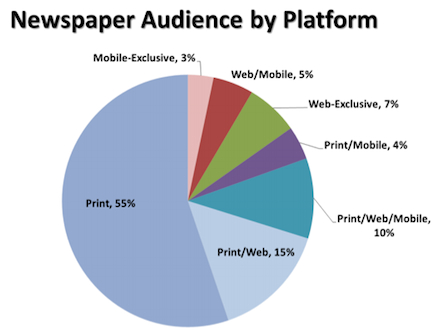
A recent study by the Newspaper Association of America (NAA) trade group reported significant growth in digital and mobile readership, yet also proudly proclaimed that 54% of newspaper audiences only read their local newspaper through its print edition. Overall, the NAA reported circulation gains of about 3%. Also reported was the fact that print circulation has fallen to 71% of
total circulation (75% of Sunday circulation), down from 85% the year
before (a 20% decline). The size of this year's shift, it should be noted, may be coming from a change in AAM reporting, which lets publishers decide whether subscribers of both the digital and print editions get counted as print subscribers or as digital subscribers. With most ad revenue growth in digital, they may be choosing to emphasize those numbers.
 One interpretation of the more than half of circulation remaining print-only is that there's still a significant role for print editions. Another is that almost half of readers don't ever access their local newspaper digitally. Newspaper readership is not only in general decline - it seems to be splintering, with older readers sticking with print, and younger readers shifting their news consumption to online and mobile sources. The NAA report said that 30% of readers use a combination of print and digital sources, and 15% only use digital. According to the NAA report,
 A deeper look showed an industry in widespread decline. Almost all of the circulation gains were by the five largest U.S. newspapers, and predominantly from increased digital circulation. A breakdown by circulation showed aggregate circulation losses in all other segments. The report notes that most smaller papers are posting print circulation declines smaller than seen in some of the biggest urban dailies. Smaller, perhaps, but declines nonetheless.
From an economic perspective, it's clear that there is a strong and rapidly growing digital market for news. News organizations, whether newspapers, broadcast networks and local stations, magazines and radio would be well-served to develop easily-accessible online delivery systems for the news they produce (mobile apps in particular). The audience is going there, and frankly, the distribution costs are minimal compared to traditional media. However, there remains a sizable portion of news consumers who remain loyal to traditional media formats - particularly for their traditional local news sources. Local news organizations need to still consider that audience segment before going all-digital.
Source - NAA: 'Print only' still more than half of newspaper audience even as digital grows, Poynter
"a closer examination of the elements, supported by readership data, does confirm a steady transition to digital reach among newspapers and a healthy print readership base for readers and advertisers."

From an economic perspective, it's clear that there is a strong and rapidly growing digital market for news. News organizations, whether newspapers, broadcast networks and local stations, magazines and radio would be well-served to develop easily-accessible online delivery systems for the news they produce (mobile apps in particular). The audience is going there, and frankly, the distribution costs are minimal compared to traditional media. However, there remains a sizable portion of news consumers who remain loyal to traditional media formats - particularly for their traditional local news sources. Local news organizations need to still consider that audience segment before going all-digital.
Source - NAA: 'Print only' still more than half of newspaper audience even as digital grows, Poynter
Monday, November 18, 2013
Forbes for sale; Is digital success fluke or future?

Forbes magazine has seen the same downturn in print advertising as its competitors, with a 12.3% decline in the number of ad pages over the first three quarters of 2013. However, it's been more successful than most of its print competition in growing its digital side. Digital circulation at Forbes.com has more than doubled over the last three years, and digital earnings currently account for about half of total revenues for the parent firm.
One analyst indicated that potential buyers needed to ask 2 basic questions. First, was the rapid growth in digital revenues driven by its aggressive branded-content emphasis in combination with its unpaid-blogger strategy? Second, if that's the case, why is Forbes up for sale?
Print media has been losing value in recent years, and increasing distribution costs and declining ad print ad sales have imperiled traditional print business models. Many recent print sales (Washington Post, Boston Globe, Newsweek, Maxim) were at levels 80-90% below peak valuation. In contrast, some of the early numbers suggest Forbes could go for only 20-25% below peak valuation. That does suggest that Forbes Media may have been more successful in developing its digital side and business model. That includes cost savings by ditching professional journalists in favor of unpaid bloggers (the Huffington Post model), and their pioneering "native advertising" Brandvoice program. Native advertising is a bit controversial for its combination of interactive targeting and using ad content that mimics their editorial content. The combination makes the Forbes.com more of a bazaar than a traditional journalistic outlet.
 One critic suggests that the noise and choice of the bazaar will start to wear on the traditional passive news consumer and thus will be, in the long term, unsustainable. And knowing that, current Forbes leadership is looking to exploit their short term success. On the other hand, perhaps the bazaar is a much more comfortable venue for the younger Internet generations - after all, its really not that different from the Wild West of the Web. Younger Internet users are used to having access to an abundance of content, interactivity and targeting, evaluating the value of content, and even seeking to place their own content for wider access. If that's the case, Forbes Media may be positioning itself to take advantage of the changing audience interests and behaviors of younger media consumers.
Sources - 'Forbes' Placed On The Auction Block, MediaDailyNews
Running For The Exit, Garfield at Large blog, MediaPost.com
Tuesday, November 5, 2013
Newspapers see digital traffic growth
Online metrics provider comScore has reported that last September set new records for online traffic to newspapers' digital sites. The tracking numbers showed that 141 million U.S. adults visited a newspaper's web site or used a newspaper mobile app. That's 71% of online adults, and more than half of all U.S. adults.
Growth in newspaper traffic is up across all devices, with some of the most rapid growth occurring in the use of mobile devices for news. And in what is a measure of good news for newspapers, mobile seems to be driving new readers to newspapers' digital outlets, and encouraging new patterns of online news reading. The comScore report indicated that the number of US online adults who report using only mobile devices to get news has jumped 22% in the last three months, and now accounts for 23% of newspapers' total digital audience. When you add in those using mobile as well desktops and laptops, 55% of total newspaper readership used newspapers' digital content.
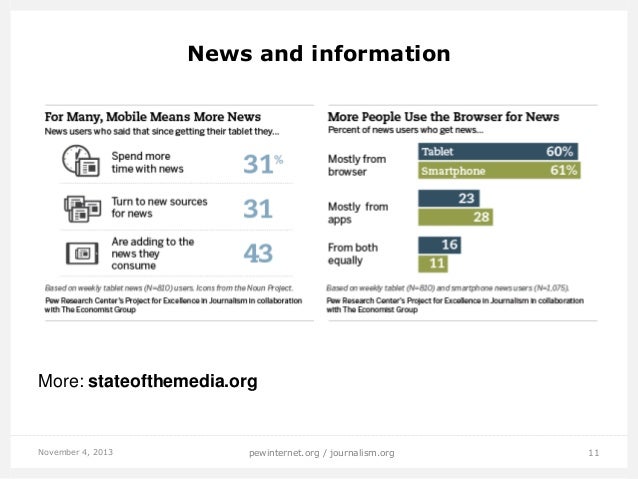
 These results support some of the findings reported by the Pew Research Center's Internet & American Life Project. They found that half of American adults cite the Internet as a main source for national and international news, and that 23% of adults report getting news on at least two mobile devices. Mobile devices, particularly tablets, also seem to be impacting news consumption. Since getting tablets, 31% report spending more time with news, 31% are turning to new sources for news, and 43% are adding to their news consumption.
Sources - Newspapers Set Digital Traffic Record, MediaDailyNews
Reading, writing, and research in the digital age, research presentation, Pew Internet & American Life Project
Growth in newspaper traffic is up across all devices, with some of the most rapid growth occurring in the use of mobile devices for news. And in what is a measure of good news for newspapers, mobile seems to be driving new readers to newspapers' digital outlets, and encouraging new patterns of online news reading. The comScore report indicated that the number of US online adults who report using only mobile devices to get news has jumped 22% in the last three months, and now accounts for 23% of newspapers' total digital audience. When you add in those using mobile as well desktops and laptops, 55% of total newspaper readership used newspapers' digital content.
Sources - Newspapers Set Digital Traffic Record, MediaDailyNews
Reading, writing, and research in the digital age, research presentation, Pew Internet & American Life Project
Tuesday, October 29, 2013
Knight on Nonprofit News- Stumbling to viability

While perhaps (and understandably) overly optimistic, the report suggests that the most successful nonprofit news organizations share certain traits:
- Keep questioning assumptions - don't assume you know what your audience wants and needs. Keep track of who your audience is, and what they care about - they're changing, and your organization needs to follow.
- Pursue both niche and need - successful organizations identify underserved niches in their market and target them; while balancing those with more general news and informational needs. "(The) answer to 'who is your audience?' is never 'everyone.'"
- Serve, don't just publish - they realize that their business isn't publishing news and advertising, but developing relationships with their audience that are rich in information and connections.
- Invest beyond content - follows the previous point - to be successful they need to be more than just a source for news stories, and have that a core component of their business plan and operations.
- Measure what matters - and it's not the traditional news metrics of readership. Exploit the data-rich environment of online metrics.
- Move to where your audience is - how people obtain and consume news is changing. The sustainable news organization needs to recognize that, and follow. Don't expect the audience to conform to your preferences.
- Strive for diversity in funding, and build partnerships. News alone won't keep news organizations economically viable over the long term. Look for ways to build relationships with readers and sponsors that can lead to revenue streams into the future. Having multiple revenue streams also helps to keep the organization independent and flexible.
Sources - Finding a Foothold: How NonProfit News Ventures Seek Sustainability, Knight Foundation Report.
Thursday, October 10, 2013
Financial Times to cut print in favor of digital

“Journalists will publish stories to meet peak viewing times on the Web rather than old print deadlines,” the memo stated. “This will require a change in mind-set for editors and reporters, but it is absolutely the right way forward in the digital age.”The memo also indicated that the website has more people subscribing to it than all of the current print editions, and stressed the need to remain competitive as news consumption is shifting to desktops, smartphones, and tablets. There was no immediate indication of job cuts or layoffs, but the memo did suggest that employees would need to make "informed choices" about their careers.
Source - Financial Times to Consolidate Print Editions, New York Times
Thursday, September 26, 2013
Lloyd's List to end print run after 280 years
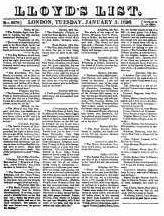
Between the rising costs of printing and mailing, a reader survey that showed that less than 2% of readers relied on the print version, and the increased opportunities for innovation offered by digital, it was an easy business decision. Even so, ending such a long tradition is difficult
In commenting on the move, Lloyd's List editor, Richard Meade, harkened back to the first days of the paper, when it was a notice pinned to the wall of a London coffee shop and noting that today its readers can still sit in coffee shops and access the paper through smartphones and tablets - in a sense maintaining tradition while expanding access, opportunity, and increasing their ability "to provide news and market intelligence for the shipping industry... in the format our customers want and need."
Source - Lloyd's List to go all-digital, Informa
Wednesday, September 25, 2013
Infographic: Changing News Habits
 From a multinational survey of news consumers - and presented by a company marketing its own news app platform. Still, there's some significant findings and trends on display.
- 75% of smartphone owners and 70% of tablet owners check news through mobile devices several times a day - compared to the numbers using at least weekly for TV (74%), radio (55%), newspapers (38%), print magazines (18%) [TV includes broadcast, cable, and DBS sources]
- Use of tablets to get news has doubled in the last year
- The only media where half the respondents report consuming news for more than 30 minutes a day are TV and smartphones (both at 52%); 40% of tablet owners do, which is a higher share than any other medium
- Thankfully, "accuracy" remains the most important criteria, although "fresh" (i.e. current) and "free" are cited as important by 57%.
- 95% of news consumers get their news from aggregators (which includes traditional news outlets as well as online providers), although social media continues to make inroads. 43% report getting news from Facebook, and 28% from Twitter
- EU news consumers report higher usage of traditional news media (newspapers, radio, TV) than USA news consumers.
“Due to mass adoption of consumer mobile devices, the access and appetite for trusted news continues to increase. People want to remain informed in a timely manner, more so now then ever before in our world’s recorded history,” said Gilles Raymond, said mobile industry veteran and CEO of Mobiles Republic. “We’ve found that reading news on tablets has more than doubled year over year. This is because the tablet allows for new trends in news consumption─ news snacking, for example, and because news syndication apps that provide all of a users favorite news sources within one app is a ready cure for information overload while increasing the user’s level of being informed on personal topics. We believe our research can reassure the world’s primary news outlets, while also confirms they must have multiple streams of mobile news distribution in order to reach the mobile audiences and continue to thrive.”Source - 2013 Infographic - the change in news reading habits, Mobiles Research press release
Tuesday, September 17, 2013
Sun's traffic plummets after paywall
When instituting a price for a formerly free good, just like when raising a good's price, there is an expectation that you'll lose some consumers. So when UK's The Guardian newspaper put their Sunday tabloid The Sun's online edition behind a paywall, I'm sure they expected some decline in online readership.
With more than a month behind a paywall, independent metrics firm SimilarWeb found that monthly site visits fell from 37.3 million the month before, to 14.4 million in August - a decline of 62.4%. More critically, average time on the site also fell by two-thirds (from 3.6 minutes to just over 1 minute); and more than two-thirds of visitors to the site left without accessing any content. That later stat, called the bounce rate, suggests that those who had an interest in a topic that led them to the site were unwilling to pay the price set by The Sun for access.
Sources - Sun online's disastrous paywall start as traffic plunges by 62%, Greenslade Blog on The Guardian.co.uk
SimilarWeb's website traffic overview for The Sun.
With more than a month behind a paywall, independent metrics firm SimilarWeb found that monthly site visits fell from 37.3 million the month before, to 14.4 million in August - a decline of 62.4%. More critically, average time on the site also fell by two-thirds (from 3.6 minutes to just over 1 minute); and more than two-thirds of visitors to the site left without accessing any content. That later stat, called the bounce rate, suggests that those who had an interest in a topic that led them to the site were unwilling to pay the price set by The Sun for access.
Sources - Sun online's disastrous paywall start as traffic plunges by 62%, Greenslade Blog on The Guardian.co.uk
SimilarWeb's website traffic overview for The Sun.
Monday, August 26, 2013
Local TV faces mobile challenge for weather and traffic
As mobile continues to expand, it's challenging two of the key foundations for local TV news: local weather and traffic reports. Already, multiple free mobile apps offer up-to-the-minute weather information most anywhere, including weather alerts and radar maps to follow storms, zoomable to neighborhood levels. And unlike local TV news, you can get the report any time you want, and any place (with cell coverage).
 Almost all smartphones come with built-in weather apps, and many display weather on the opening screen. A recent survey found that 79% of smartphone users in the 18-44 demographic have their devices with them almost all day. More specifically, the IDC study found that 89% of 18-24 year-olds are using their smartphones within 15 minutes of waking. And weather is among the top three categories of importance in using news apps.
 Now, the globally popular Google Maps is adding real-time traffic coverage, from recent acquisition Waze. With the addition of real-time traffic in many areas, Google Maps provides extra functionality to basic mapping and navigation. But the critical difference here is adding local real-time value in the ability to assess the quickest routes, and avoid road construction and closures.
 In the meantime, Google Now is breaking ground in terms of anticipating user wants and needs. As users build up their profile, Google Now can pre-emptively notify users of traffic reports when they're headed out, and if there are other accidents on the route, notify travelers when they happen. There's also reports that Google Now is experimenting with adding local news reports to the information it filters through.
The latest Pew State of the Media Report shows that local broadcasters have been increasing the proportion of air time devoted to weather and traffic (29% last year, opposed to 25% in 2005). Still, the Pew report noted that audience demand for the topics were “ripe for replacement by any number of Web- and mobile-based outlets.”
Source - Local TV facing increasing competition in weather and traffic, LostRemote
79% Of People 18-44 Have Their Smartphones With Them 22 Hours a Day (STUDY) All Twitter
Always Connected, IDC-Facebook research report
Local Media App Trends: Summer 2013, Stepleader Digital
(I used weather apps this summer when Dad and I drove across the country - to check storm tracks when the clouds on the horizon looked ornery, and to know when to pull off the road, or choose an alternate route if they looked too bad.)


 In the meantime, Google Now is breaking ground in terms of anticipating user wants and needs. As users build up their profile, Google Now can pre-emptively notify users of traffic reports when they're headed out, and if there are other accidents on the route, notify travelers when they happen. There's also reports that Google Now is experimenting with adding local news reports to the information it filters through.
The latest Pew State of the Media Report shows that local broadcasters have been increasing the proportion of air time devoted to weather and traffic (29% last year, opposed to 25% in 2005). Still, the Pew report noted that audience demand for the topics were “ripe for replacement by any number of Web- and mobile-based outlets.”
The massive reach and prominence of mobile devices and apps are impacting how people get news and information. The ability of major national and international apps like Google Maps and The Weather Channel to provide localized (and increasingly personalized) content makes them at least somewhat competitive with local TV newscasts. The ability to do so at any time, at any location, and the growing ability to personalize content and delivery provides additional levels of value and service, and over time will likely lead to such apps being the place to go for weather and traffic information. Local TV news needs to prepare for that eventuality.
Source - Local TV facing increasing competition in weather and traffic, LostRemote
79% Of People 18-44 Have Their Smartphones With Them 22 Hours a Day (STUDY) All Twitter
Always Connected, IDC-Facebook research report
Local Media App Trends: Summer 2013, Stepleader Digital
Thursday, August 22, 2013
Battle of Las Vegas
The Las Vegas Review-Journal and Las Vegas Sun both publish daily newspapers in Las Vegas under a joint operating agreement (JOA). Under the agreement, the two papers share printing and advertising staffs, but keep separate editorial staffs. The current status of the JOA is unusual; instead of printing and distributing two separate newspaper editions, the Sun is published as a small advertising-free insert within the Review-Journal. The Sun, instead, has shifted its editorial focus to its online version - which has been very successful both editorially (winning several major journalism awards in recent years) and financially. Earlier this month, the Review-Journal's owners (Stephens Media) reached an agreement with members of the Greenspun family (owners of the Sun) to "release" the Review-Journal from the JOA.
 The Sun's editor and publisher, Brian Greenspun, has gone to court to challenge the proposed dissolution of the JOA. The deal would free the Review-Journal from the burden of printing and distributing the limited insert that is the only print version of the Sun, in return for transferring ownership of the domain name www.lasvegas.com (currently leased to and run by the Las Vegas Convention and Visitors Bureau). The cancellation of the JOA would leave the Sun without the infrastructure to print and distribute the physical edition of the paper. The agreement also reportedly includes a non-compete clause prohibiting the production of a print newspaper or dissemination of news online, effectively killing the competition provided by the online Las Vegas Sun. The deal was accepted by the two younger Greenspun siblings against the advice of Brian Greenspun.
Frankly, the Sun doesn't really need a print presence in Las Vegas - the current daily insert consists almost exclusively of features and is designed to minimally abide by the terms of the JOA. Whether the JOA parties can unilaterally dissolve the agreement is debatable. Those that have ended have done so by one of the newspapers folding. Still, the most troubling part, and the one most likely to form the basis of a successful legal challenge, is the non-compete clause. By its very nature, the clause is anti-competitive and flies in the face of the intent behind JOAs - maintaining competitive news presences locally.
It would be a shame to kill one of the best and most innovative online local newspapers in America. I hope a way to let it continue operations will be found.
(And, incidentally, shifting ownership of the lasvegas.com domain name from the newspaper would increase the likelihood of a successful domain name challenge from the city or other entity like the LVCVB - so the promise of big bucks from leasing lasvegas.com may be ephemeral.)
Source - Las Vegas Sun at Risk of Folding, Wall Street Journal
Las Vegas Sun website

Frankly, the Sun doesn't really need a print presence in Las Vegas - the current daily insert consists almost exclusively of features and is designed to minimally abide by the terms of the JOA. Whether the JOA parties can unilaterally dissolve the agreement is debatable. Those that have ended have done so by one of the newspapers folding. Still, the most troubling part, and the one most likely to form the basis of a successful legal challenge, is the non-compete clause. By its very nature, the clause is anti-competitive and flies in the face of the intent behind JOAs - maintaining competitive news presences locally.
It would be a shame to kill one of the best and most innovative online local newspapers in America. I hope a way to let it continue operations will be found.
(And, incidentally, shifting ownership of the lasvegas.com domain name from the newspaper would increase the likelihood of a successful domain name challenge from the city or other entity like the LVCVB - so the promise of big bucks from leasing lasvegas.com may be ephemeral.)
Source - Las Vegas Sun at Risk of Folding, Wall Street Journal
Las Vegas Sun website
Tuesday, August 13, 2013
Online News Use continues Rise

The U.K. study comes from the Office for National Statistics, and looks at Internet Access by individuals, and within households. The survey found that Internet access in Great Britain continues to grow and diffuse: 73% of adults report using the Internet daily, 53% now access the Internet from mobile phones. 83% of households report having Internet access, and 42% had land-based broadband Internet connections.
More than half of adults (55%) reported "reading or downloading online news, newspapers or magazines" on a daily basis, more than doubling the rate reported in 2007 (20%). That change in usage was the biggest of the services reported.
"In 2013, with reports of decreased physical newspaper readership, there has been media interest in how people will access the news in the future," said the ONS.The survey also found that more than half (52%) of those UK adults have purchased reading materials online had done so through digital forms such as eBooks. A substantial number also reported buying eBooks for the readers in their family.
Usage among young adults (16-24) was greatest for leisure or recreational activities: 93% engaged in online social networking daily, 60% accessed wikis, 55% downloaded software, and 40% made phone or video calls over the Internet. People in the 25-34 age group, on the other hand, had the highest use of regular activities like sending emails (89%), getting information on goods and services (i.e. shopping) (77%), and engaging in online banking (76%). The highest growth in reported Internet usage was among older users, where daily use for seniors (65+)grew from 10% in 2006 to 38% in 2013 and reported daily use among those 55-64 grew from 37% in 2006 to 68% in 2013.
The U.S. numbers come from the Pew State of the News Media 2013 report. In a survey conducted in 2012, Pew asked U.S. adults where they had gotten news "yesterday." Respondents were allowed to cite multiple sources. Half (50%) of respondents reported getting news from digital sources. The only form used more was "TV" at 55%, but that number combined local and national broadcast news with cable news.

The other point that the Pew report makes is that online news use is the only format that has not been consistently trending downward over the last 20 years. "TV" daily use has dropped from a high of 71% in 1994 to 55% in 2012. Newspaper usage has dropped from a high of 57% in 1991 to 29% in 2012. And radio as a daily news source has dropped from 54% in 1991 to 33% in 2012. Yes, that's right - more American adults report getting their news from radio than report getting news from newspapers.
Not so good news for legacy formats, but still somewhat optimistic about news usage overall.
Sources - More than half of Britons access news online, The Guardian
Statistical Bulletin: Internet Access - Households and Individuals, 2013, ONS.gov.uk
Digital: As Mobile Grows Rapidly, the Pressures on News Intensify, Pew Research Center
The full Pew report on The State of the News Media 2013 is available here.
Monday, June 3, 2013
Goin' Mobile - For News
Sales and diffusion of mobile devices, particularly tablets, are continuing its fast pace. The good news for journalism is that people are also increasingly using them for accessing news.
 A survey by the University of Missouri's Reynolds Journalism Institute (RJI), in connection with the Digital Publishing Alliance (DPA), conducted early this year found that roughly one-third of U.S. adults have and use a larger media tablet. The rapid growth was fueled by the introduction of major new tablet models from Samsung, Google, and Microsoft, Apple's move into smaller media tablets, and new larger-screen smartphone models that may provide competitive alternatives for smaller tablets.
 The good news for journalism and news media is that most mobile device owners report using their devices to access news. For most age groups (and both smartphone and large tablet users), roughly two-thirds of the sample reported using their devices for news. Among smartphone news users, a majority report still using web and search portals to get news, but the acquisition and use of specific news apps is rapidly growing. The survey reported that more smartphone owners had downloaded apps from newspapers than any of the other traditional media - although almost as many had "niche" apps (those affiliated with special events or narrow topics such as weather). The survey found that for smartphones, only a third of the oldest respondents (65+) used their devices for news. Interestingly, men were much more likely to use smartphones for news than were women (across all age groups).

 In contrast, media tablet owners seem to prefer sites and sources that allow them to take advantage of their larger screens. While have had downloaded newspaper apps, a whopping 94% had television (video) news apps on their devices. Looking at the demographics of large tablet news yielded some interesting highlights. For tablet owners, usage of tablets for news was lowest among the youngest group included in the sample, at 42%. News use for tablet owners in the 25-64 age group (66%-70%) mirrored the rates for smartphone owners, although the older 65+ group was slightly less likely to do so (60%), while less than half of tablet users in the 18-24 age group reported using their devices for news. There's also an interesting interaction between age and gender - among the youngest and oldest groups, women were more likely to report using tablets for news (than men), while for those between the ages of 25 and 54, men were more likely to be news users on their tablets. Tablet owners also expressed a small preference for using news apps rather than browsers for their news content.

It's looking like mobile is becoming a significant market for news access by audiences - although in many ways one that is still under development. As news organizations face increasing competition and declining usage in their traditional markets, this seems to be one that news organizations should take seriously - in reaching out to new audiences, and in the opportunities mobile presents for new ways to package and distribute news and information.
Source - 2013 Q1 Research Report 2: Media tablets now used by at least one-third of U.S. adults,
RJI-DPA Mobile Media Research Project release
 A survey by the University of Missouri's Reynolds Journalism Institute (RJI), in connection with the Digital Publishing Alliance (DPA), conducted early this year found that roughly one-third of U.S. adults have and use a larger media tablet. The rapid growth was fueled by the introduction of major new tablet models from Samsung, Google, and Microsoft, Apple's move into smaller media tablets, and new larger-screen smartphone models that may provide competitive alternatives for smaller tablets.


It's looking like mobile is becoming a significant market for news access by audiences - although in many ways one that is still under development. As news organizations face increasing competition and declining usage in their traditional markets, this seems to be one that news organizations should take seriously - in reaching out to new audiences, and in the opportunities mobile presents for new ways to package and distribute news and information.
Source - 2013 Q1 Research Report 2: Media tablets now used by at least one-third of U.S. adults,
RJI-DPA Mobile Media Research Project release
Tuesday, May 28, 2013
Learning the wrong lesson - putting comments behind paywall
There's been a bit of discussion recently among journalism blogs about the recent decision by the Winnipeg Free Press (Canada) to limit comments to paying subscribers. Allowing open comment sections should be a serious decision for news sites - there are legal implications with respect to copyright and libel, and considerations about whether open comments fit in with the purpose and focus of the news organization and/or the sensibilities of its readers.
But once an organization commits to allowing open commenting, it's best to remain truly open rather than putting limits on access. Too heavy a hand in limiting open discussion can harm a news organization's image of neutrality and balance; in their willingness to consider and credit alternative views. And the explanation given for this decision doesn't help -
“We want to keep the party-crashers out so those who’ve paid for the right to be part of the online conversation can do so without being turned off by yahoos spewing vile and bile,” writes (Winnipeg Free Press) editor Paul Samyn.“The bulk of the ugliness that lands from time to time on our website comes from those abusing the ‘free’ in Free Press to engage in gutter talk or worse on our no-cost forum."In later comments, Samyn indicated surprise at the reaction to the move - at the amount of reaction (on track to be the most heavily-commented post in the paper's history), and at reader's reactions. Samyn said he expected a strong negative reaction (but did he really expect 60% to oppose the move, versus 25% who approved). But reading between the lines there's the arrogance and self-delusion endemic in old-line news organization - casually brushing aside concerns about shuttering an open forum (that's for journalists and not for the yahoos of the general public), and trying to find redemption in the claims from a few readers that having a cleaner, more filtered comments section (that reflected and reinforced their own opinions) might encourage them to look at comments more frequently.
In addition, there's the problem that their filtering (by paid subscription in one form or another) doesn't necessarily reflect their expressed concerns over civility. It might reflect a desire to limit opposing viewpoints, if they're assuming (or admitting) that their news is targeted to the like-minded among the public, but few papers will publicly admit to doing that.
And while there's significant differences in terms of the traditions of letters to the editor and comments (mainly that the editors select what letters to publish) here's the key question they should have asked themselves - would they also require people submitting letters to the editor to be paid subscribers?
Source - Winnipeg Free Press: Only Subscribers Allowed to Post Comments Starting Next Week, JimRomanesko.com blog
Tuesday, May 14, 2013
Goin' Mobile - Device Differentiation
I've mentioned in a few previous posts that studies are starting to show that mobile device users are starting to differentiate their use and consumption patterns based on the characteristics of the particular mobile devices being used. A newly released industry analysis b y Adobe Digital Index is providing more insight and support for mobile differentiation.
 To start, the study supports the rapid expansion of mobile and tablet diffusion and use. The explosion in tablets and their use has been phenomenal - the number of tablets shipped worldwide more than doubled over the last twelve months. More importantly, in their three years in the market, tablets are already generating more online traffic than smartphones (on a global basis). A large part of that is the finding that people tend to visit 70% more pages when browsing the internet on tablets than when the browse on their smartphones. Both tablets and smartphones are each closing in on accounting for 10% of all page views through browsers.
 Traffic using mobile apps is also booming. In what is a good sign for print media, there was a 200% growth in readers of digital publishing apps from August 2012 to February 2013. More readers of digital magazines access through tablets than all other media combined. And tablet use tends to be more frequent and more in-depth than smartphone use. Specifically, compared to smartphone usage, tablet users open digital publication apps twice as often per month, and read three times as many pages per session. Tablets account for three-fourths of all online reading sessions.
Online video use is rapidly going mobile, although the bulk of online video viewing occurs on PCs, or through devices connected to TV sets. Still, mobile video consumption tripled over the last year, and now accounts for over 10% of all online video viewing. Here again, despite the much higher penetration rates for smartphones, tablets account for most of the mobile digital video consumption.
On the retail side, the study found that tablet users are a lot like PC users - they use their devices to compare products and make online purchases. In contrast, smartphones are used more for quick reference - for price checks, locating stores, restaurants, etc.
Sources - Smartphones and Tablets, Though Mobile, Require Separate Ad Approaches, Research Brief
State of Mobile Benchmark, Adobe Digital Index research report


Online video use is rapidly going mobile, although the bulk of online video viewing occurs on PCs, or through devices connected to TV sets. Still, mobile video consumption tripled over the last year, and now accounts for over 10% of all online video viewing. Here again, despite the much higher penetration rates for smartphones, tablets account for most of the mobile digital video consumption.
On the retail side, the study found that tablet users are a lot like PC users - they use their devices to compare products and make online purchases. In contrast, smartphones are used more for quick reference - for price checks, locating stores, restaurants, etc.
Sources - Smartphones and Tablets, Though Mobile, Require Separate Ad Approaches, Research Brief
State of Mobile Benchmark, Adobe Digital Index research report
Monday, May 6, 2013
News from U.K. - Regulations and competition

The mad rush to establish a press oversight/regulatory body by Royal charter has been sidetracked. The Prime Minister's office announced that their proposed charter will not be presented to the Queen later this month, as previously scheduled.
The delay comes after strong negative reactions from the press, and the presentation of an alternative charter for a self-regulatory body to the Privy Council. The Privy Council posted the newspaper industry's proposal for open content. After the initial comment period (ends May 23, 2013), the council will consider whether to hold a full consideration of both proposals before making a recommendation and forwarding a Charter to the Queen.
One of the UK Newspaper Society's concern with the original charter proposal was the lack of any clear statement against government interference. That concern was supported by a new Transparency Report from YouTube, which showed that UK government and police requests for removal of YouTube videos doubled in 2012. These requests were made for alleged violation of national security or hate speech laws, or were critical of police practices. The 124 cited requests did not include requests based on copyright violation or court orders. Google reported rejecting about half of the requests.
Some of the examples provided were basically requests to remove content that officials thought made them look bad. If that's the standard that the government's hoping to be applied under the proposed News Regulatory body, that's something to worry about.
BT, formerly known as British Telecomm, announced a deal with the Press Association to provide news and editorial content for their relaunched website. BT's been transitioning from phone service provider to online content service, having acquired ESPN's UK sports channels earlier and sports licensing deals with major European soccer associations. The Press Association is UK's national news agency, providing news feeds to newspapers, newsrooms, and businesses across UK and Ireland.
PA's managing director, Tony Watson, said: "The agreement with PA and BT represents a significant moment in our evolution from traditional content supplier to provider and manager of multi-platform content and solutions."Sources - Royal charter for press regulation delayed by ministers, The Drum
UK requests removal of 124 YouTube videos, CBR
Deal with Press Association will provide news and editorial content on relaunched BT website, The Drum
Thursday, May 2, 2013
US Newspapers Circulation Report
The Alliance for Audited Media (AAM) - formerly known as the Audit Bureau of Circulation (ABC) - has just released its report on newspaper circulation as of last March.
Overall, digital circulation continues to rise, as print circulation stagnates or falls. Total daily circulation numbers were down 0.7% over the last year, and Sunday circulation fell 1.4%. In contrast, digital circulation was up 36%, and now accounts for 19.2% of all newspaper circulation.
 The Wall Street Journal remains as the circulation leader, with a total average circulation of just under 2.4 million (with a circulation increase of 12.3%). (I'm going to round to the nearest tenth of a million). The New York Times moved up a spot to second, with a total average circulation of 1.9 million, posting an increase of 17.6% to move past USA Today, whose average circulation fell 7.9%, to 1.7 million. The New York Times was also the only newspaper in the Top 25 where digital circulation was higher than print circulation, with digital accounting for 60% of total circulation. Rounding out the top five are the Los Angeles Times, with average daily circulation at 0.6 million, and the New York Daily News at 0.5 million.
For most of the rest of the Top 25, average daily circulation was more or less stagnant. A few papers showed big increases in total average circulation, but most of that seemed to come from the inclusion of "branded editions" (defined as "newspaper-owned products such as commuter, community, alternative-language or Sunday-Select type newspapers") in the total average circulation counts.
Source - Paywalls Boost Some Newspaper Circs, MediaDailyNews
Top 25 Newspapers For March 2013, report from Alliance for Audited Media
Overall, digital circulation continues to rise, as print circulation stagnates or falls. Total daily circulation numbers were down 0.7% over the last year, and Sunday circulation fell 1.4%. In contrast, digital circulation was up 36%, and now accounts for 19.2% of all newspaper circulation.

For most of the rest of the Top 25, average daily circulation was more or less stagnant. A few papers showed big increases in total average circulation, but most of that seemed to come from the inclusion of "branded editions" (defined as "newspaper-owned products such as commuter, community, alternative-language or Sunday-Select type newspapers") in the total average circulation counts.
Source - Paywalls Boost Some Newspaper Circs, MediaDailyNews
Top 25 Newspapers For March 2013, report from Alliance for Audited Media
Tuesday, April 23, 2013
Hyperlocalism & Mobile
A UK study sponsored by the National Endowment for Science, Technology and the Arts (NESTA) found that demand for hyperlocal content in being driven by the growing penetration of mobile devices.
Hyperlocal Media are Used. The survey found that two-thirds of adults in the UK expressed an interest in news and information about "the immediate area in which they currently live." More than half (53%) of Internet users report having accessed hyperlocal media at some point. Among those who indicated that they had used some or all of the hyperlocal media sites listed, roughly one-third indicated daily use, and another third reported weekly use. Interestingly, 8% reported using hyperlocal media to get information about areas where they used to live.

Mobile Devices and Hyperlocal Interest. Interest in, and use of, hyperlocal media was highest among owners of connected mobile devices (laptops, smartphones, tablets). People who own smartphones and tablets are the most likely to indicate using hyperlocal on a daily basis. More than half (55%) of those reporting using hyperlocal media more often now than they did two years ago indicate that their increased use was driven by getting a smartphone and/or tablet. More than a quarter (28%) of hyperlocal media users reported that they have used apps to access hyperlocal content.
Sources for Hyperlocal Content. More than half of hyperlocal media users report using search engines to find and access hyperlocal content. About a quarter cite using websites or apps of local media (in the UK that means newspapers and magazines), and 30% go to websites created by local governments and agencies. The study found that, at least for now, there was little use of specialized stand-alone providers. Only 17% report using social media for hyperlocal content, and they use it primarily for timely information - weather, sports scores, etc..
Hyperlocal Content Drivers. Hyperlocal media use seems to be predominantly driven by functional needs for localized information. Half of users report getting local weather information, 41% are seeking local breaking news, almost a third (32%) are seeking local entertainment information or info on local bars, restaurants, and clubs (29%), and more than a quarter (27%) use it for information on community events. Convenience (59%) and free cost (45%) are also important factors - and a third indicate that they think hyperlocal media are more up-to-date, accurate, reliable, and comprehensive than other media outlets. Respondents also indicated that while hyperlocal media kept them informed about their neighborhood, it was much less likely to motivate involvement (doesn't increase their influence or help develop new friendships).
Demographics. There are age and income differences in hyperlocal media users. Those in the 35-54 age group are the most likely to be hyperlocal users. There are also significant differences among age groups, and between rural and urban residents, in terms of the types of hyperlocal information sought.
Sources - Study: Hyperlocal demand driven by mobile devices, Journalism.co.uk
UK Demand for Hyperlocal Media Research Report, Nesta research report
edit: added labels
"Both the reach and the consumption of hyperlocal content has been accelerated by smartphones," Jon Kingsbury, Nesta's programme director for creative economy. "And of course smart phones know where you are, so we think that offers a huge potential to hyperlocal publishers to make opportunities out of the fact that GPS-enabled devices might be a way of helping people find their content."The study is part of an effort to support the growth of hyperlocal content and media, particularly in the areas of news and public information.
Hyperlocal Media are Used. The survey found that two-thirds of adults in the UK expressed an interest in news and information about "the immediate area in which they currently live." More than half (53%) of Internet users report having accessed hyperlocal media at some point. Among those who indicated that they had used some or all of the hyperlocal media sites listed, roughly one-third indicated daily use, and another third reported weekly use. Interestingly, 8% reported using hyperlocal media to get information about areas where they used to live.

Mobile Devices and Hyperlocal Interest. Interest in, and use of, hyperlocal media was highest among owners of connected mobile devices (laptops, smartphones, tablets). People who own smartphones and tablets are the most likely to indicate using hyperlocal on a daily basis. More than half (55%) of those reporting using hyperlocal media more often now than they did two years ago indicate that their increased use was driven by getting a smartphone and/or tablet. More than a quarter (28%) of hyperlocal media users reported that they have used apps to access hyperlocal content.
Sources for Hyperlocal Content. More than half of hyperlocal media users report using search engines to find and access hyperlocal content. About a quarter cite using websites or apps of local media (in the UK that means newspapers and magazines), and 30% go to websites created by local governments and agencies. The study found that, at least for now, there was little use of specialized stand-alone providers. Only 17% report using social media for hyperlocal content, and they use it primarily for timely information - weather, sports scores, etc..
Hyperlocal Content Drivers. Hyperlocal media use seems to be predominantly driven by functional needs for localized information. Half of users report getting local weather information, 41% are seeking local breaking news, almost a third (32%) are seeking local entertainment information or info on local bars, restaurants, and clubs (29%), and more than a quarter (27%) use it for information on community events. Convenience (59%) and free cost (45%) are also important factors - and a third indicate that they think hyperlocal media are more up-to-date, accurate, reliable, and comprehensive than other media outlets. Respondents also indicated that while hyperlocal media kept them informed about their neighborhood, it was much less likely to motivate involvement (doesn't increase their influence or help develop new friendships).
Demographics. There are age and income differences in hyperlocal media users. Those in the 35-54 age group are the most likely to be hyperlocal users. There are also significant differences among age groups, and between rural and urban residents, in terms of the types of hyperlocal information sought.
"The other thing that really came out in the research is that people expect traditional media brands to provide very very local content. When we asked them where they would look for very very local content they were much more likely to look to existing or traditional brands, like broadcasters and traditional local newspapers, than they were to hyperlocal blogs."
Sources - Study: Hyperlocal demand driven by mobile devices, Journalism.co.uk
UK Demand for Hyperlocal Media Research Report, Nesta research report
edit: added labels
Subscribe to:
Posts (Atom)